



All districts — With the state’s budget still in limbo, the future of the Michigan School Meals program — which ensures free breakfast and lunch for all of the state’s pre-K-12 students — is uncertain. And Kent County school districts are starting to reckon with the possibility that a service that’s been benefitting students since the 2023-24 school year could be coming to an end.
Districts making use of the program sent out communications to families at the start of the year stating that funding is secured only through the end of the fiscal year on Sept. 30. What its status will look like after that point has yet to be determined, districts said.
Dan Behm, executive director of Education Advocates of West Michigan at Kent ISD, said districts likely won’t know until late September whether the state budget will include funding for the continuation of the program. Both the State Senate and the governor’s budget proposals support the program, but the State House of Representatives’ proposal does not, Behm said, adding that negotiations on the state budget are ongoing.
Schools offering free breakfast and lunch exclusively through the United States Department of Agriculture’s federal Community Eligibility Provision that are not also participating in Michigan School Meals would not be directly affected by a change in the program.
Joel Stoner, superintendent of Sparta Area Schools, said his district has been watching things unfold in Lansing, and is well aware that the program might cease at the end of the month.
“We’ve known that Sept. 30 would be potentially the last day,” Stoner said.
‘I truly believe this program has been incredibly beneficial for both students and families, and without it, students will be the ones who suffer the most.’
— Sparta Food Service Director Melissa Alley
Sparta has reserves in its food service budget that would allow the district to continue offering free breakfast and lunch, at least for a while, if the program is discontinued. The district has enough to cover the cost of students’ meals for the remainder of the 2025-26 school year, Stoner said, but it’s going to cost around $300,000 to do so.
“Our plan right now is that we’d pull from that reserve fund just so our families have time to adjust to this,” Stoner said.
The discontinuation of the program would have a massive impact, Stoner said, not just on Sparta, and not just on low-income families. In fact, he said, the families that make too much to qualify for free or reduced-price meals would feel it the most.
“The reality is that there is a large section of our population that’s living paycheck to paycheck,” Stoner said. “Sometimes we refer to them as the working poor — those individuals who make too much to qualify, but they’re straining. … This meal program has provided a good deal of relief for them so they can pay rent, pay their mortgage and fill their gas tanks.”
If the program does come to an end, Stoner said, the district wouldn’t look to offset the additional expenses by laying off food service staff. But there might have to be other sacrifices. The purchase of new kitchen equipment may be delayed, for example. Or, if the situation grows dire, the district may have to pull from its general fund.
“We’ll cross those bridges as they come,” Stoner said.
He also said that if concerns about unnecessary spending are at the heart of the budget gridlock, the free meal program shouldn’t be caught in the crossfire.
“These monies are committed to just feeding children. This is not an area of waste, this is not an area of excess. If the House budget is looking to fix those things, feeding children is not the area that you target.”
‘Because it’s free for everybody, no one student feels singled out, and their family doesn’t feel singled out.’
— Rockford Superintendent Steve Matthews
‘Middle-class families would feel the greatest impact’
Sparta’s reserves, Stoner said, are the result of the conservative spending of Food Service Director Melissa Alley. Alley also leads Comstock Park’s department through Chartwells, which contracts with school districts to meet food service needs.
Alley said the universal free meals program has made a huge difference at Sparta, echoing Stoner’s sentiments that it has particularly benefitted families that would not otherwise qualify for meal assistance.
“Now, every child has access to at least two healthy meals at school each day,” Alley said. “We’ve seen increased student participation in both breakfast and lunch, a reduction in the stigma sometimes tied to free and reduced meals, and greater equity — giving every student the same opportunity to participate in school meals.”

The district would suffer if the program ceased, she said.
“Middle-class families would feel the greatest impact — and they make up the majority of our community,” said Alley. “Many of these families are already working hard to make ends meet, and without this program they would face the added cost of providing both breakfast and lunch at school every day.”
Meal prices would probably have to go up, and though staff wouldn’t be immediately affected, as Stoner said, Alley noted that participation in school lunch would probably drop off. That, she said, could eventually affect food service staffing levels and employee hours.
“I truly believe this program has been incredibly beneficial for both students and families, and without it, students will be the ones who suffer the most,” Alley said. “Feeding kids is essential to their success both inside and outside the classroom.
“My hope is that legislators are closely reviewing the data from schools and seeing just how impactful this program is, and that they move forward in making it permanent law. One of the biggest challenges right now is the uncertainty — in most years, by July 1 we know the income guidelines and can plan ahead for the school year. Waiting until September leaves families in limbo, and that uncertainty is heartbreaking for them and very difficult for schools to manage.”
Program a ‘net positive’
While Sparta is aiming to keep the program going, at least for a while, not every district has that option.
Rockford Superintendent Steve Matthews said that if the program is discontinued, it would cost millions to keep it going for the remainder of the school year. He said the expense wouldn’t be feasible.

“It would be over $2 million that we’d have to take out of the general fund,” Matthews said. “For us, we don’t think it’s possible to continue that program. We’d like to figure out a way to do it, but that’s a big expense and we don’t see how.”
Matthews said the program has been a “net positive” for the district in more ways than one, providing parents with a safety net “to ensure that they don’t have to worry about providing their children with breakfast and lunch.”
The availability of free meals for all students has leveled the playing field, Matthews said. Prior to the implementation of the program, he said, families that did qualify for free or reduced lunch would sometimes opt not to apply for it out of a fear of stigma. Giving all students access to free meals has essentially fixed that issue.
“Because it’s free for everybody, no one student feels singled out, and their family doesn’t feel singled out,” Matthews said.
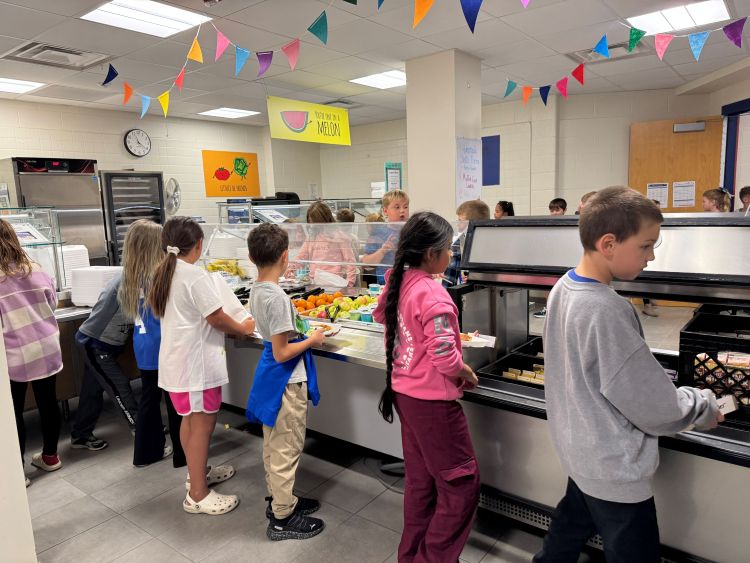
The program has also been convenient for families that may not qualify for reduced lunch, but might lack the time to prepare meals at home.
Matthews said district leaders hope a compromise can be reached in Lansing that would keep the program afloat.
“The people who are most concerned about it are the administrators and the food service office,” he said. “We understand that this kind of program is hanging by a thread. It’s been a positive for the district, so we’d like to see it continue.
“And kids who aren’t hungry learn better.”
Reporter Joanne Bailey-Boorsma contributed to this story.
Read more:
• Birth rates, jobs, affordable homes all key to kindergarten enrollment
• Getting to the bottom of the so-called ‘summer slide’


