


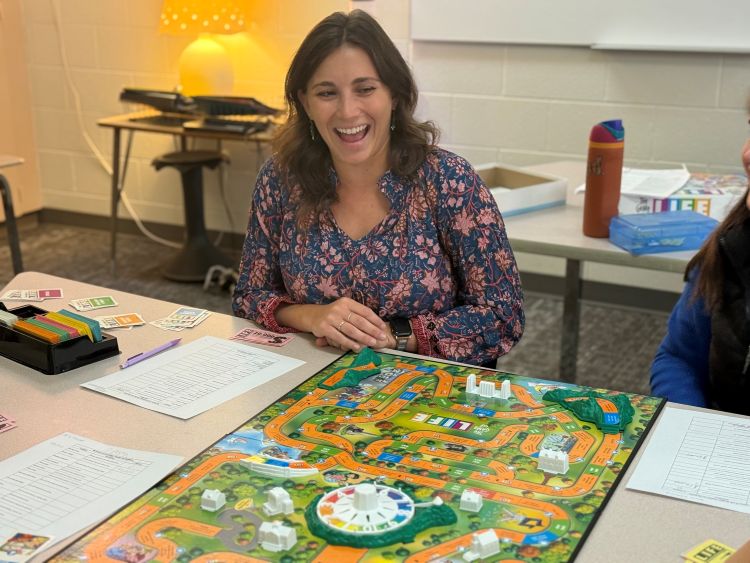
Lowell — Anna Mainero spun the wheel and pulled a card while playing The Game of Life with students.
“Oh, my gosh, I’m a teacher!” she said after reading the card that assigned her a profession. “This is real life.”
They were playing the game to learn about personal finance, tracking on worksheets income as earnings and the many costs that pop up in life as expenses.
“You invented an ice cream flavor,” she said to junior Blake Seaburg. “Is that an expense or an earning?”
“Earning,” Blake answered.
In her seventh year teaching special education students at Lowell High School, Mainero offers academic support for ninth- through 12th-graders and teaches a new class called Career Focus, which is geared toward employability, life skills and transition-related activities.
‘It’s really cool to see them grow up and figure themselves out, learn from others and then teach me.’
—Anna Mainero, special education teacher
Her days go by helping students develop skills, supporting their academics and advocating for them. It’s the life of a special education teacher, and one Mainero fully embraces. She spoke to SNN about the profession, its challenges and what keeps her motivated and passionate about the job through every twist and turn.
Why do you teach? “I teach because I really like to see the growth students make, and I really enjoy connecting with students. I come from a family of teachers, so I was always around and inspired by teaching and learning my whole life. I thought it would be fun working with high school kids. I think they are super unique and fun to work with, but I really like the growth aspect of everything.”
What is your biggest motivator that keeps you excited about teaching? “I just get most excited to see the kids. I really focus on trying to establish positive relationships and connections with students. It’s not like I’m necessarily passionate about a subject area; I’m passionate about helping students get the skills to be independent. That’s what really gets me motivated — enjoying working with them and teaching them something they can use in their lives.”
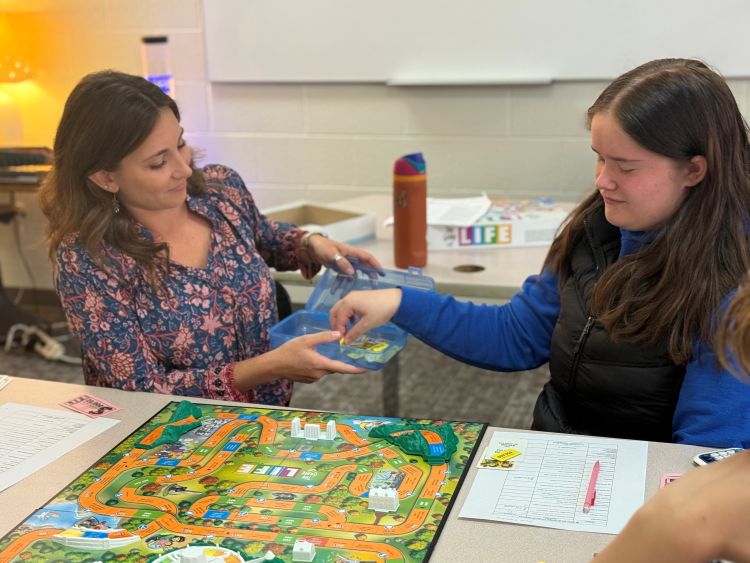
Why did you want to teach special education? What’s the best thing about it? Mainero said she loves small-group teaching and helping students find their voices and strength. She usually has five to 10 students in her class at a time, but general education students often drop in for help with math support.
“I love being creative and problem-solving, so I love coming up with unique ways to meet the needs of students.
I recognize this set of kids may not feel like they have a voice or have someone advocating for them — they may not have a conventional way of learning.”
She said she loves to be someone who can provide support and help them develop their abilities.
“That is super important to me — rooting for the underdog.”
What are some of the biggest challenges in your role and how do you strive to meet them? Mainero said many factors inside and outside of school affect students’ state of being, and she has to always be prepared for that.
“I have to be prepared by being flexible and knowing the student well enough to know how to approach them and handle situations. Especially, working with a population of students who struggle in an academic environment, there are a lot more difficulties that can come up.
“I try to view any challenge as an opportunity — an opportunity to learn what ways to help a student, to problem-solve and teach skills like self-advocacy and conflict resolution.
“Sometimes I have a kid come in who is having difficulty while I’m teaching a class, so it’s trying to balance all of the needs.”
What’s the most amazing thing about your students? “There are a lot of amazing things. It’s hard to choose: them as humans, their unique personalities and characteristics. They have areas of difficulty, but they also have areas of strength.
“Since I work with ninth- through 12th-graders, I really see their growth, even in maturity and how they treat people. It’s pretty incredible. It’s really cool to see them grow up and figure themselves out, learn from others and then teach me.”
What would you say to someone considering teaching as a profession? “You really have to enjoy working with kids and have flexibility. Knowing my job, I especially need to be flexible. But I think that is good even for general education teachers to know, in regard to collaborating and changing students’ needs.”
Read more from Lowell:
• Chief meteorologist forecasted his future in first grade
• Girl Scouts’ projects give back to their former elementary school


