


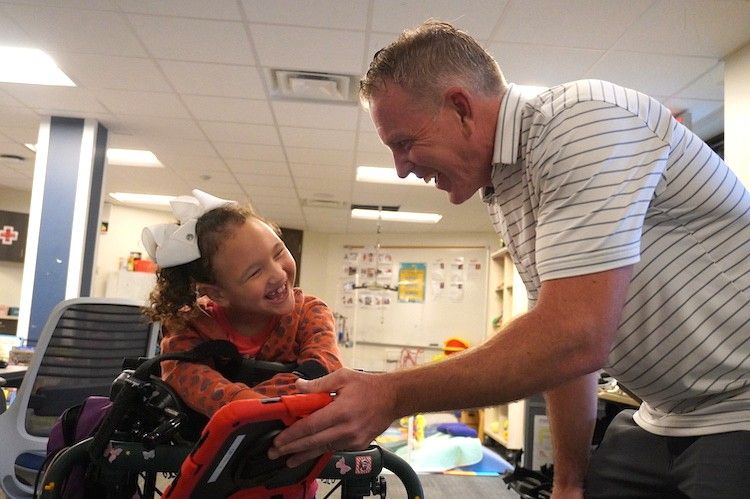
Kent ISD — Scott Angebrandt admits it’s easy to mix up the Lincoln School and the Lincoln Developmental Center, a mistake he made himself on his very first day of student teaching.
“I came to the Lincoln Developmental Center thinking it was the school,” he said with a laugh, gesturing across the parking lot. “They were like, ‘I think you’re supposed to be over there.’”
Despite the initial confusion, Angebrandt would go on to find his professional home at the Lincoln Developmental Center. He eventually secured a full-time position there and has remained ever since — 27 years and counting — passing up other career opportunities along the way.
“When I was interviewed, they (asked), ‘How long do you anticipate staying in this type of program?” I said, ‘I don’t know, five to 10 years,” Angebrandt recalled.
Now, “I will wake up every day and I’m like, ‘I’m still in the same building that I started teaching, and not many people do that, have the trajectory in their career where they are in one place for that long. But I never felt I wanted to leave, because I love it here.”
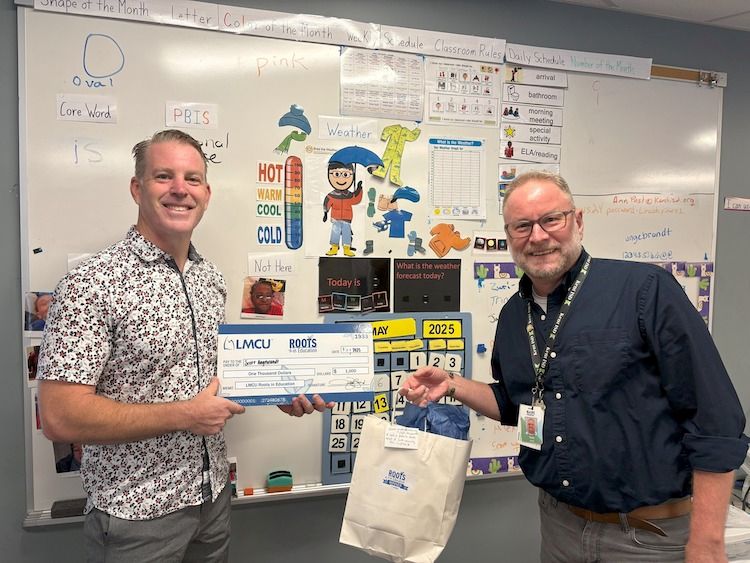
His dedication to his students recently earned him the Lake Michigan Credit Union’s Roots in Education award, which recognizes educators who make a lasting impact.
You work in center-based programs. Could you explain what those are? Angebrandt said the center-based program is highly specialized, featuring adaptive equipment, individualized curricula and assessment tools like the Top-Down Motor Milestone Test. He said the program incorporates a mix of academic and functional learning using resources such as News2You and GoTalk NOW for communication and choice making.
Its blend of therapies, hands-on materials, and technology is considered one of the most distinctive programs in Kent County, Angebrandt said.
Why do you teach? Angebrandt’s mother was a teacher.
“I think everyone has that person, like in middle school or high school, who pushes them to become a teacher, and I had a few of those influences that said ‘I think you would be good at that because of your heart.’
“That’s the reason I went into education, but the reason I do it is I knew I wanted to be a special education teacher from probably my junior year of high school. I had done some Special Olympics activities, and I just fell in love and I felt like I could make a difference in special education because I had a decent amount of enthusiasm and drive, and I just loved the aspects of helping kids.”
What is your biggest motivator that keeps you excited about teaching? “What I think motivates me is our students. Every year, we have up to nine students in our classroom, and their ranges of abilities are different. That’s a challenge in trying to figure out how to address every one of the students that you have in your classroom. Some might need more adaptive technology. Some might need more physical help. Some might need more help with nursing needs.
“There’s a wide range of challenges every day, and what I like is not every day is going to be the same here. You have different ancillaries coming in — occupational therapy and physical therapy — and we’re working on this stuff all day.”
Why the center-based program? And what’s the best or most interesting thing about it? Angebrandt said he enjoys the physical aspect — lifting and engaging directly with students — combined with teaching core subjects like English, math and science, all while helping students work toward their personalized goals.
“We had a student who we probably had put on the bike 1,000 times. She would occasionally push her feet one or two cycles on the bike. One day it just clicked, and she took off throughout the building. I could not believe how fast she went. … It takes a lot of patience sometimes for them to develop to their potential.”
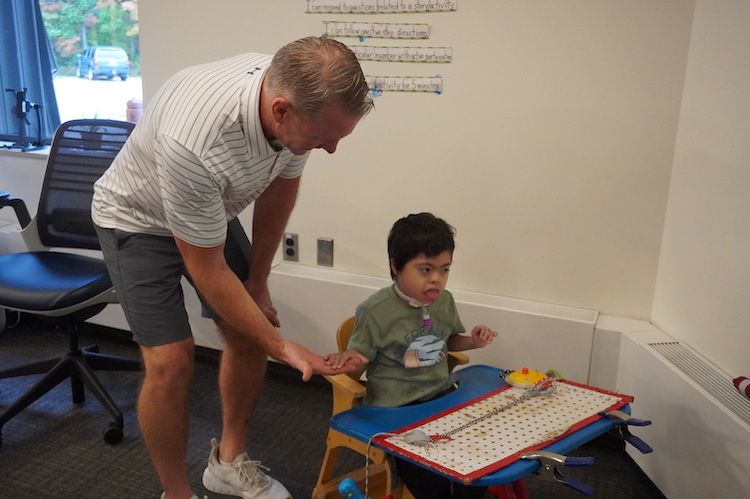
What are some of the biggest challenges in the role, and how do you strive to meet them? Angebrandt said one of the unique challenges is that as students grow, it becomes more difficult for them to use certain equipment, but staff continue to work on physical therapy goals despite these challenges.
Because many of the students have serious physical and health conditions that can lead to hospitalization, experiencing the death of a student is a particularly difficult part of the job.
“That’s a big challenge. I have a slogan in my room, and I say, ‘This is the best day, every day, every moment, this is the best moment of my life.’ I love my kids, and I love my family, and I’m looking forward. I want to be where my feet are. So every day when I’m in that classroom, we just try to lock in every day and make it the best.”
What’s the most amazing, notable or interesting thing about your students? “That they are capable of so many things,” Angebrandt said, adding often special education students are locked into a specific “window.” Since he started in 1999, he said assistive technology in education has significantly advanced from using simple methods like paper-based communication and limited physical support to tools like iPads, Tobii devices, gait trainers, and adaptive bikes. These improvements not only enhance physical mobility but also stimulate cognitive development by engaging the brain through movement, he said.
What would you say to someone considering teaching as a profession? “I think it’s where we need the most energetic teachers out there. You need people that not only are passionate, but they like to be able to move students, to be able to get them inspired, to want to try their best. That is, I think, the key component you need: super passionate, energetic people.”
Read more from Kent ISD:
• New center programs director says return ‘feels like coming home’
• Students explore early job opportunities, build skills with holiday market


