


Leer en Español, traducido por El Vocero Hispano
Kent City — Daniel Berli remembers the questions.
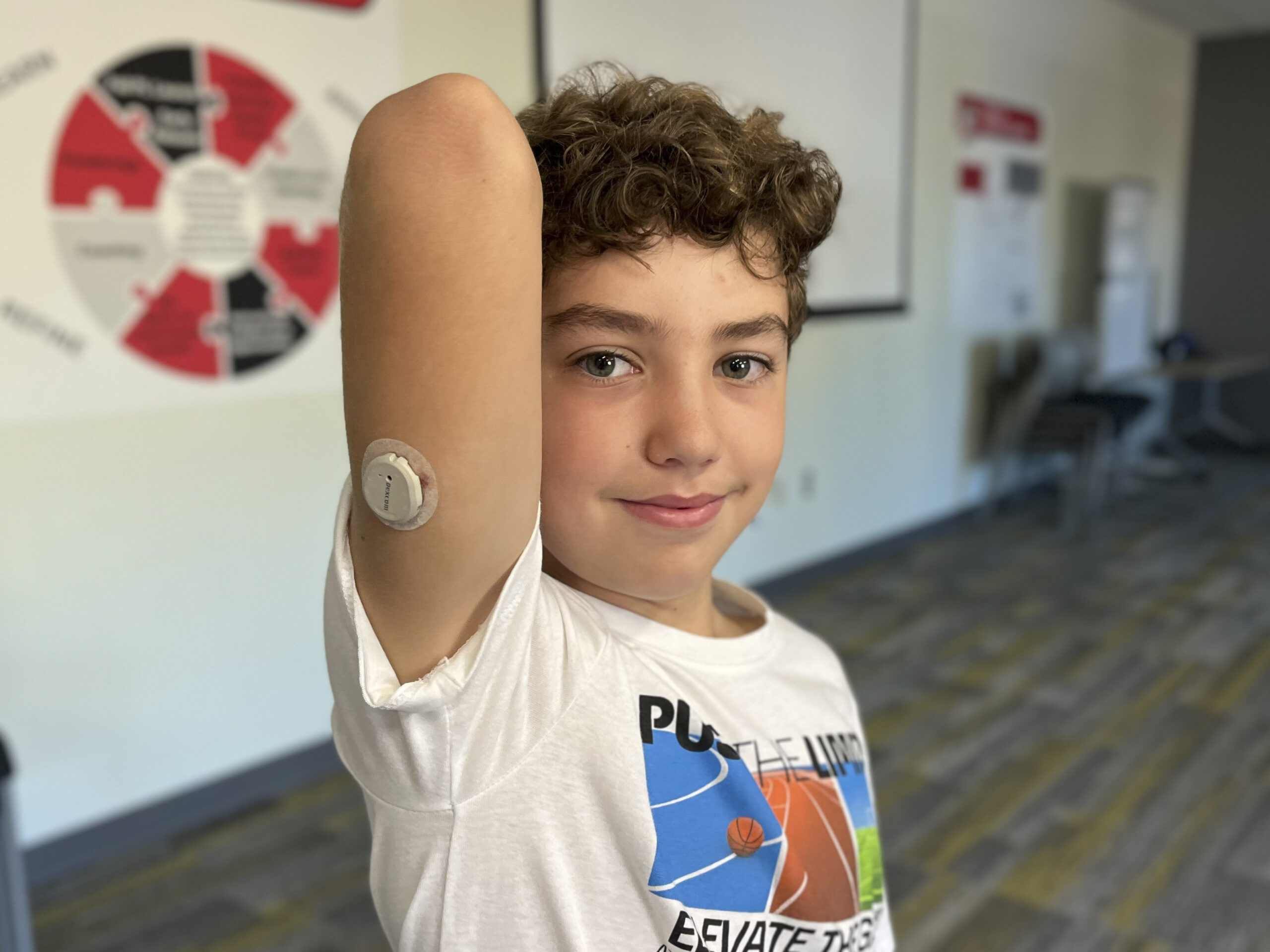
The Kent City Elementary fourth-grader was diagnosed with Type 1 diabetes at age 5 and spent some time in the hospital to get his blood sugar, or glucose, under control. When he returned to kindergarten, daily life looked much different: he occasionally received snacks from the school nurse, he was allowed to carry a phone in class and he had a glucose monitor attached to his arm.
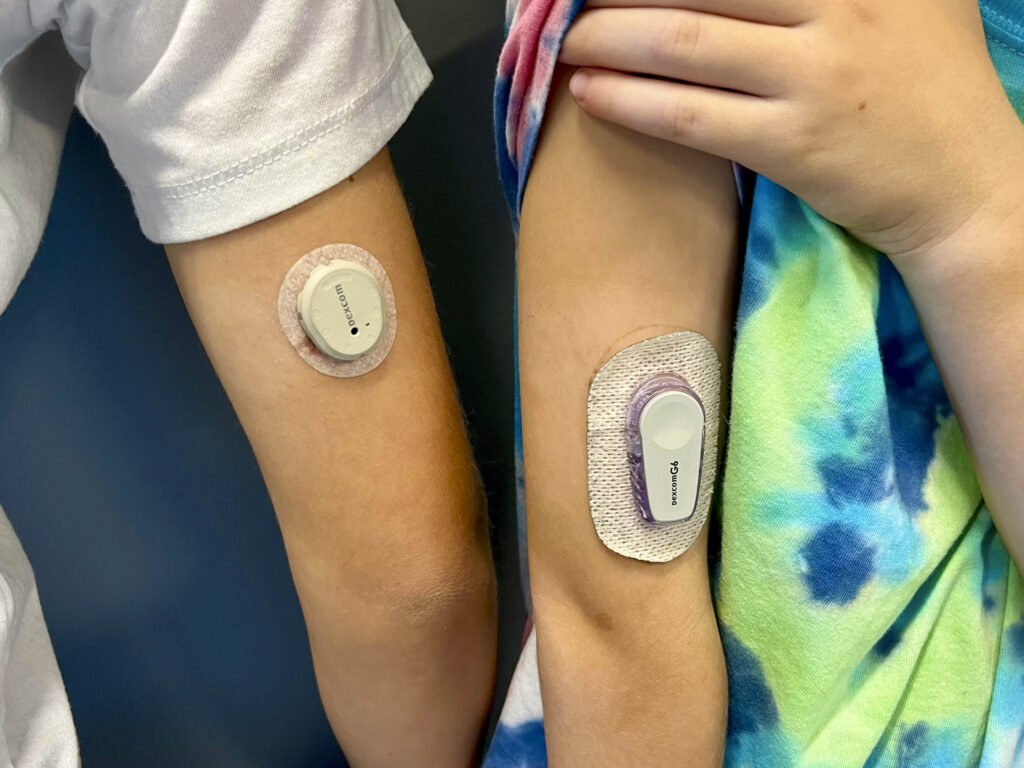
“If I got Smarties, (my classmates) would be asking me for some, or asking (the nurse) if they could have some, and when I was wearing a short-sleeve shirt, about 20 kids would come up to me and ask, ‘What is that? What is that?’” recalled Daniel, now 9, as he pointed to the Dexcom glucose monitor on the back of his upper arm. “I like talking about it, but I’m starting to not really like getting asked, because it’s just starting to get annoying.”
So when Daniel learned a KCE kindergartner with Type 1, named Beau, was facing the same questions from classmates this year, he knew he was uniquely qualified to help.
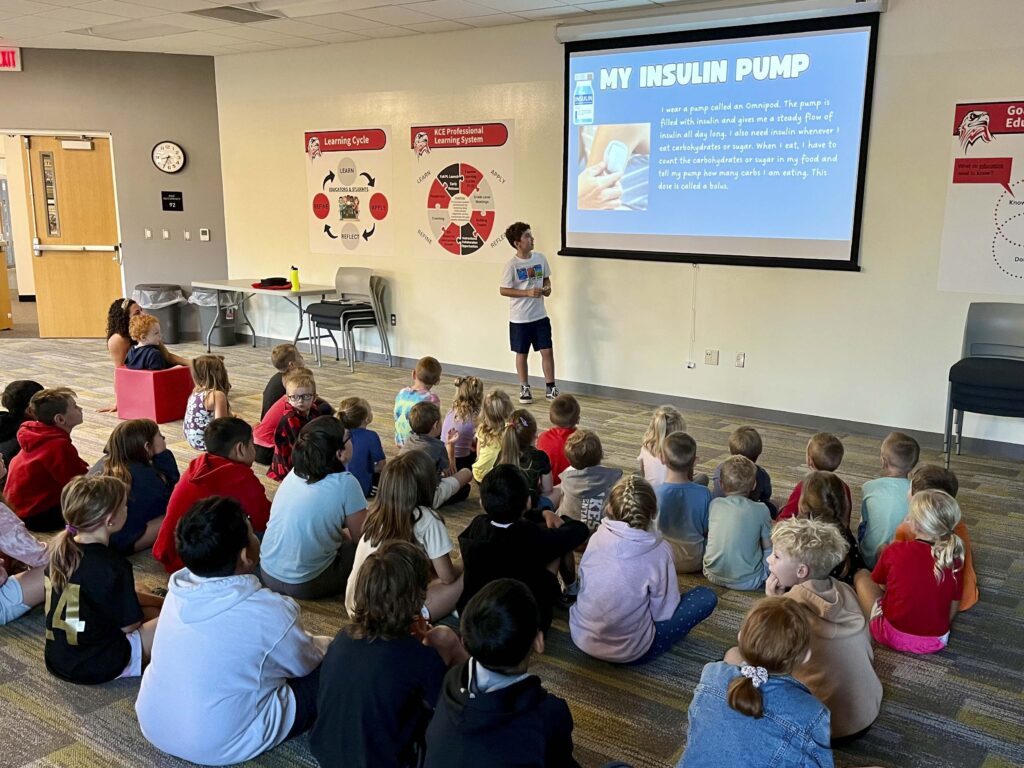
With encouragement from Beau’s teacher, Daniel recently put together a slide presentation about Type 1 diabetes and gave a talk to Beau’s class and his own fourth-grade classmates. The goal? To help them all have a better understanding of the condition, cut down on the daily questions and put Beau more at ease while navigating kindergarten.
“I was excited to do it,” Daniel said of teaching his fellow students. “I like to share about my diabetes, because not a lot of people understand what it is, so they don’t know what’s going on.”
Understanding Differences
As Daniel explained in his presentation, Type 1 diabetes is a condition that prevents the pancreas from making insulin, which helps the body turn food into energy by regulating the amount of sugar in the blood.
“Your body does this on its own without you even noticing, but I get my insulin through a pump that is attached to my body,” Daniel told the kindergartners and fourth-graders.
People with Type 1 diabetes must monitor their blood sugar level throughout the day to make sure it doesn’t go too high or low, he said. Someone with low blood sugar can feel very sleepy, hungry or dizzy, while high blood sugar can cause headaches, thirst, blurred vision or a lack of focus.
‘I like to share about my diabetes, because not a lot of people understand what it is, so they don’t know what’s going on.’
— fourth-grader Daniel Berli
In practical terms, this means “school rules” look a little different for Daniel and Beau.
Although cell phones are off limits, both are allowed a phone to check their blood sugar levels using an app. Beau gets to carry a special bag with all of his supplies, including fruit juice and candy for emergencies, and he sometimes runs a race with his teacher to get his body moving — even when it’s not recess time.
These differences have been tough for Beau to explain, as his classmates naturally have a healthy amount of kindergarten curiosity.
“I don’t really like to talk to them about (diabetes) myself, because everyone asks, ‘What is that? What is that? What is that?’ like, all day at school,” said Beau, who was diagnosed at age 3.
He said the constant questions make him feel “sad, ‘cause I just don’t want to talk about it.”
Knowing Beau’s feelings, kindergarten teacher Angela Sabin said she got tears in her eyes when Daniel agreed to teach her class more about Type 1 diabetes.
“I knew kids were going to ask questions — they’re 5; they’re curious — but from day one there was a lot, and I really wanted to make Beau feel more comfortable with it here at school,” Sabin said. “I don’t know all that much about (diabetes), but we knew Daniel was experienced, and they both liked the idea (of a presentation) to answer those questions.
“I love that now Beau’s friends can understand more about him, and hopefully there will be less of the questions like, ‘How come he gets a snack and I don’t?’”
‘What you did was so powerful’
Following his presentation, Daniel happily answered questions from the audience of his peers. He discussed different areas of the body where Dexcom monitors can be placed and described in detail how it feels to have low blood sugar. He also explained that his pump and monitor don’t prevent him from doing anything he wants, even swimming.
Sabin told SNN it was especially meaningful for her class to learn this information from another student, rather than an adult.
“Daniel, what you did was so powerful,” she told him after the presentation. “I hope you feel awesome and incredible, because you taught your teachers, you taught these students, you taught all the adults that joined us, and that’s a huge thing. It’s going to help my students understand Beau — that (his diabetes) is something that just happens, and he can still bike, he can fish, he can swim, he’s just like us.”
Although he’s answered a lot of questions in the years since his diagnosis, Daniel said he understands people’s curiosity. He said he might want to give a future presentation on the difference between his Type 1 diabetes, which is lesser known, and Type 2 diabetes, which occurs when the body can’t process insulin properly.
“I think why people ask so many questions is because usually they’ve met someone with Type 2, and with Type 2 they don’t have anything on them (like a monitor or pump).” Daniel said. “With me, people are like, ‘Eat this carrot and you’ll be better,’ but that’s not how it works. We just have to explain more about (Type 1), that it’s not something you get from eating too much candy or something. But I like teaching people.”
Read more from Kent City:
• Leaders for life, no matter their age
• Young leaders find their place at the table on student council


