


All Districts — An unexpected theme surfaced at Kent ISD’s annual State of the Student event, Listen. Learn. Lead.: students’ negative reactions to artificial intelligence.
According to a student panel made up of members of the Kent ISD Student Leadership Community, rising stress and heavy workloads are pushing some students to lean on AI for their schoolwork.
“I think that it can build bad habits that kids are just relying on AIs to finish what they can’t complete at school,” said Kent City senior Brandon McCullough. “So I think it should be avoided.”
Constantly turning to a tool that provides answers on demand can make it easy to lose one’s sense of self, said Grandville junior Calvin Zeng, adding that it’s essential to maintain personal identity and not let something inanimate define a person.
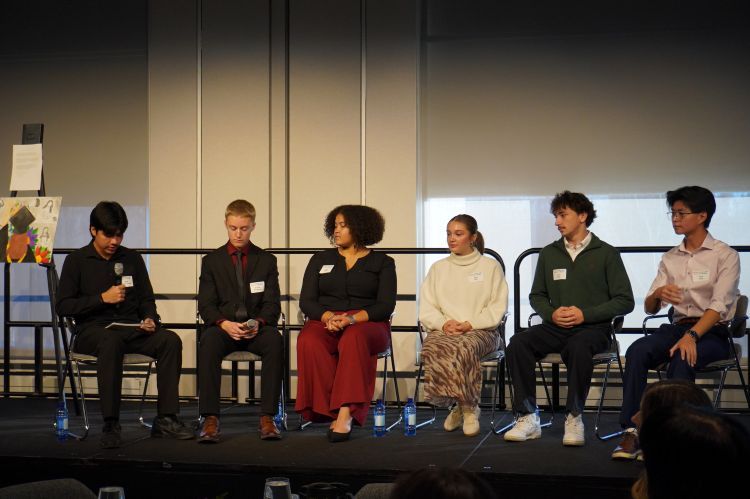
Azaria Powell, a senior at Grand Rapids University Preparatory Academy, noted that AI is definitely becoming more prevalent in the world, and if students were taught how to use it correctly, she thinks it could become a tool instead of something that is harmful.
That discussion was part of the annual event, which took place at Frederik Meijer Gardens & Sculpture Park. It was organized by the Student Leadership Community, with adult guidance. In its fourth year, the event is designed to showcase student voices to help further the conversation about challenges districts face in educating students.
Founded in 2022, the Student Leadership Community brings together 45 students representing a broad cross section of Kent County’s public, charter and home-school programs. Designed to provide a forum for students to share their perspectives on education, the program engages participants in leadership development, advocacy, community service, event involvement and networking.
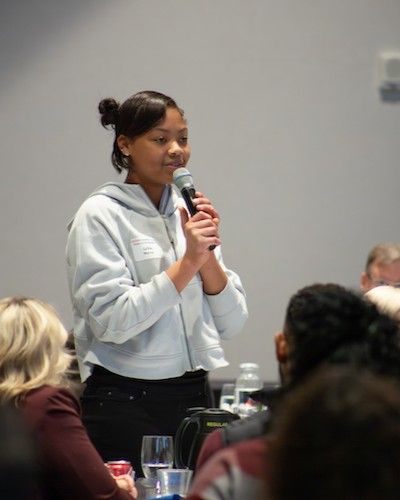
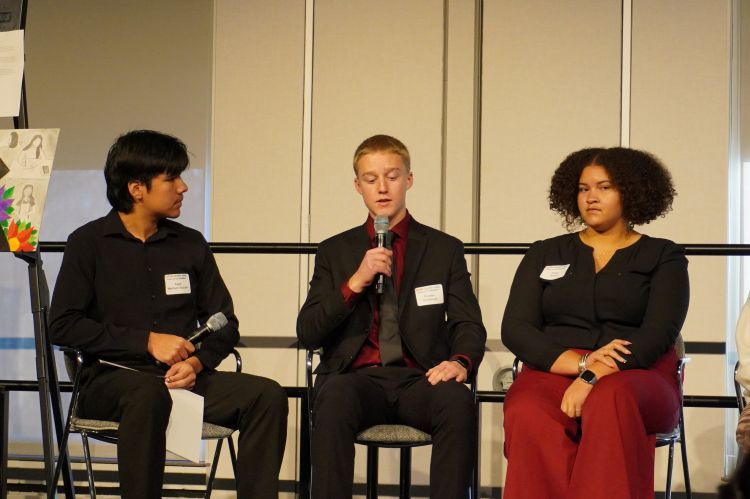
The event featured a five-student panel led by Comstock Park sophomore Angel Martinez-Alcauter followed by student-led table discussions.
Sparta senior Girum Merriman introduced panel topics chosen by the Student Leadership Community through discussion and voting, he said. They were engagement, the importance of relationships and mental health, which also branched into discussions on career readiness, social media and AI.
“Every student is unique, but we found these themes resonated with all of us,” Girum said during the event. “I guarantee that these same things are important to thousands of others. Leaving here with what you learned will go a long way.”
Brandon said the group was successful in touching upon the bigger topics such as engagement, mental health and well-being.
“I know we talked a little bit off script about AI and social media and how that can affect engagement,” he said. “We also talked about the way excess workload can create a lot of stress and really diminish student mental health.”
Preparing Students for Life After High School
Panelists overall thought that schools were doing a good job helping them prepare for the future, with such options as the college and career readiness website, Xello, internships, career exploration programs and financial literacy.
“Personally, I think I’m also very prepared, but I think the means and the accessibility to have options to be prepared for life after high school need to be more available to students,” Calvin said, noting that students often have to travel several different locations, such as Kent Career Tech Center or other schools.
Mental Health
Northview junior Colin Yanik said “mental health is a top concern constantly, because negative mental health can really hurt a student in a lot of ways, like you start slipping out on your grades, you fall behind in your classes because maybe you’re missing school, or just not trying hard enough.
“There’s also the social aspect. I’ve witnessed firsthand when kids’ mental health goes down, then they start kind of pushing away their friends, and it’s just kind of like a domino effect of these bad things that can happen to you.”
Brandon said the greatest pressure students face today is their workload, which isn’t well communicated between students and educators.
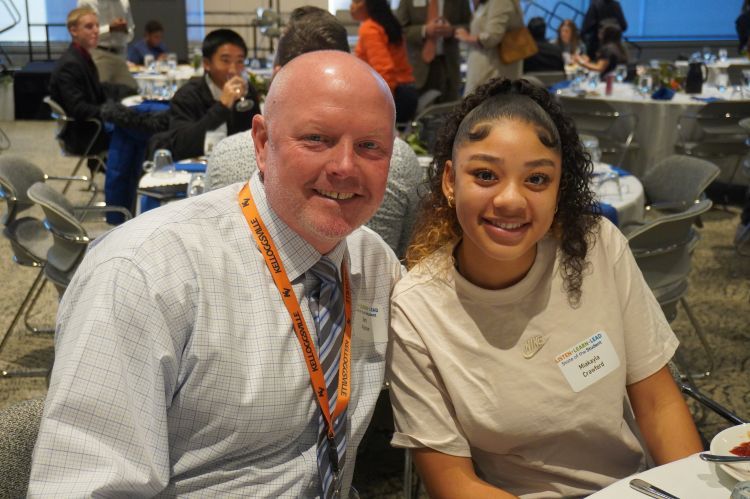
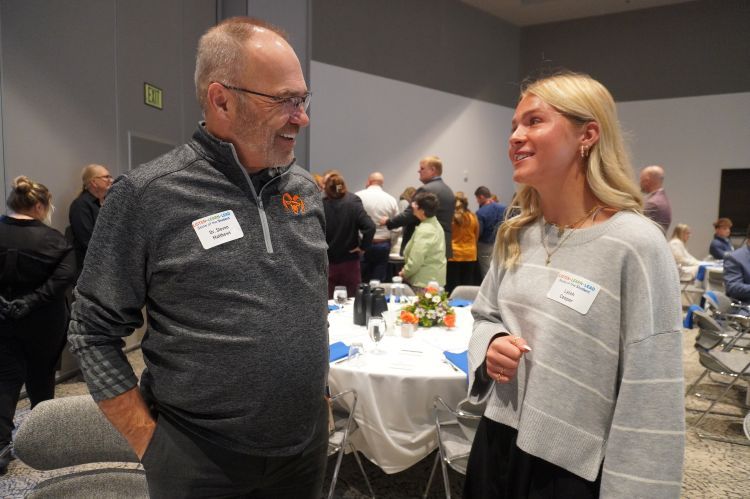
“There will be some weeks where we’re overwhelmed with how much stuff we have to do, and then there’s other weeks when we’re kind of cruising by because there’s not much to do,” he said. “So I think if (the workload) was better distributed, then that could help alleviate the stress that students face.”
Other factors panelists noted included pressures of social media and that athletics have become more competitive.
“I think a lot people assume that every extracurricular that you do is really just for fun and that there’s not a lot of stress that comes behind it,” Azaria said, “but with all the different athletics that we do and all the extracurriculars, there are some real stressful things behind it. And not everything that we do is sunshine and rainbows and everyone gets to carry on and have fun all the time.”
Engaging with Students
Panelists agreed that one of the most effective ways adults can help is by simply listening and being mindful of how they communicate.
In one table discussion, Colin said students respect educators who connect with them, ask about life outside school and meet them at their level. Colin added that students tend to respect those teachers’ rules and respond better to criticisms and discipline.
The Impact of Technology
Brandon also pointed out that technology plays a huge role in students’ lives, as they are on computers at school and then at home, and they de-stress by scrolling on their phones or watching TV.
“There’s positives and negatives to it, because we’re more effective then we’ve ever been. But on the same side, I think it’s impacting a lot of students’ sleep and their mental health, and just their well-being in general.”
Comstock Park’s Angel said the Student Leadership Community plans to use the insights gathered this year to reflect on what they’ve learned and begin shaping next year’s event.
“I think an important legacy to leave is the courage to speak about issues that concern us such as mental health and/or engagement,” Brandon said. “I hope the students after us will do the same thing, that events like this will still take place and that adults will continue to seek empathy toward our students.”
Read more:
• Event addresses youth homelessness, on the rise in Kent County
• Virtual welding sparks real-world learning


