


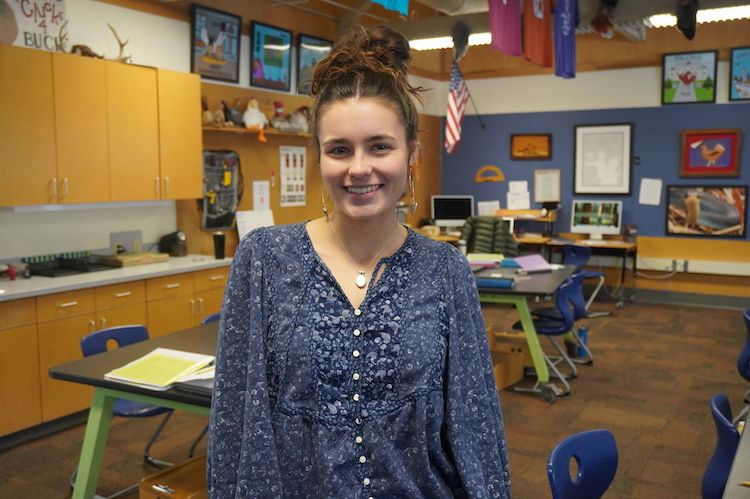
Forest Hills — When Forest Hills alum Isabelle Gray attended Goodwillie Environmental School in fifth and sixth grade, the experience deepened her understanding of the environment and sparked a passion for the outdoors.
When she returned last fall for a semester as a student teacher, it taught her how to teach and reaffirmed she was on the right career path.
“I feel super lucky to have gotten into this school … and to be able to come back, well, I feel so lucky to be here,” she said. “It’s the best place ever.”
Founded in 1999, Goodwillie is one of the few dedicated environmental schools in Michigan. Modeled after Grand Rapids Public Schools’ Blandford School, it offers hands-on, outdoor-focused education integrated with core subjects. The school has two sections each of fifth and sixth grades, with 104 students.
District students are introduced to the program while in second grade, when they attend trail tours with fifth-graders as the guides.
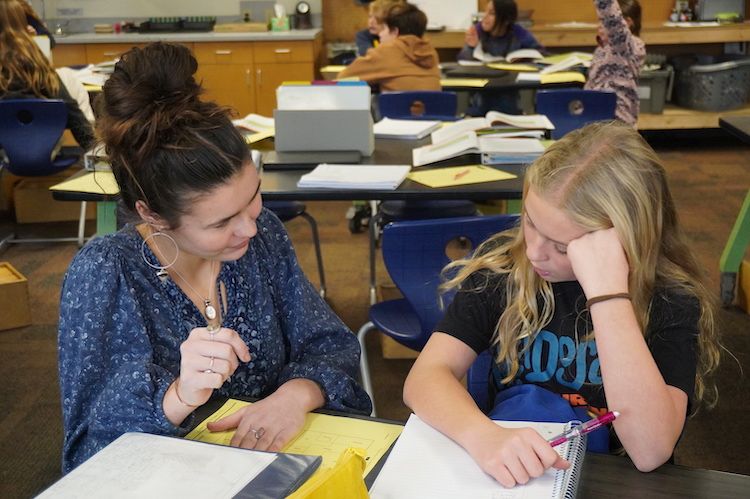
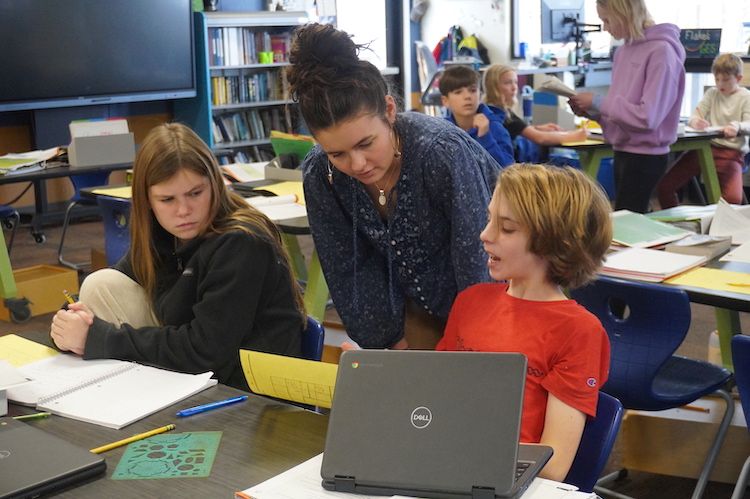
The program is open to all fourth-graders but has a rigorous application process. About 140 students typically apply for 52 fifth-grade openings, said sixth-grade teacher Scott Moorehead.
Selection is based on a student’s strong interest in the outdoors. Gray loves backpacking and hiking, so she applied in 2013 and was accepted.
Moorehead noted that Gray always took advantage of every opportunity presented to her, even serving as the chairperson of the school’s chicken business.
“We have a saying here, ‘Reach for the top rung of the ladder,’” (meaning) do your absolute best work,” he said. “(Gray) was always that type of a kid.”
Teaching What She’s Passionate About
Goodwillie’s influence shaped Gray’s career path when she headed to college after graduating in 2021 from Forest Hills Northern High School. Wanting to work outdoors, she initially pursued environmental science. She later learned much of the work was lab-based, and decided the field was not a good fit.
Gray comes from a family of educators. Her grandparents were educators, and her mother, Kelly Gray, is a Spanish teacher at Godwin Heights High School.
“I kind of connected the dots,” she said. “I was like, ‘Wait a second; I could be a teacher, and maybe even teach kids about the outdoors, something I’m super passionate about.”
Another reason for her career choice: “I wanted to have the same impact that my teachers, Scott (Moorehead) and Beth (Dondit), had on me here.”
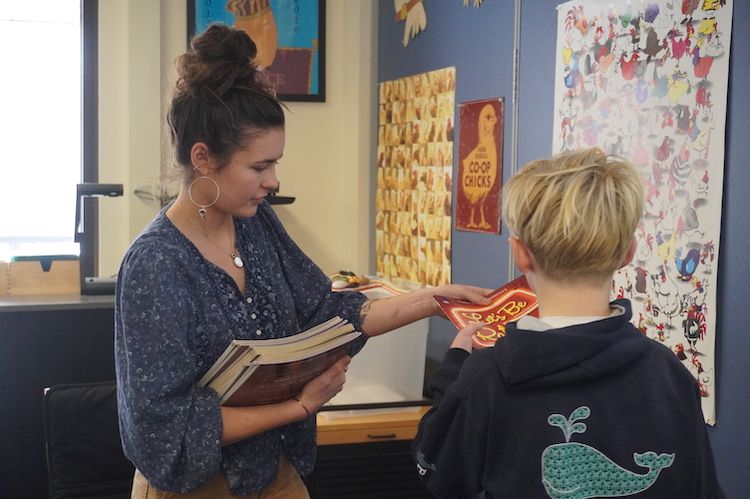
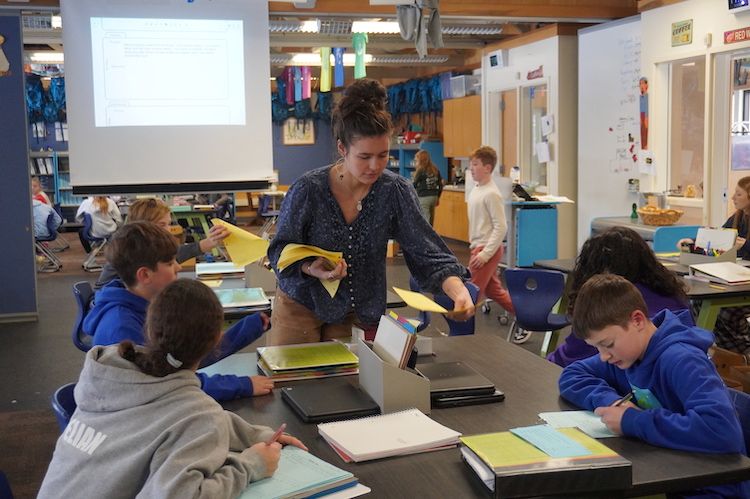
Moorehead said it is uncommon for Goodwillie to host a teacher intern because of the responsibility involved and the program’s unique structure, which can present a learning curve for those unfamiliar with an environmental school.
“I’ve never had a student teacher before, but when Isabelle reached out, I didn’t hesitate to say yes, because I knew her as a sixth-grader here and what an outstanding kid she was,” he said.
Gray started at the beginning of the school year and took over teaching responsibilities by mid-October. The internship lasted until winter break.
“She went from being a student teacher to just being a part of the team at some point,” Moorehead said. “I couldn’t put my finger exactly on when that was, but it was just like all of a sudden it’s just ‘Miss Gray.’”
He said during Gray’s internship, “The kids absolutely adore her. The relationships that she’s formed with them are so great.”
Teaching Takes a Lot of Planning
Returning as a student teacher was definitely different, Gray said, and she used the popular school chicken business as an example.
Students are assigned to run the business, splitting into committees on the care of the chickens and egg sales.
“I feel like, as a kid, you get the chickens and it’s so much fun,” Gray said. “You get to do chores and do all this stuff.”
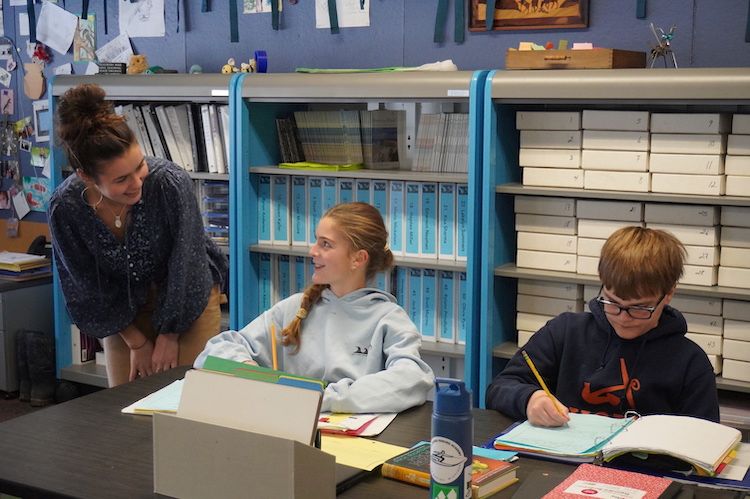
But as a student teacher, Gray got to see the other side: all the planning her teacher and then mentor, Moorehead had to do.
“The kids go into their chicken business committees and they all have a list of everything they have to do,” Gray explained. “(Moorehead) has to give the kids spreadsheets about all the things they are going to have to do, and then the leader of the committee has to then instruct the kids. It’s a lot of layers, and that’s a lot of planning for (Moorehead) that I just hadn’t even thought about when I was kid.”
Through the internship, Gray said she discovered it takes a lot of planning to make sure students understand the information and are doing their best.
For example, when teaching a lesson on ethnobotany — the study of how people interact with and use plants — “I took over math, which was fun because I love the subject, but teaching it is completely different. It makes sense in my head, but figuring out how to explain it to the kids was a challenge.
“I’m glad I did it, though, because now I have a better idea of how to teach math, a topic I think many students struggle with.”
Gray graduated from Northern Michigan University in December with a general education teaching for K-8 degree with a minor in integrated science. For the winter, she plans to stay in the Marquette area, where she has family and friends.
This summer, she plans to start looking for an elementary teaching position. Because there are few environmental schools in the state like Goodwillie, Gray said she recognizes she will likely need to take a general education position, which she hopes is upper elementary such as fifth or sixth grade.
“So the goal is to work up to becoming a teacher at an environmental school,” she said — perhaps even Goodwillie.
Read more from Forest Hills:
• Invasion of the artistic kind
• Paddling, early settler style


