


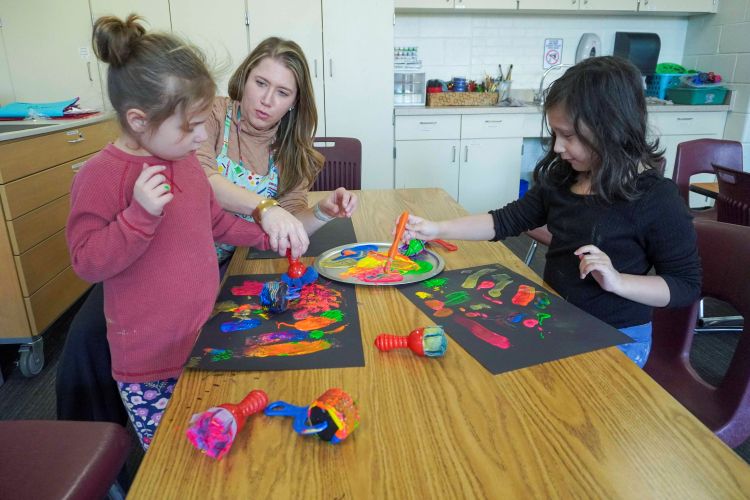
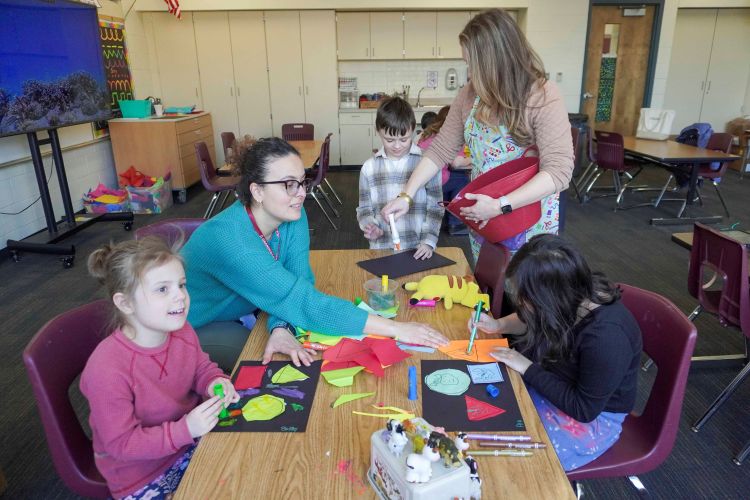
Grandville — At one table in the art room at East Elementary, first-graders Ara and Blakely are having a blast painting their colorful creations, using special brushes to create patterns on black construction paper.
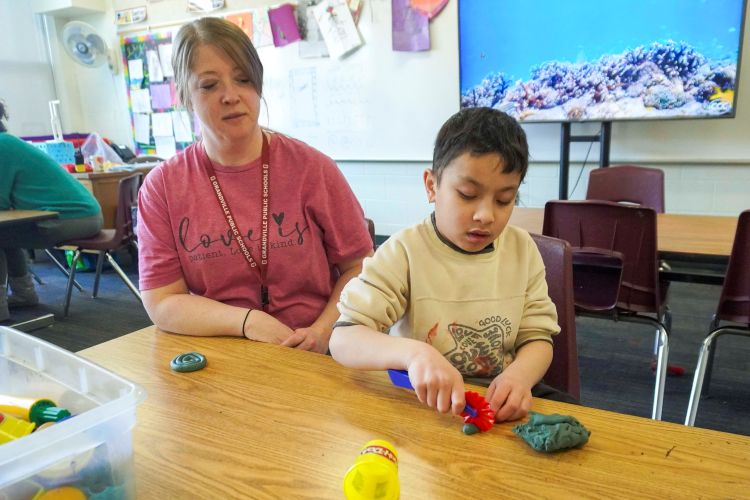
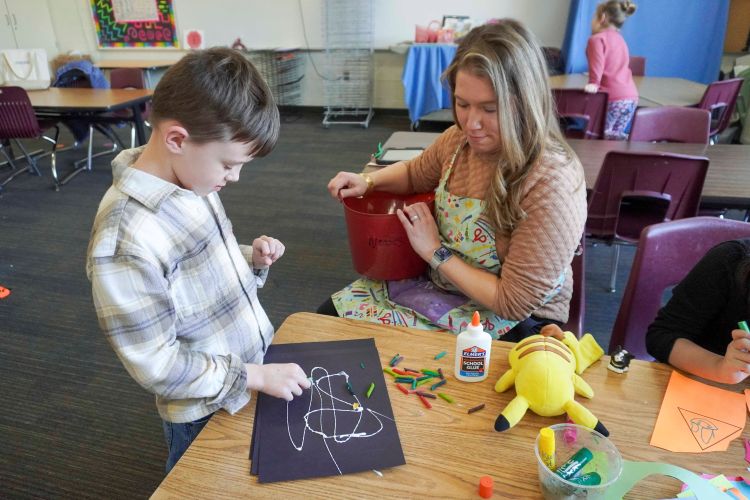
At another table, second-grader Alvin and paraprofessional Kerri VanHouten are busy creating shapes out of Play-Doh; Alvin uses a roller to cut out pieces of the soft clay and slowly builds his masterpiece.
And at yet another table, second-grader Dino has his hands deep in a bucket of colorful noodles, ready to glue them onto paper in a swirly shape.
“I think that if somebody was to just observe (my classroom), they’d be like, ‘Wow, there’s a lot going on,’” said art teacher Sarah Lawton. “But it’s controlled chaos. And it’s because there’s that much excitement; it’s exciting that they can express themselves in their art.”
Lawton teaches ASD (autism spectrum disorder) art classes for grades K-2 at East Elementary and grades 3-4 at Central Elementary. Last year, she received a grant from the Grandville Education Foundation to purchase adaptive art tools specifically designed to support that population of students.
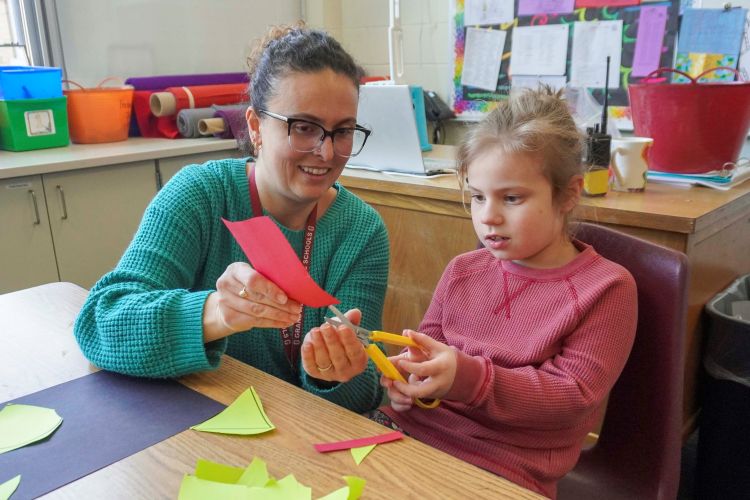
“The way that ASD students deal with art materials is different; a lot have trouble with their fine motor skills, so I wanted to make sure we had materials that could help them improve those skills in a way that works for them,” Lawton explained.
“A lot of (the tools) have handles that are easier to hold, or other ways to make it easier for students to create art more independently. We want them to create their own art, to do it for themselves, to build that confidence.”
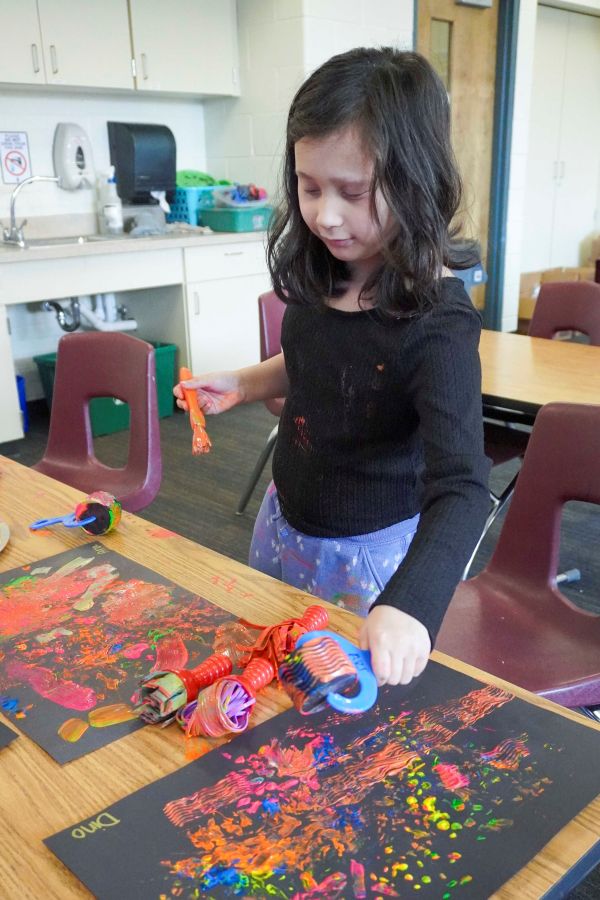
Those new tools include items like paint brushes with thicker handles to be easier to grasp, textured rollers to be able to dab and roll paint in different ways, pattern and rolling tools for working with clay, and adaptive scissors with a grip that gives extra assistance while cutting paper.
In a typical 40-minute ASD art class, Lawton has several stations set up around the room, so that students and parapros can tackle new creative projects and use new tools instead of tiring or growing bored.
‘This is a different way of communicating, and I think it’s important that they have that.’
— elementary art teacher Sarah Lawton
Art as Expression
Lawton said she purposely purchased items that would last for several years, so that students could get used to using them while continuing to build their fine motor skills and work on other goals that may be in their IEP (Individualized Education Program). Over the past year of use, she said she’s seen student confidence take root as many grow more accustomed to using their hands in new and creative ways.
“Art is really important as a way to express yourself, and a lot of these students are non-vocal and aren’t necessarily able to verbalize how they feel,” Lawton said. “This is a different way of communicating, and I think it’s important that they have that.”
Lawton relayed the story of one student who used to be reluctant to come to art class. Since introducing tools that better fit his abilities, she said, it’s been a night-and-day difference.
“Now he knocks on my door all the time — he wants to come in every class because he enjoys it so much,” she said. “To see him grow — to go from being not really sure, to ‘I want to be here all the time,’ that’s really rewarding.”
East Elementary Principal Anne Waldie said she’s also seen a difference when it comes to specific goals a student may have in their IEP, such as grip strength. Those are skills students work on often in the classroom, but adaptive art tools offer additional practice in a way that gripping a regular pencil might not, she said.
“(Lawton) does a lot of things that’s related to those skills, but art is a more fun way to practice it, which leads to more things that they can do down the road,” Waldie said.
“To give our kids the same opportunities, no matter what ability or where they’re at — for them to be able to take home a piece of artwork that they made — I just appreciate that work (Lawton) does to make it happen, and think it’s so great.”
Read more from Grandville:
• Fourth-graders lend support to grad tackling Iditarod adventure
• Ensuring smooth reunifications after emergency events


