


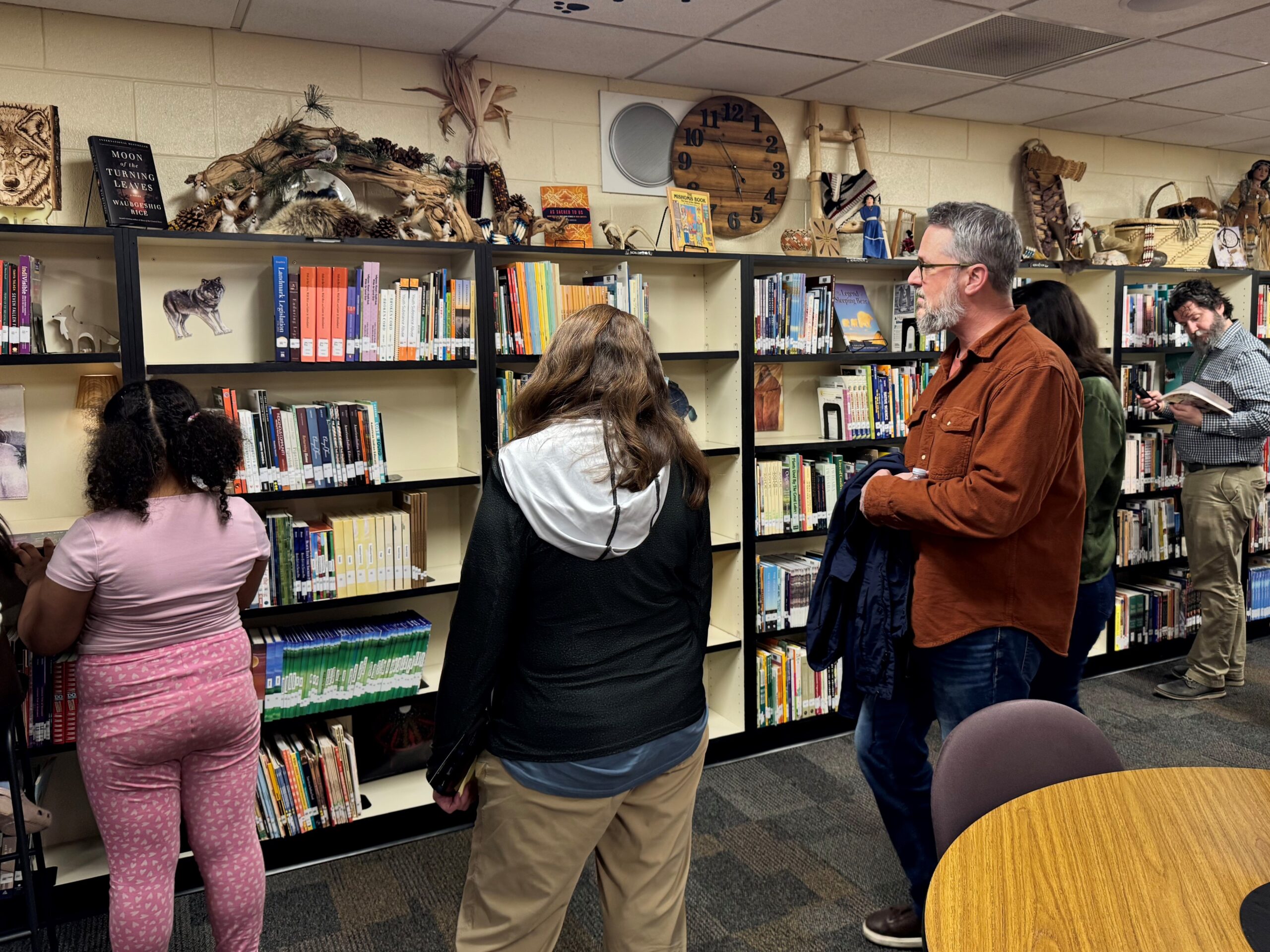
Grand Rapids — It was a milestone moment for Grand Rapids Public Schools when the Native American Education Program opened up its brand-new, centralized resource library, wrapping up a project that’s been a decade in the making.
The NAEP is a federally funded program that offers academic support, mentorship and cultural opportunities to the district’s Native American students. At GRPS, the program serves upwards of 200 students from 29 different tribes.
“Today we gather to honor history and to make history,” Superintendent Leadriane Roby said to the crowd of students, educators and community supporters.
‘The ripple effect of this resource will be powerful.’
— NAEP Program Coordinator Amy Westcott
For years, NAEP staff have been working to consolidate their vast and ever-growing collection of books, articles, artwork and other resources into one central location. Now, that work has paid off, and the NAEP Library is open for business.
Located in the NAEP’s main hub at 850 Chatham St. NW in Grand Rapids, the library houses thousands of books in 16 languages, with texts exploring the stories of Native American tribes throughout the country.
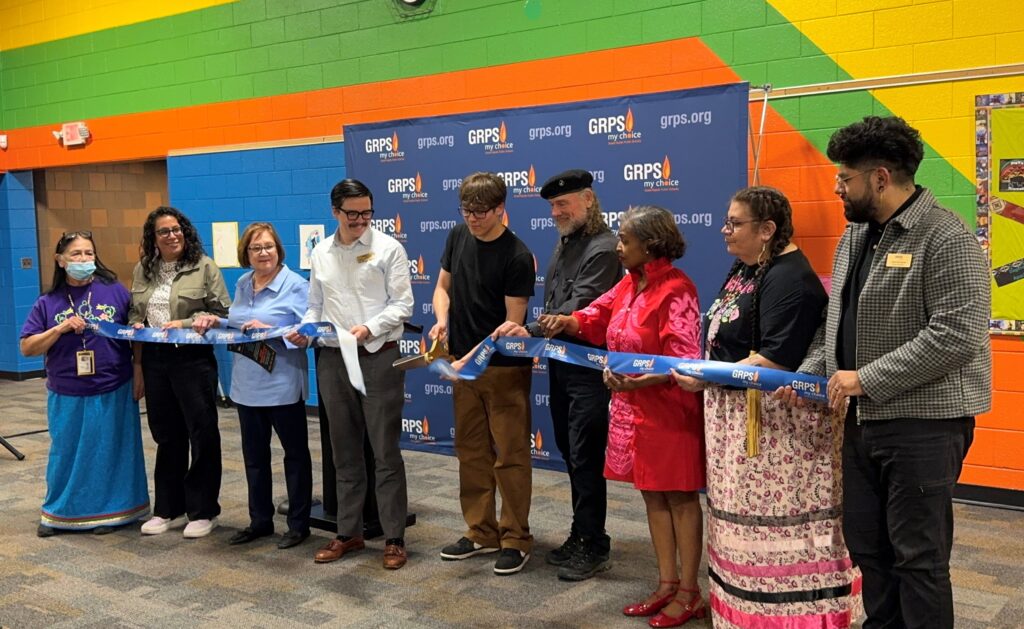
During a ribbon-cutting ceremony and open house on March 31, around 50 people came out to commemorate the unveiling of the library, which will be a resource for students and teachers district-wide.
Roby said she’s “incredibly proud” of the work of the NAEP, noting that the program is the only one of its kind in West Michigan, and that it “stands (as) a powerful example of what it means to value and uplift every scholar that we serve.”
The opening of the NAEP library “reflects a deep commitment to ensuring that our Native American scholars see themselves reflected in the stories they read, and the history they learn,” Roby said.
“This is a place where history is preserved, and where young people can discover who they are, as well as who they can become,” she continued. “It serves as a bridge, connecting scholars to their heritage, connecting families to our schools, and connecting our entire community to the rich history and ongoing contributions of the Native people.”
‘A commitment to belonging’
GRPS Board President José Rodriguez said the opening of the library is emblematic of a move toward acknowledging, embracing and honoring people who have, historically, been cast aside.
“Across our country, stories of indigenous people, whose land we inhabit, have often been told incompletely, inaccurately or not at all, and today we are changing the narrative,” Rodriguez said. “This space creates an opportunity for all of our scholars to learn from voices that they don’t often hear — voices that are authentic and diverse.
“This library is a commitment to belonging. When scholars walk into this library, they will see reflections of themselves, their families and their communities.”
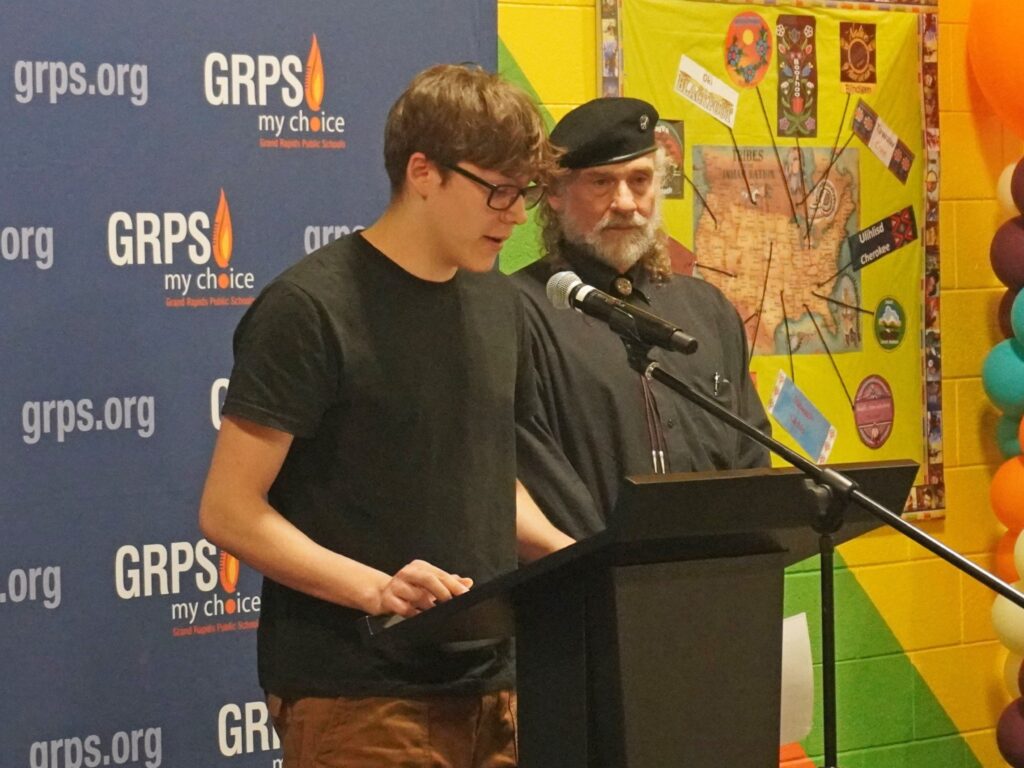
Willem Odykirk Garcia, a City High Middle School junior of Apache descent, spoke about the impact the NAEP has had on him.
“The Native American Education Program has helped me stay on track with school and continue working toward my goals,” Willem said. “Through the program, I’ve broadened my cultural awareness and learned more about Native traditions and practices. These experiences help me better understand my identity and appreciate the strength and history of our communities.”
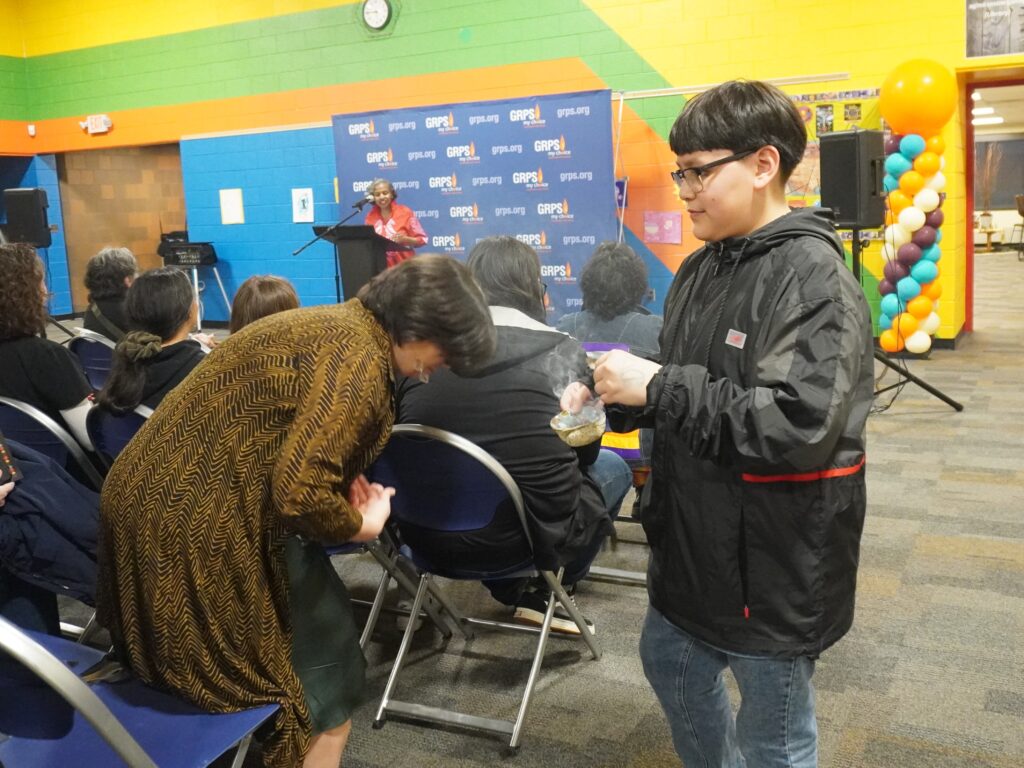
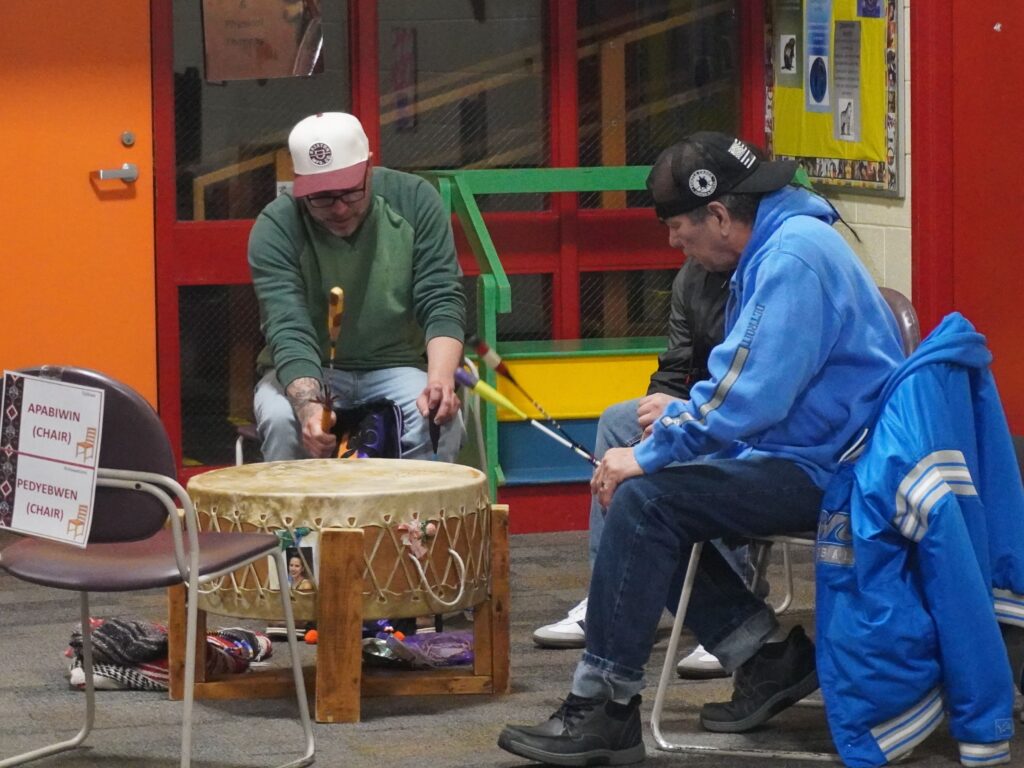
In addition to the various speakers the celebration also featured a drum performance by NAEP’s Circle of Life Singers youth drumming program, and a smudging ceremony led by Southwest Elementary sixth-grader Moises Juan.
Expanding Awareness
Amy Westcott, the NAEP program coordinator, told SNN that the library will broaden visibility and awareness of tribes beyond the 12 that are federally recognized, allowing more Native American students to connect their own background to what they learn at school.
“Our kids would come to the after-school program, and they would say, ‘How come I don’t see my tribe in here?’ Well, you know what, they’re not in here. We see the 12 federally recognized tribes … but we didn’t see Apache, we didn’t see Cree,” Westcott said, noting that those tribes and many others are represented in the collection.
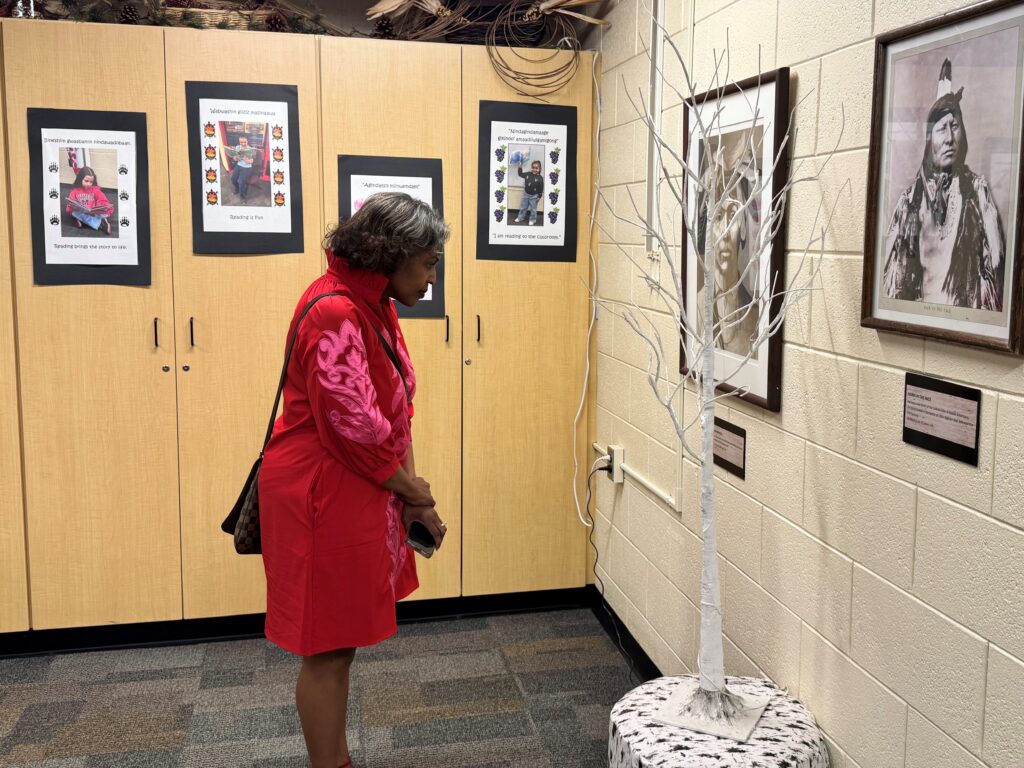
The NAEP Library features around 4,000 books, with more arriving each day.
“It’s not just the number that makes this space extraordinary — it’s the representation and the authenticity,” Westcott said while addressing the crowd. “This collection highlights the histories of tribes from across this country, including many that are often overlooked in textbooks.”
Students and teachers will be able to access and check out books in the collection, Westcott said, which will expand awareness throughout the district.
“The ripple effect of this resource will be powerful,” Westcott said.
Read more from Grand Rapids:
• ‘Every one of them is unique’: Paper butterflies complete migration
• Reading challenge leads to lessons in art, geography & more


