


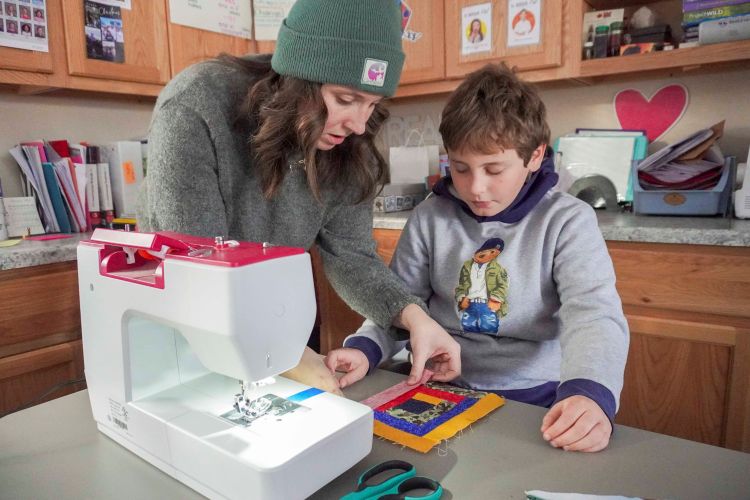
Northview — When it comes to quilting tips and tricks, fourth-grader Sammy Herrick already has the biggest rule memorized.
“You always have to measure twice and then cut once, because you don’t want to get the wrong measurement,” he said. “If it’s too big, that’s OK, because you can just cut a little off. But if it’s too small, you’re gonna have to redo it.”
But Sammy said that’s not the most important thing to come from his class quilting project. Along with sewing techniques, he’s also learned a key part of American history.
“Definitely the most important thing I learned is how unfairly they treated slaves,” he said. “I just think that it’s really unfair that people with darker skin weren’t treated as good as people with lighter skin. I was really glad that the Underground Railroad helped with that.”
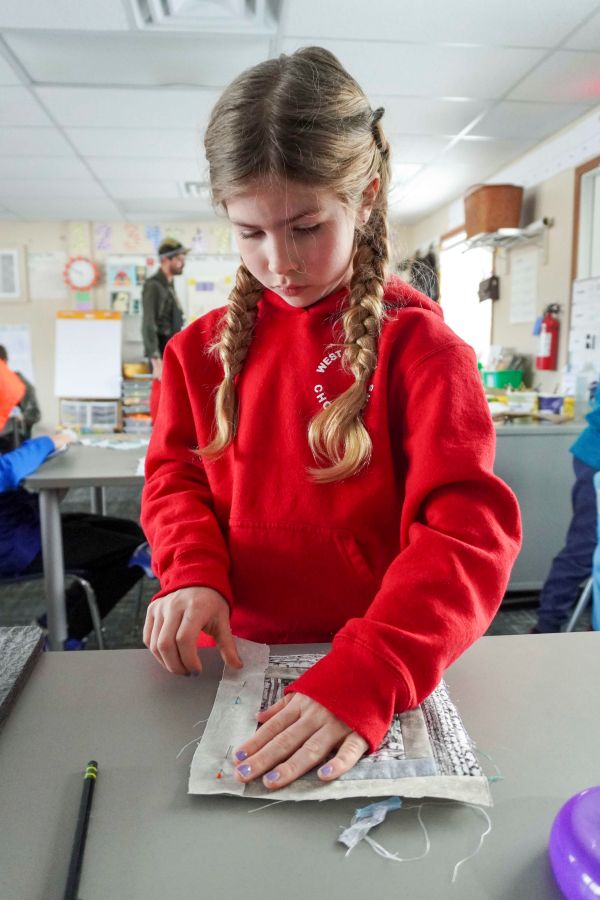
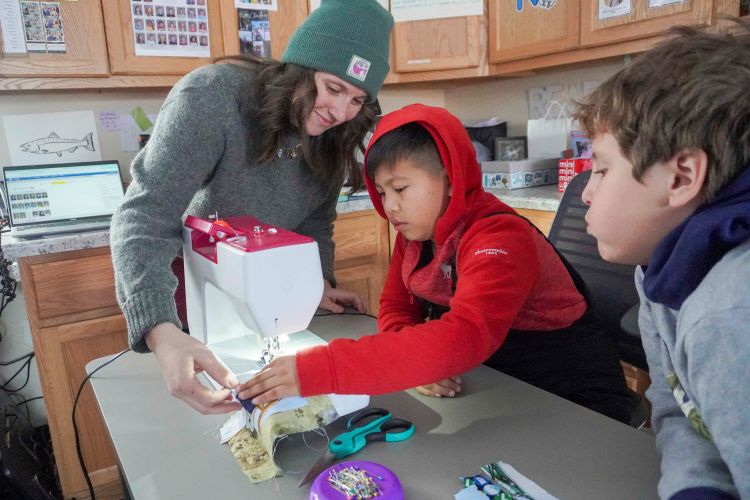
The third- and fourth-graders in Sarah McCormack’s Field School class at West Oakview Elementary recently created and pieced together a class quilt based on their study of the Underground Railroad and its Michigan ties. The state played a key role in the 19th-century network that helped enslaved people escape to free states, due to its proximity to the Great Lakes.
‘Kids need to learn how to work with their hands more — it’s so good for their attention spans.’
— teacher Sarah McCormack
As they read about the secret network, McCormack said, her students took particular interest in the way quilts were used to communicate. Abolitionists would use quilt-block patterns and specific colors of fabric to send freedom-seekers in the right direction or indicate safe houses along the route.
“These quilts that were seemingly just casually tossed on a fence post would be like a map to freedom,” said McCormack, who enjoys sewing as a hobby and has also taught her students how to embroider. “The kids have really loved our other sewing projects, so we decided to try and make a quilt based on the numerous books we saw with pictures of how the quilts were used to communicate.”
They also found inspiration from visiting the Grand Rapids Public Museum, where they got to see an authentic “log cabin” quilt from the late 1800s. According to history books, the log cabin pattern typically has a red square in the center, symbolizing “hearth and home.” Along the Underground Railroad, though, quilters changed the center square to a blue fabric to indicate a safe house.
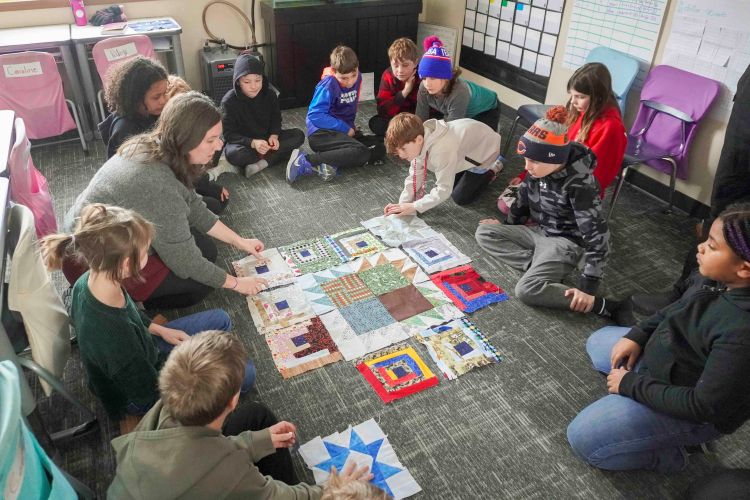
Log Cabins & North Stars
For his own quilt block, Sammy also chose to sew the log cabin pattern, making sure he put blue fabric in the center.
“I remembered what it meant, so I wanted to choose that one, and it also just looked the coolest,” he said. “It wasn’t easy, but I really like sewing. It’s just peaceful and satisfying when you get it done.”
Fellow fourth-grader Cooper Simon chose to make the “North Star” pattern for his quilt block. He said the hardest part of the project was the math required to measure the fabric before cutting.
As for the pattern’s significance along the Underground Railroad, “it basically means, just follow the North Star to get north where there’s safety over slavery,” Cooper said. “I think it’s just crazy that people would use this because they were so desperate that they couldn’t even talk.”
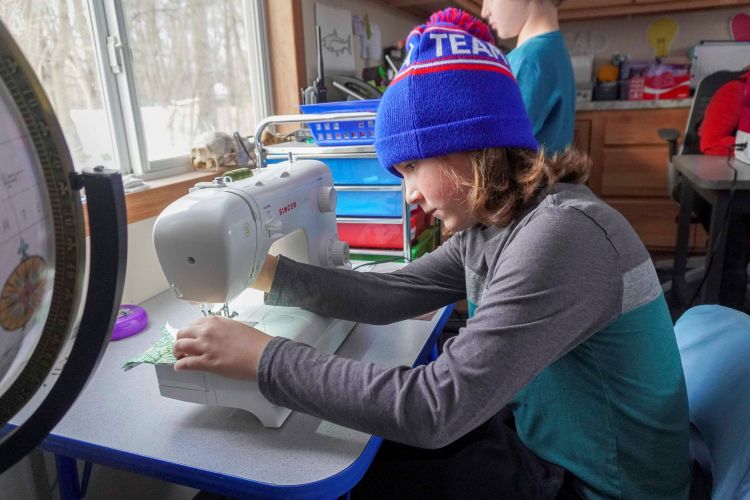
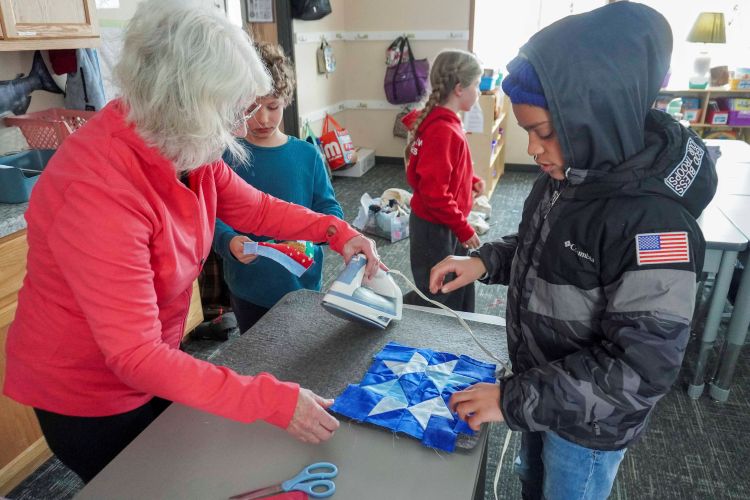
McCormack said the quilt project was a good way to help students keep focused on a task while also bringing history to life. She received an outpouring of donated fabric and sewing machines from the West Oakview community to make it happen, and several “class grandmas” volunteered their time to help teach the techniques.
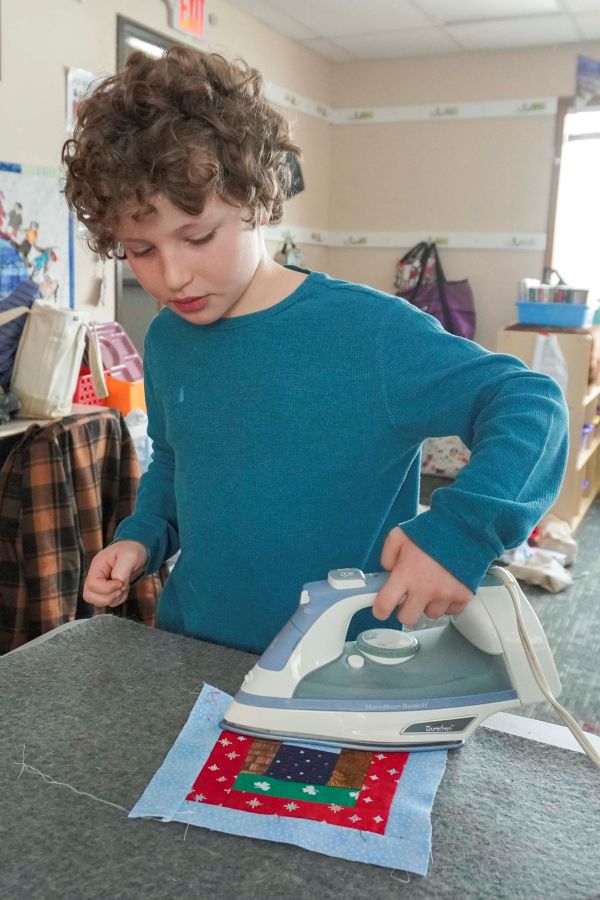
“(Quilting) is a skill that is not passed down like it used to be … but I think kids need to learn how to work with their hands more — it’s so good for their attention spans,” she said. “I also think kids like doing adult things; they feel grown up and trusted when they get to use the machine. … No matter how their squares look, they’ve been so insanely proud of the finished product.”
As Sammy reflected on the project, he tried to imagine what life might have been like in the mid-1800s as the Underground Railroad was in use, and pictured his own family making a log cabin quilt to hang outside.
“If I was alive in the time that slavery was still a thing here … if I was somewhere near the Underground Railroad path, then we would probably be somewhere safe for slaves to hide,” he said. “I was really happy that they were able to help so many people that way.”
Read more from Northview:
• Honing their approach to new phonics lessons
• Learning garden’s growth fueled by veggies, students, ‘lots of love’


