


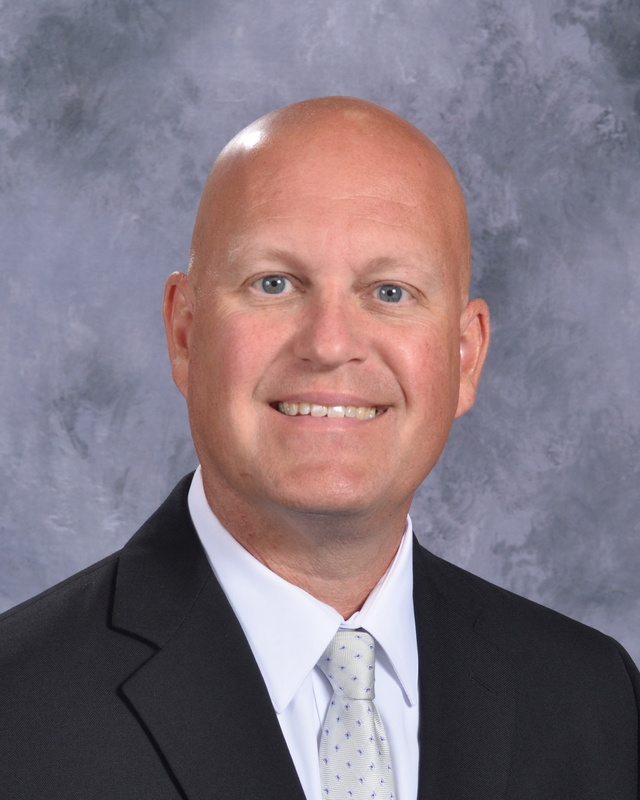
This guest commentary was written by Craig Hoekstra, superintendent of Wyoming Public Schools; Bo Torres, community advocate for the Latino Community Coalition, Grand Rapids; and Jeff Cobb, director of government relations for EdTrust-Midwest. It was originally published by Bridge Michigan, a nonprofit and nonpartisan news organization. To get regular coverage from Bridge Michigan, sign up for a free Bridge Michigan newsletter here.
With Michigan’s Legislature deadlocked in partisan budget negotiations, local districts across the state began the school year with troubling uncertainty about the resources and funding they will have in the coming year to support students.
Let’s be clear about what that means: without a School Aid Budget, school districts from West Michigan to the Upper Peninsula had to start the school year without knowing whether they will have the funding necessary to pay teacher salaries, pay for after-school programs, pay for interventions for students who are falling behind, fund school lunches for students who can’t afford them, pay for literacy coaches to address Michigan’s early reading crisis and so much more.

This uncertainty comes at a time when all of Michigan’s students, but especially the most vulnerable students, require reliable resources to keep from falling further behind. The Legislature must make passing the School Aid Budget their No. 1 priority. But as important as passing the budget, the budget must address the needs of our most vulnerable students by investing in a fairer weighted funding formula.
Here is why: Not all students have the same needs, and not all districts serve the same students. Yet for many years, Michigan’s School Aid Budget has not taken these differences into account. And while policymakers have made great strides in the past two years to level the playing field, Michigan still has one of the highest foundation allowances in the country but is among the bottom 10 in terms of funding students from low-income backgrounds and English Learners. To truly improve Michigan’s education system, it will require much more targeted investment in these students.
The current funding system is failing too many students. For example, only 25% of third-grade students from low-income backgrounds were proficient in reading, according to the most recent M-STEP results. In seventh-grade math, only 18% of students from low-income backgrounds were proficient. English Learners fare even worse in both reading and math. According to the 2025 M-STEP, only 23% of third-grade English Learners were proficient in reading, and only 12% of seventh-grade English Learners were proficient in math. They also lag their peers in four-year graduation rates. These outcomes are not acceptable.

The good news is that it does not have to be that way. A recent California study showed that consistent, targeted investment in students with the greatest needs can lead to improved student achievement. Increased investment improved students’ math and reading achievement, reduced the probability of grade repetition, increased the likelihood of high school graduation and college readiness, and decreased suspensions and expulsions.
This is why we urge the Legislature to pass a budget that can have real impact on students with the greatest needs, starting with increasing funding for the Opportunity Index. This new funding formula, created in 2023, provides needed resources to improve the educational outcomes of students from low-income backgrounds and targets those dollars toward school districts with the highest concentrations of poverty. Funding the Opportunity Index is critical to addressing the opportunity and achievement gaps between these students and their wealthier peers.

We also urge the lawmakers to protect specific funding for English Learners. English Learners attend districts across the state, including in urban, rural and suburban areas. They are a growing population of over 100,000 students, and the vast majority of these students are U.S. born. For instance, Wyoming Public Schools district is proud to be home to many of these students. English Learners currently make up 27% of the student population, and this diversity is one of the district’s greatest strengths.
Unfortunately, the budget passed by the Michigan House of Representatives fails our students by completely eliminating dedicated funding for English Learners. This comes on top of the Trump administration’s efforts to slash needed funding and services for these students. In the face of this attack, it is more urgent than ever that state lawmakers stand up for English Learners and prioritize investing in these students to ensure they receive the services they need to succeed. Without adequate targeted funding, many districts will not have the capacity to provide the level of services that their students require.
Any budget proposal that does not include increased funding for the Opportunity Index and specific funding to meet the needs of English Learners will continue the status quo, which has led to poor student outcomes. Our students deserve better. We call on the Legislature to take a meaningful step toward improving the academic achievement of our most vulnerable students. This will require putting aside partisan differences and passing a timely budget that includes prioritizing and investing in students with the greatest needs.
Read more:
• Governor talks school meals, stalled budget during district visit
• State, federal funding mess complicates return to school


