


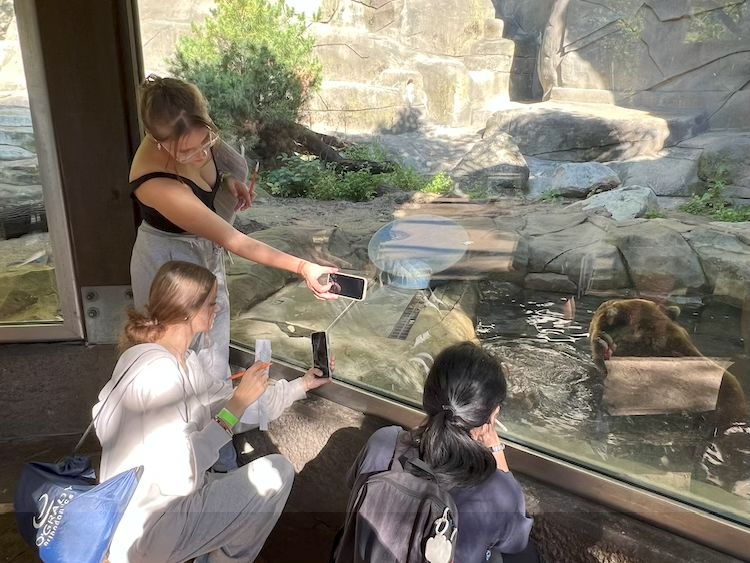
Forest Hills — Booboo, the Alaskan bear at John Ball Zoo, was giving freshman Claire Gorman plenty of material to write about.
Claire was one of about 650 students from Forest Hills’ three high schools — Northern, Central, and Eastern — who visited the zoo as part of their biology class. One of their assignments was to create an ethogram by observing an animal for 10 minutes and recording its behavior each minute.
“I didn’t know bears could be that active,” Claire said after completing her observation. “When I have been here before, they have been sleeping, but they move around a lot.”
Claire said she noticed that the zookeepers encourage activity by providing enrichments such as a cylinder toy, and placing food around the enclosure to encourage Booboo to use his natural instincts to hunt and forage.
At the golden eagle enclosure, Eastern freshman David Mouw was seeing an occasional head movement and feather cleaning.
“I never knew that a golden eagle is from North America, and how it lives in rocky areas,” David said as he read the enclosure signage.
‘“Hands-on experiences like this are so important; they allow students to … connect with the curriculum in a way that goes beyond the textbook.’
— Central biology teacher Kristy Butler
Expanding Learning Beyond the Classroom
Kristy Butler, a science teacher at Central High, said the opportunity to explore a local resource like the zoo adds meaningful, real-world context to student learning.
“Hands-on experiences like this are so important; they allow students to step outside the classroom, observe animals firsthand, and connect with the curriculum in a way that goes beyond the textbook,” Butler said.
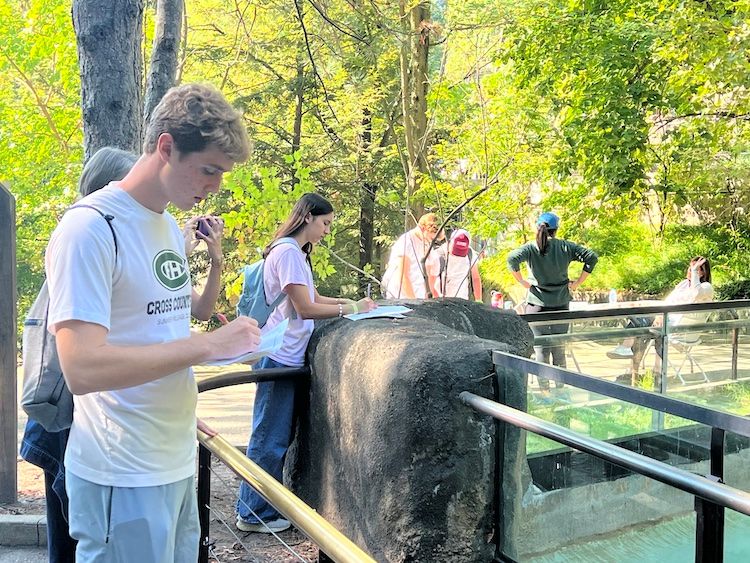
While Central High students have been participating in the zoo excursion for about the past 10 years, Butler said this is the first time students from all three high schools participated, which was made possible through the regional enhancement millage and John Ball Zoo and Grand Rapids Public Museum millage.
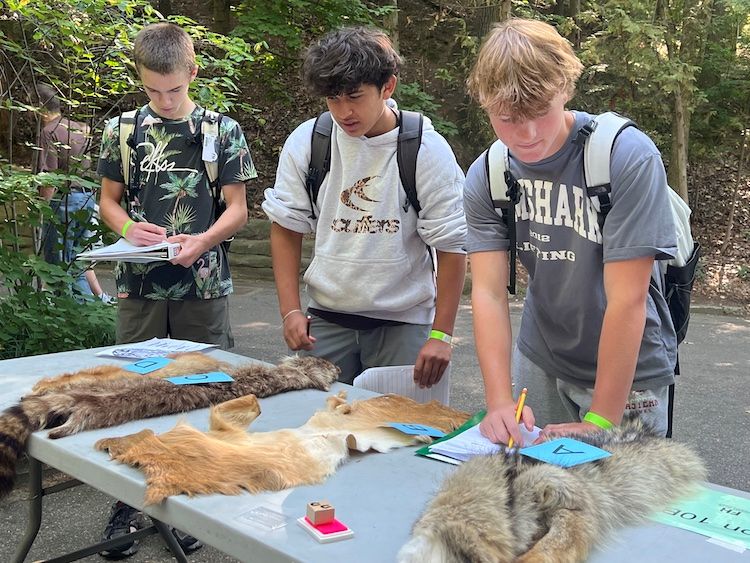
In addition to working on ethograms, students rotated through various stations where they examined four similar items and identified the one that was different, explaining the reason for their choice. They also participated in the zoo’s insect scavenger hunt, which is part of its current exhibit, “The Power of Pollinators.”
When it came to determining which of the four turtle shells were different, Central freshmen Tegan Forger and Owen Rowland agreed to disagree, with Tegan selecting one because it had spikey flakes, and Owen going with the largest.
“It’s kind of a cool opportunity,” Tegan said of being at the zoo. “We’ve gotten to see the otters eating, and it has been interesting to see how the animals interact with each other.”
Designing Their Own Enrichment Items
A group of Central High Advance Placement Biology students observed the enrichment items that zookeepers were placing in the habitats.
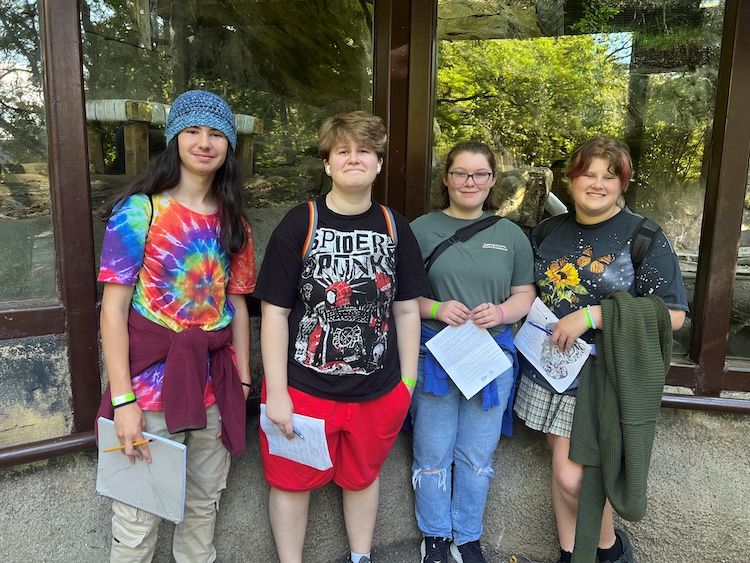
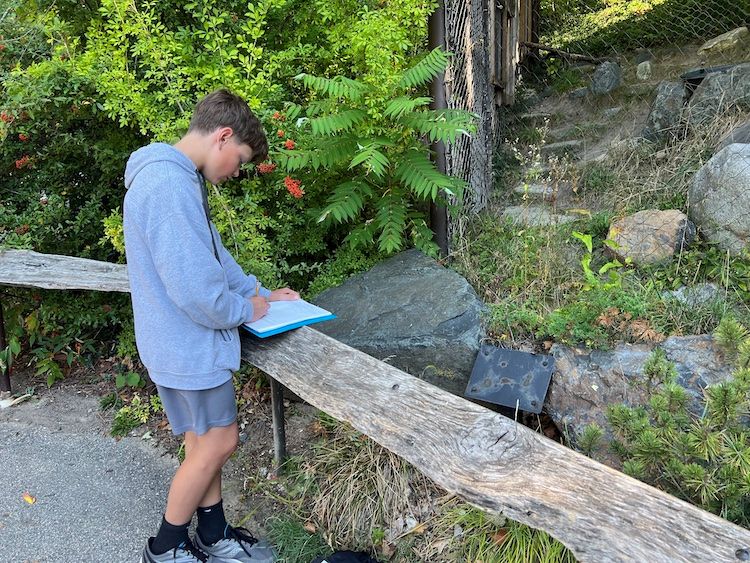
“I’m looking at what type of enrichment they use, and when they are placed in the enclosure,” said senior Jack Monterusso. “I am collecting this data so that I can design my own enrichment item for an animal.”
As Jack came up to the otter enclosure, he noticed one sitting with an object.
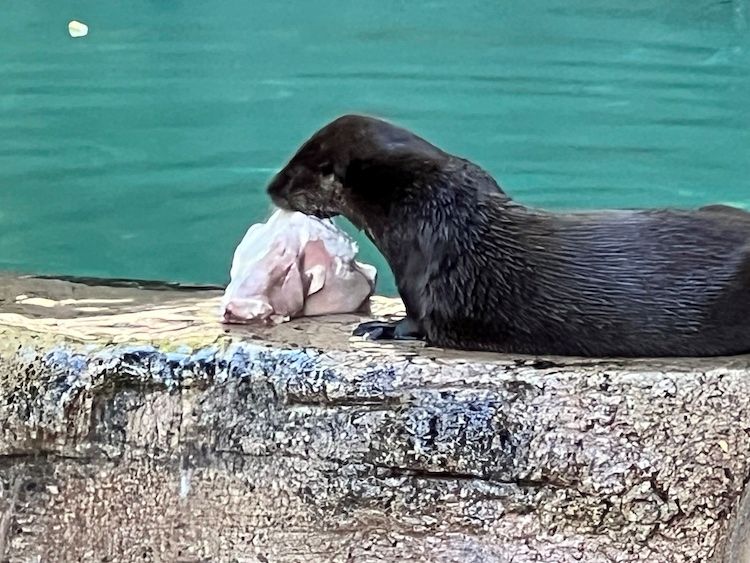
“Did you just put something in with the otters?” Jack asked the zookeeper, who responded yes, a horse knuckle bone.
“Sometimes the enrichment can be food,” Jack said. “In this case, the knuckle bone is providing an opportunity for the otter to work around the bone to find the food.”
Senior Maylee Ohlman, also in the Central AP Biology class, said it has been interesting to watch the animals and see what the zookeepers use to help them stay active and use their natural instincts.
As part of the assignment, Jack and his classmates will present their enrichment ideas to zoo officials later in the semester.
Read more from Forest Hills:
• His music career is on track, thanks to guitar hero
• From Freud to future: AP Psych class gets career-curious


