


Kelloggsville — When fourth-grader Jackie Escobargobar turned a golden, semi-transparent stone in her hand, she was certain of one thing: It wasn’t a fossil.
“It has no texture and it is not stone,” Jackie said.
Minutes later, she learned from a Van Andel Institute for Education instructor, Kim Harding, that the object was amber — hardened tree sap formed over millions of years that sometimes contains insects.
“So, it’s a fossil,” Harding said.
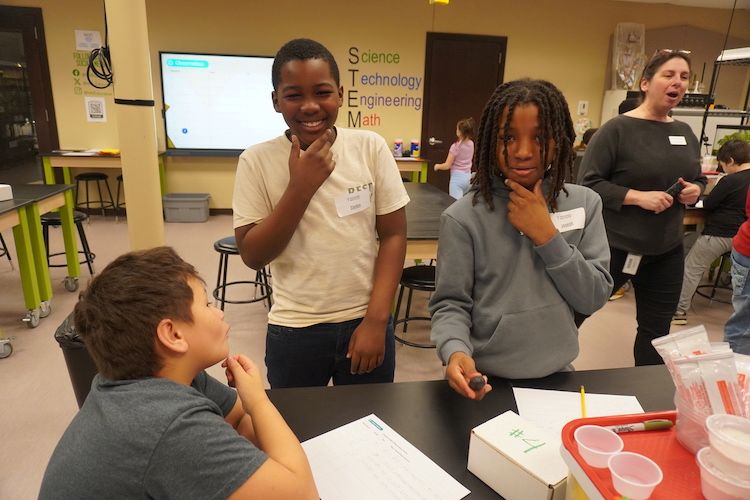
Central Kelloggsville fourth-graders recently visited the downtown Grand Rapids institute for its “Uncovering Our Past” classroom field trip program, where they explored how fossils form, are excavated and help scientists understand Earth’s history. Afterward, they toured a laboratory and met with one of the institute’s scientists.
“This falls in with our Earth science unit,” said Kelloggsville teacher Emily Ogg. “The hands-on investigation allows students to experience the mysteries of prehistoric life through a mini-fossil dig, enabling them to think and act like paleontologists.”
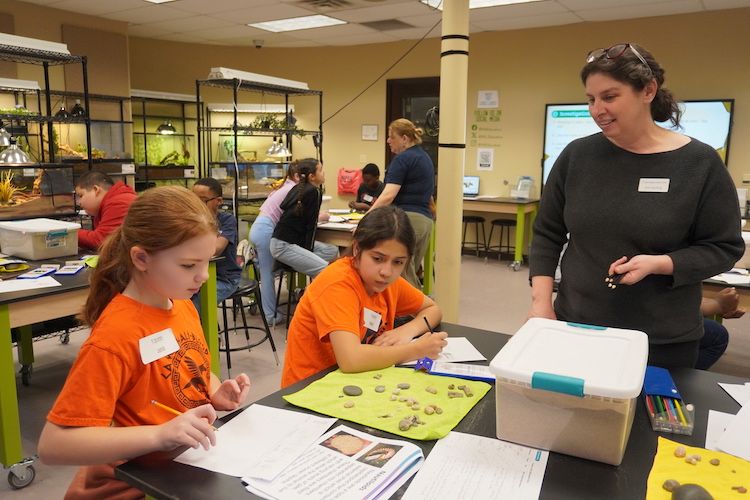
Students began by challenging what they thought they knew about fossils. At nine stations set up around the room, they examined various objects and determined whether each was a fossil.
“I know this is a fossil,” Joseph Honorable said, holding up a black rock and pointing to small pockmarks. “It’s got feet on it.”
Later, Joseph discovered the rock was actually a meteorite — a rare space rock — but not a fossil.
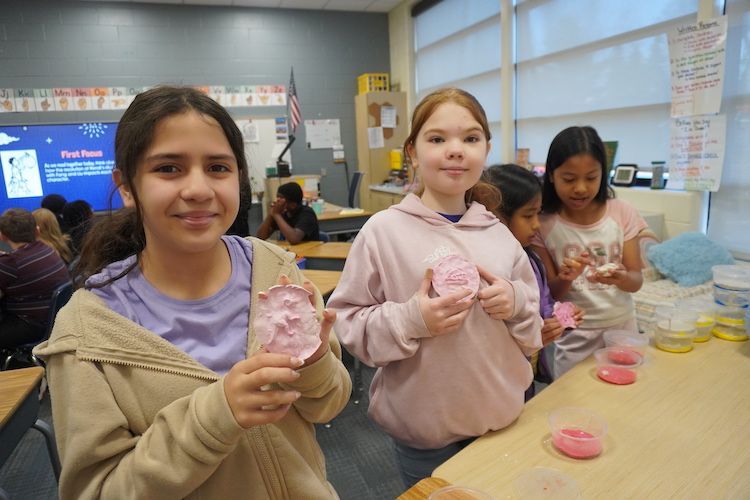
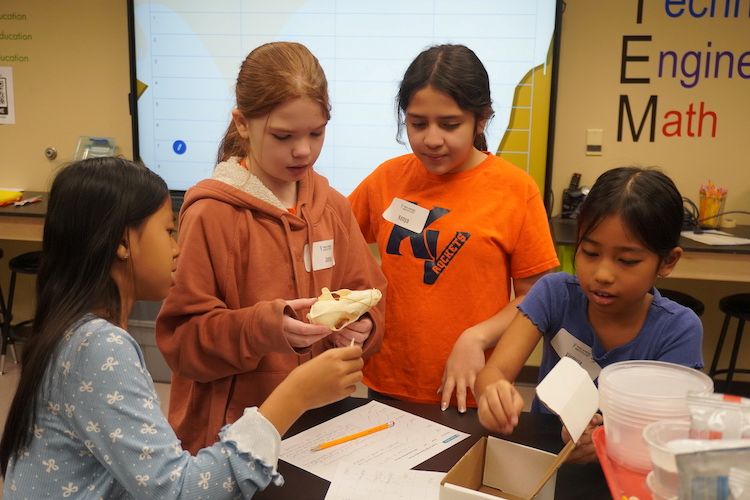
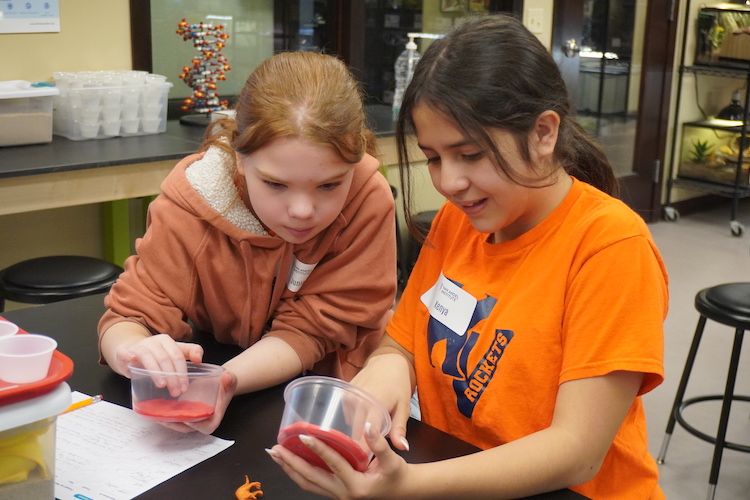
Next, students created fossil casts by pressing dinosaur shapes into clay and pouring plaster into the indentations. After the plaster had dried over several hours, they removed the casts to reveal their creations.
“This is cool,” Junia Sailer said the next day when the plaster was dry and could be removed. She ran her finger over a mold shaped like a dinosaur skull. “It’s pink,” she said, laughing, noting that it picked up the color of the clay.
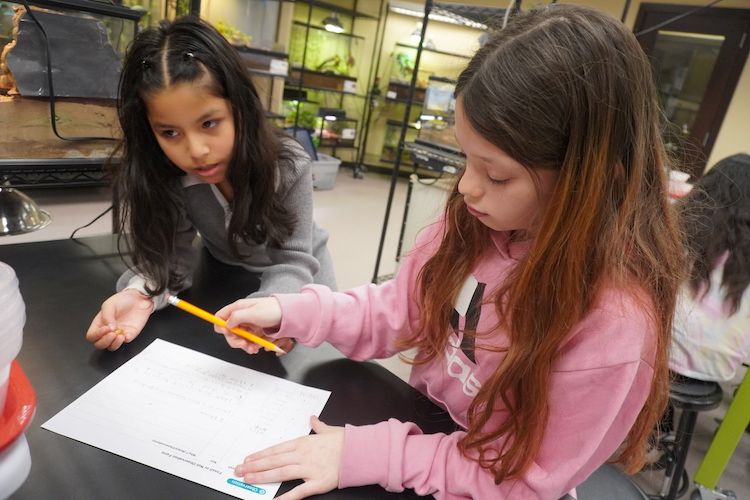
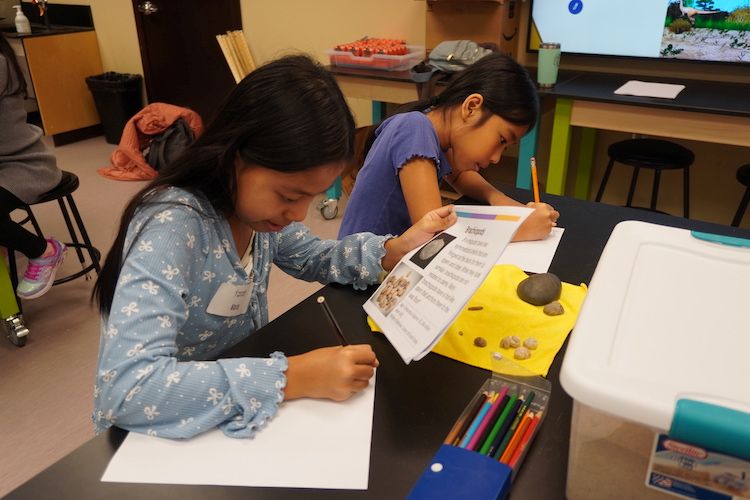
For their final activity, students conducted their own fossil dig. Each group searched through a container of sand to uncover hidden fossils. After about 10 minutes, they drew and identified their discoveries to determine where the fossils may have originated.
“They mostly came from the ocean, because one of the fossils is called sea squid,” Junia said.
In fact, the entire class reached the same conclusion — and Harding confirmed they were correct.
“If we had found only one fossil that was from the ocean, could we have assumed this area had been under water?” she asked, with the class responding “No.”
Through careful observation and discussion is how scientists piece together clues about Earth’s past, she said.
“You all have made some really good observations, thinking about what you are looking at and discussing with each other,” Harding told them.
Read more from Kelloggsville:
• Spelling out gratitude, one thank-you note at a time
• Kelloggsville Rocket Marching Band to represent Michigan in national parade


