


Education Everywhere — Looking to fill a few more weeks of summer vacation with activities that can inspire learning and get your student ready for school? The Van Andel Institute for Education has three home activities that ignite curiosity, creativity and critical thinking skills.
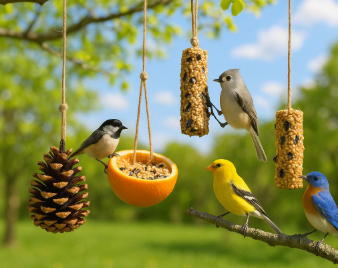
- Backyard Buffet: Feed the Birds, Fuel Curiosity! With some simple materials, you can build your own bird feeder and become a backyard bird scientist.
Begin by choosing a natural or recycled base for your feeder. This could be a pinecone, a toilet paper tube, half an orange with the fruit scooped out, or even a sturdy stick— anything that can hold birdseed and be hung outside. You’ll also need some string or yarn, a bird-friendly “glue” like peanut butter or vegetable shortening, to help the seed stick, and of course, birdseed. It’s also a good idea to have a plate or tray nearby to catch any mess during the process.
Spread your sticky substance over the surface of your base. You can use a spoon, butter knife, or just your fingers for this part. Once it’s well-coated, roll it in birdseed or fill it up, depending on your base. Cover it thoroughly so there’s plenty for the birds to snack on. Then, tie a piece of string or yarn around your feeder and hang it outside on a tree branch, balcony railing, or any other bird-friendly spot where you can watch.
And, then, watch the action! Scientists who study birds rely on close, careful observation to learn about bird behavior. Start a daily visitor log by checking your feeder each day. How many birds do you see? What species? What time do they usually show up? You can use a free app like Merlin Bird ID to help identify them. You can also try experimenting with the placement of your feeder. Do more birds visit when it’s in the shade? In the sun? Near water? You can also try offering different types of seeds or fruits to find out which ones your local birds prefer. With each observation, you’re not just feeding birds — you’re thinking like a scientist.
- Plantable Paper: Turn Old Scraps into New Life. This is a great way to talk about reducing waste and supporting the environment.
To begin this hands-on recycling and gardening activity, gather some used paper — anything from newspaper to scrap paper or tissue paper will work. Tear the paper into small pieces and soak them in water for at least an hour. This softens the fibers and makes them easier to break down.
Once the paper is well-soaked, place it in a blender with some fresh water until it forms a smooth, pulpy mixture. After blending, pour the pulp into a large bowl and gently stir in the wildflower or herb seeds of your choice. These seeds will become part of the new paper you’re creating—paper you can eventually plant!
Next, spread the seed-filled pulp evenly across a screen or fine mesh. This helps drain the excess water while shaping your paper. Use a rolling pin or a sponge to press down on the pulp, squeezing out as much moisture as possible. Then, set it aside to dry completely.
Once your seed paper is dry and firm, you can cut it into fun shapes — hearts, stars, circles — whatever you like. When you’re ready to plant, simply press the shapes into soil and water them. Over time, your recycled paper will break down, and the seeds will sprout into beautiful plants.
- Read It and Hear It: Bring Stories to Life with Sound. To turn storytime into a full sensory experience, all you need is your favorite read-aloud book and a few everyday household items. Think pots, pans, aluminum foil, straws, balloons, plastic bottles — anything that can be used to make sound effects. These simple tools can help transform your story into a dramatic performance filled with exciting sounds and surprises.
Pick a book you love – one with lots of action, animals, or thrilling moments. As you read through it, start imagining what kinds of sounds might go along with the story. Is there a creaky door opening in a haunted house? A roaring lion in the jungle? A gust of wind sweeping through a forest? Once you’ve got your sound moments in mind, bring them to life!
Get creative using your voice or the objects around you to generate those effects. You can also use the Novel Effect app to add interactive sound effects that respond as you read a book aloud!
For more ideas and classes and camps, visit the Van Andel Institute for Education website.


