


Grandville — When Joey Sabin was in Kelly Venhuizen’s first-grade class at Central Elementary School in the late 1990s, he remembers reading a book about sled dogs. Later, in fourth grade, he remembers a project on the Iditarod Trail Sled Dog Race, learning about the race’s history and following mushers and their dog teams through the course.
The details are fuzzy, Sabin admits, but they made an impact nonetheless.
“The book about sled dogs was really interesting … and (the Iditarod project) definitely got me inspired,” he said. “And as a kid, I was always outside on my rollerblades and skateboard with my pet dogs, having them pull me around, and my favorite movie was ‘Iron Will’ … Being a dog musher has been a dream of mine since I was a kid.”
Now, nearly 30 years later, Sabin has not only become a professional musher — he’s taking it one step further. This weekend, Sabin and 16 of his sled dogs will set out as a competitor in the 1,000-mile Iditarod race for the very first time.
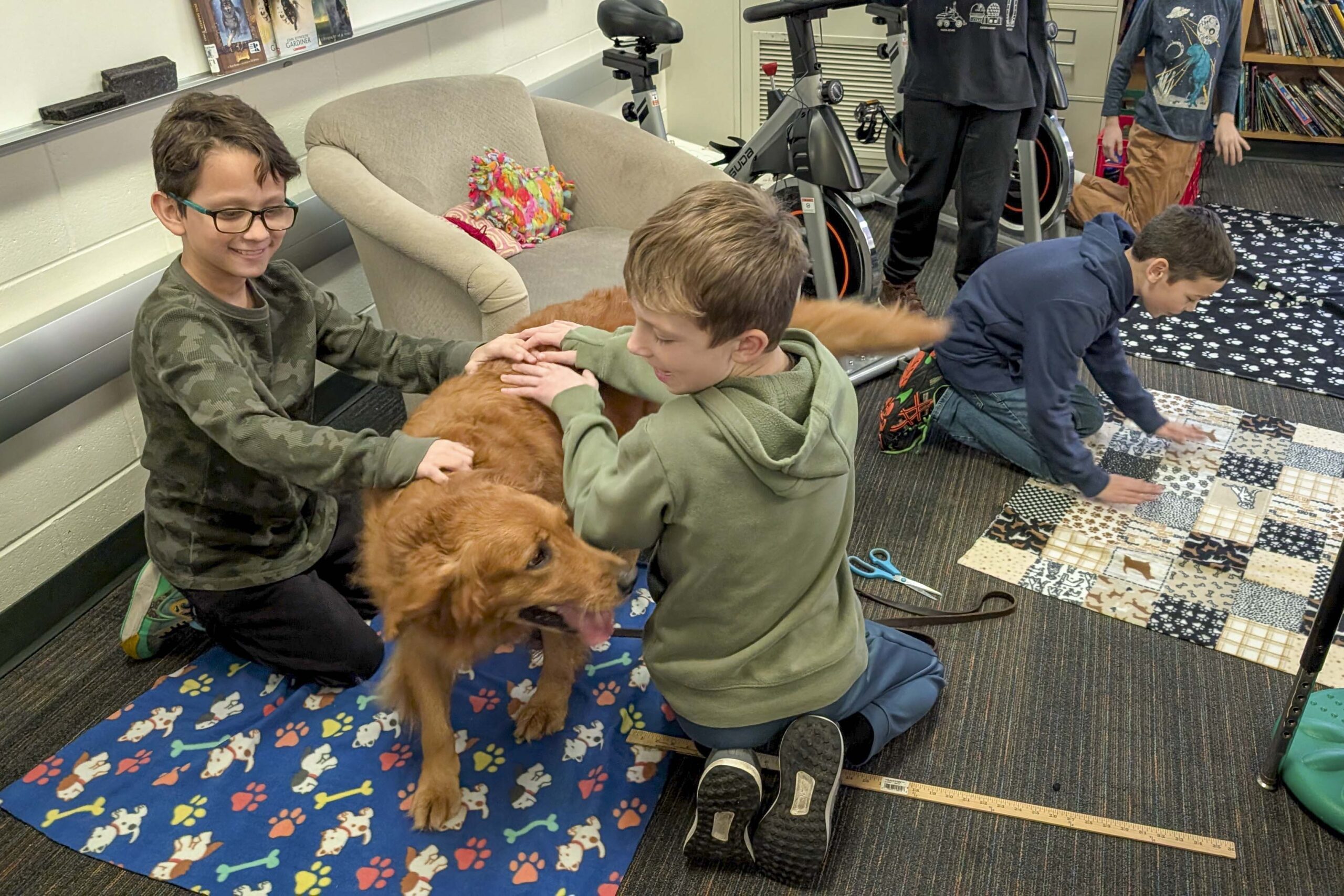
And, in a full-circle moment, he has reconnected with Venhuizen, whose students have been learning about Joey and the Iditarod, and will be cheering him on throughout the race.
“I was thrilled to hear from him,” said Venhuizen, who now teaches fourth grade at Central. “It was like, ‘You remember me?’ That was very humbling, to hear that somehow, back then, he had that spark of knowing what he wanted to do.
“And now, to bring in my class to help a former student — we have had so much fun learning about his dogs and doing what we can to support him.”
‘The dogs are ready’
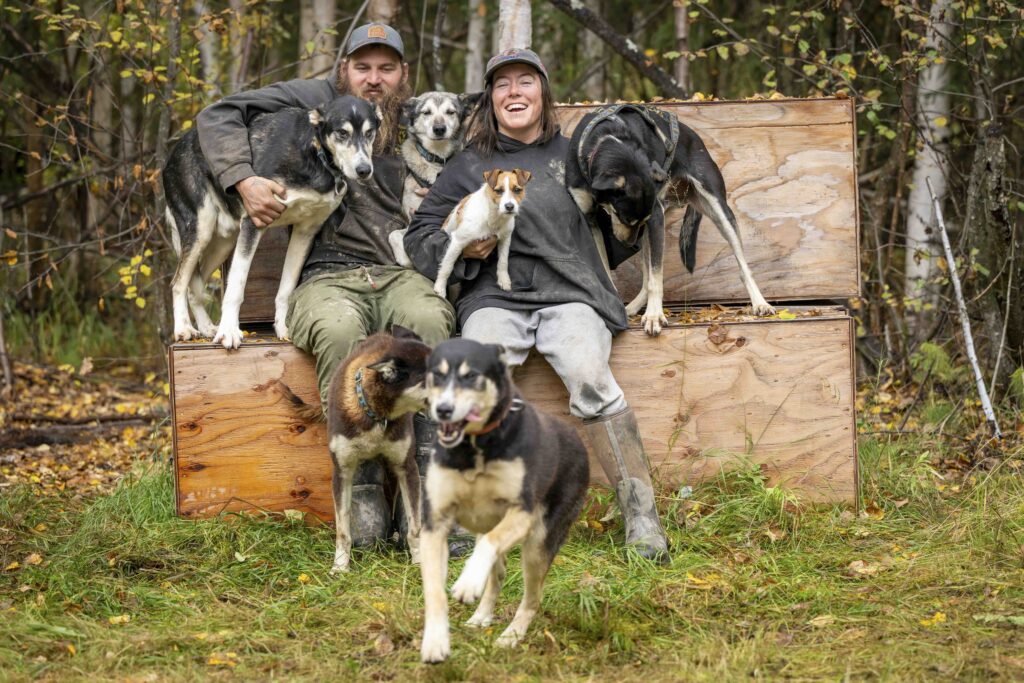
Sabin, a 2009 Grandville graduate, originally “took a break” from college to try mushing when he couldn’t decide on a major. As it turns out, mushing was his life’s calling and he hasn’t looked back. Five years ago, he started his kennel in Minnesota, and three years ago he moved the business to Alaska.
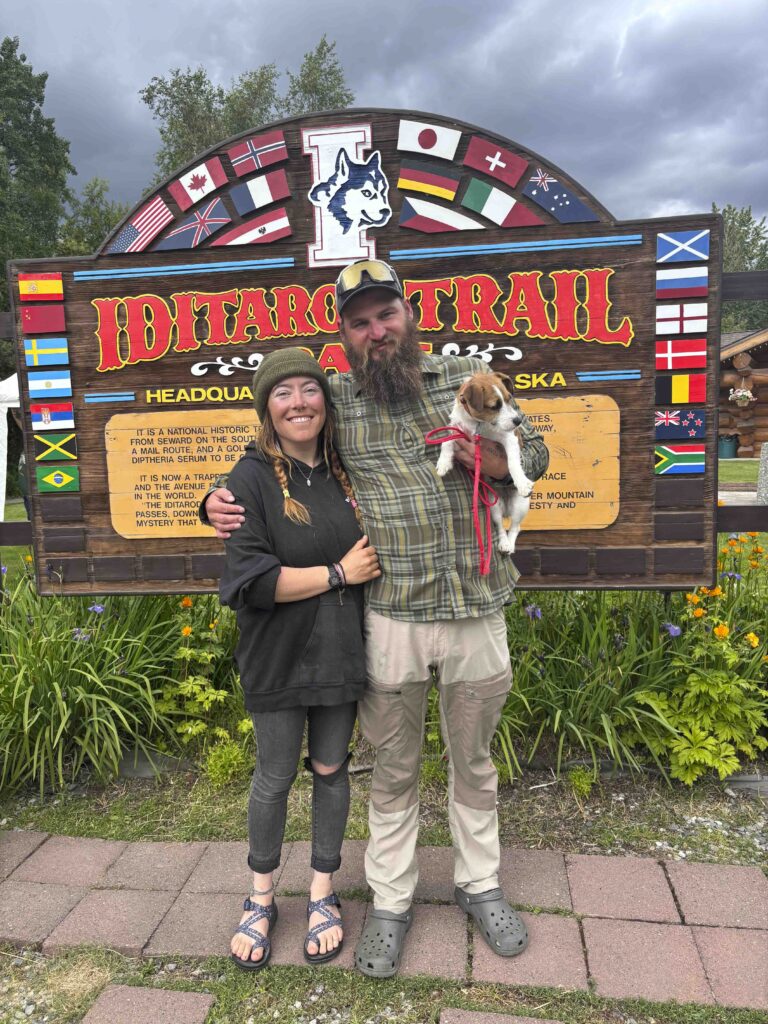
Now, he and his partner, Willoe Maynard, run Voyageur Outdoor Adventures, a sled dog kennel based in Fairbanks, Alaska, and home to 31 Alaskan Huskies and a Jack Russell terrier.
“I found my passion,” said Sabin, and racing the Iditarod “became the goal since I got into this.”
The Iditarod runs from Anchorage to Nome and typically takes anywhere from eight to 15 days to complete. To qualify for the race, a musher and their dogs must run three qualifying races that total at least 750 miles.
Sabin and his dogs successfully completed two 300-mile races and one 550-mile race last year to qualify for the 2026 competition, which kicks off on Saturday. He and his core team of 16 dogs will be competing against 35 other musher/dog teams, including 12 other rookie mushers.
He’s set a personal goal to finish the race in 10.5 days and feels relatively optimistic about that plan.
“The dogs are ready. I’m not ready — the nerves are definitely there — but the dogs are ready,” Sabin said a week prior to the race start. “Our training this year has been great. It’s a lot of the same dogs that ran last year, so the miles are there. … We were able to get a 400-mile series in a couple weeks ago, and they crushed it.
“Now it’s just the musher — myself — who really needs to figure things out. … If I make any mistakes along the way, that obviously could increase our time, but I definitely know that I have a 10-day team.”
Bulldog Teammates
As Sabin and his Huskies have been training, Venhuizen’s fourth-grade Bulldogs at Central have been eagerly preparing their support from afar. Last fall, the class (with Principal Mike Gelmi’s support) committed to sponsoring Sabin’s team and one of his dogs, named Hannah.
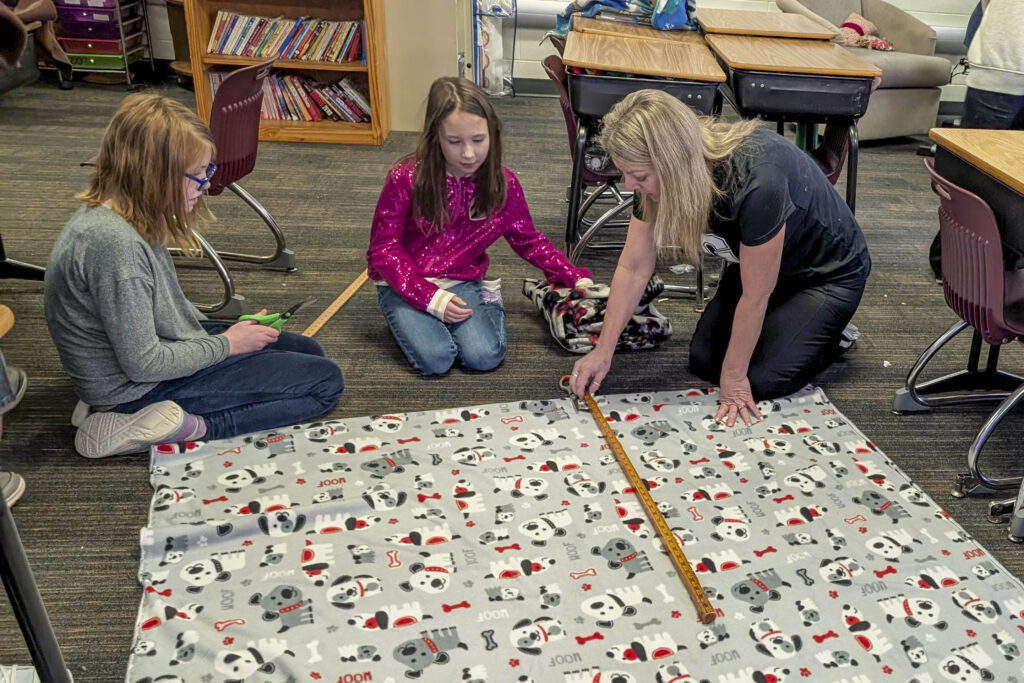
In the past few months, besides learning about the Iditarod itself, the fourth-graders have been drawing pictures, writing letters of support to Sabin and learning about his dogs. They also had a video meeting where they got to ask Sabin questions about the race, his preparations, the weather in Alaska and his time at Central all those years ago.
“We get to support his dogs and his race, and I think it’s super cool that he was in Ms. Venhuizen’s class back then and he had the idea that got him to do the Iditarod,” said fourth-grader Luca Longoria, who had never heard of the Iditarod before.
“It’s really exciting when we know that we can help keep him going,” classmate Iselle Roon added.
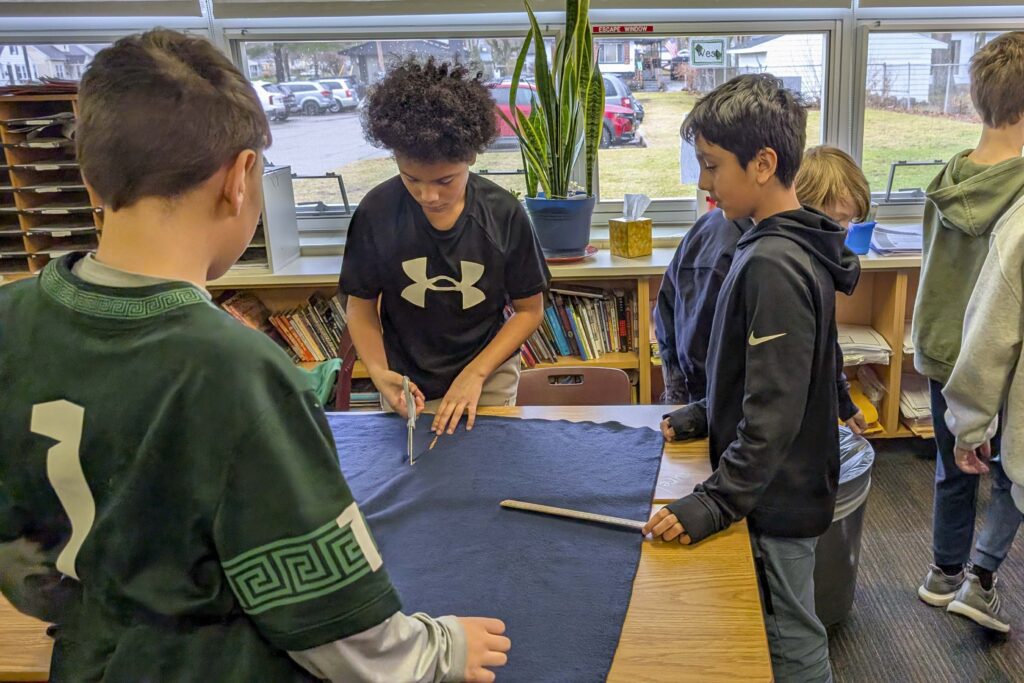
The class also took on the task of making dog blankets for Sabin’s entire canine team. Using fleece donated from Central parents, and Venhuizen’s dog Leia as a model, they spent an afternoon measuring, cutting and sewing. Sabin’s dogs will use the blankets to get warm and cozy during one of the team’s mandatory rest stops along the trail.
“The reason why they choose huskies is, huskies are used to the cold weather in Alaska, and they have lots of fur so they’re built for the cold, but they’re going to be out there a long time,” Luca said. “I think the blankets will probably help them. I learned a lot about the determination of these dogs, like how they have the endurance to run eight to 15 days — that’s just crazy.”
Venhuizen’s class will be tracking Sabin’s progress each day; Luca and Iselle said they all feel like honorary members of his team.

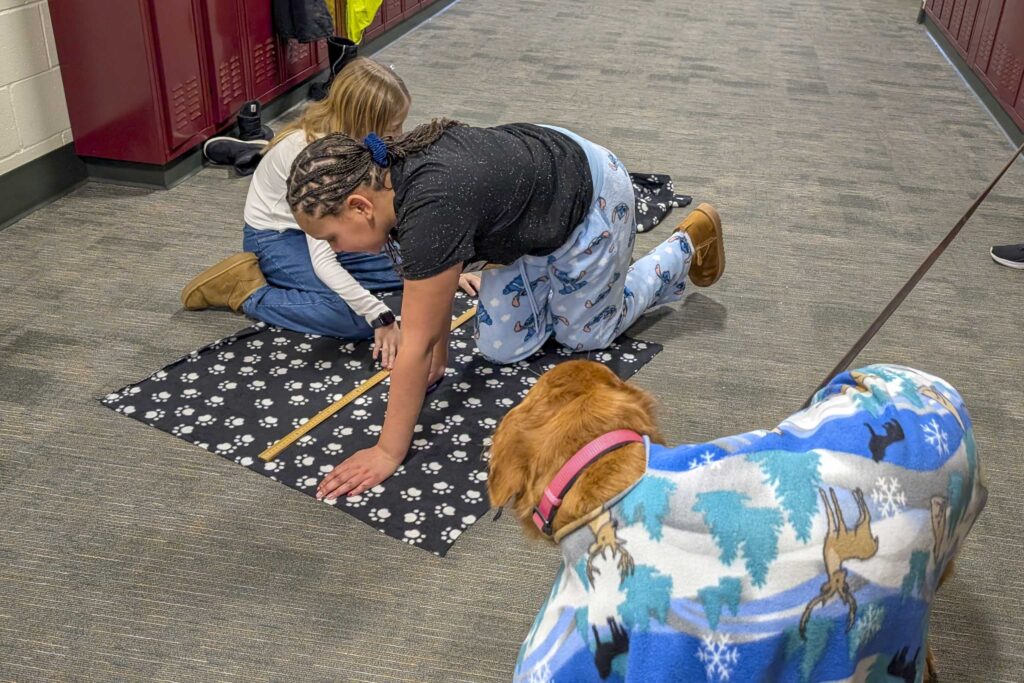
“I think our whole class is really excited to see how these dogs perform and, like, how fast they can run,” Iselle said. “It’s gonna be exciting, and also nerve-wracking, because, like, are we gonna move ahead? Are we gonna win? I can’t wait to see how it goes.”
Ahead of Saturday’s start, Sabin sent 1600 pounds of gear to the checkpoint where the team will take their mandatory 24-hour rest. Included in that shipment are the blankets and letters from Venhuizen’s class. Sabin said he plans to use some of the rest time to read the students’ messages as a pick-me-up.
“After 500 miles is when it gets really tough, and that’s when sleep deprivation kicks in and sometimes you don’t even know what your name is,” he said. “So it’s really cool that they’ve sent me these notes. I’ll have 24 hours off where I can sit and read what they wrote and I definitely think it’ll give me some inspiration to move forward. I’m pretty excited for that.”
Read more from Grandville:
• Minecraft Club builds strong communities-in-common
• Ensuring smooth reunifications after emergency events


