


Rockford — Did you know that it takes 40 gallons of sap to produce a single gallon of maple syrup?
The fourth-graders in the new Outdoor Learning program at Edgerton Trails Elementary certainly do, and that’s just one of many facts they’ve retained since a functioning maple syrup shack was brought to their school and integrated into their coursework.
The sugar shack, purchased with a grant from the Rockford Education Foundation and erected earlier this year, has worked its way into virtually all corners of the curriculum for the outdoor learners, explained Director of Outdoor Enrichment Tara Dzirbowicz.
“They’ve done social studies around it, math, science. They had to do written observations. So it’s a fully integrated project,” Dzirbowicz said.
Is there any subject to which the sugar shack can’t be applied?
“Honestly, I would say no,” said Dzirbowicz.
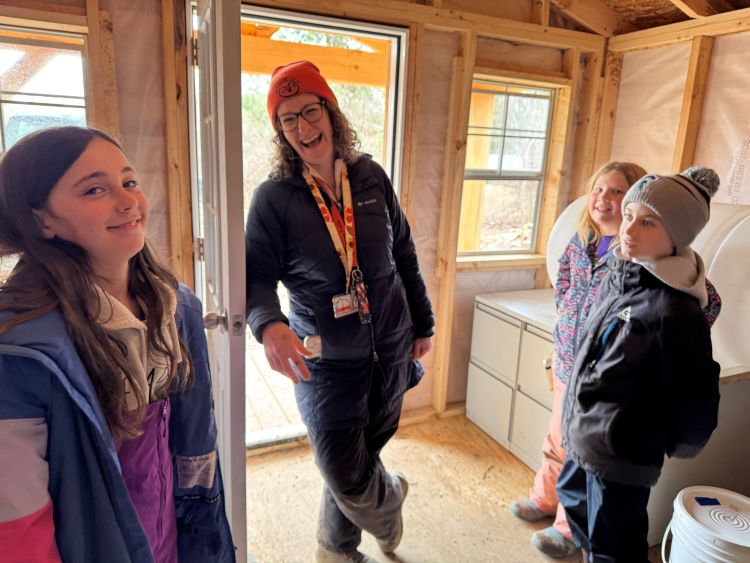
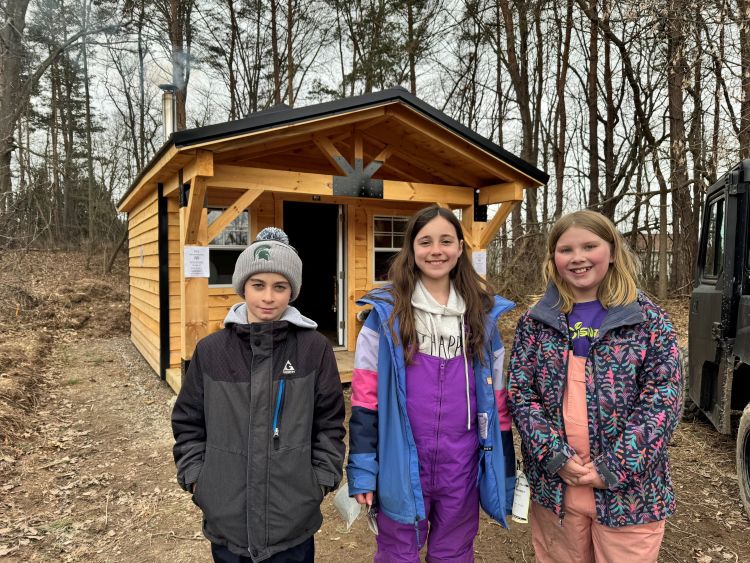
In late March, after the taps on the trees had been taken down, while a chill still hung in the air, fourth-graders Shae Randle, Andrew Zemens and Galena Sheehan joined Dzirbowicz to give SNN a tour of the sugar shack.
‘I love being able to take a real-world thing, a real-life situation, and being able to tie it into our day.’
—outdoor teacher Jodi Noakes
Touring the Sugar Shack
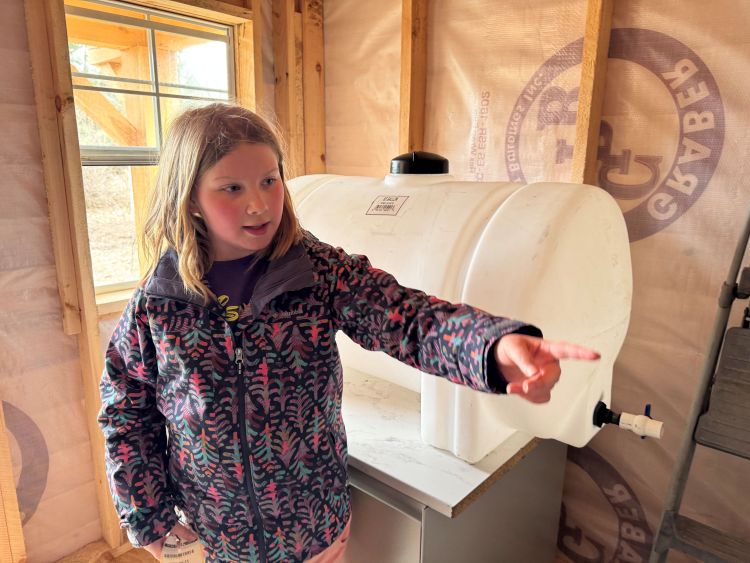
Upon entering the structure, which is situated in the expansive wooded area behind the school, Shae gestured to a massive white tank to the left.
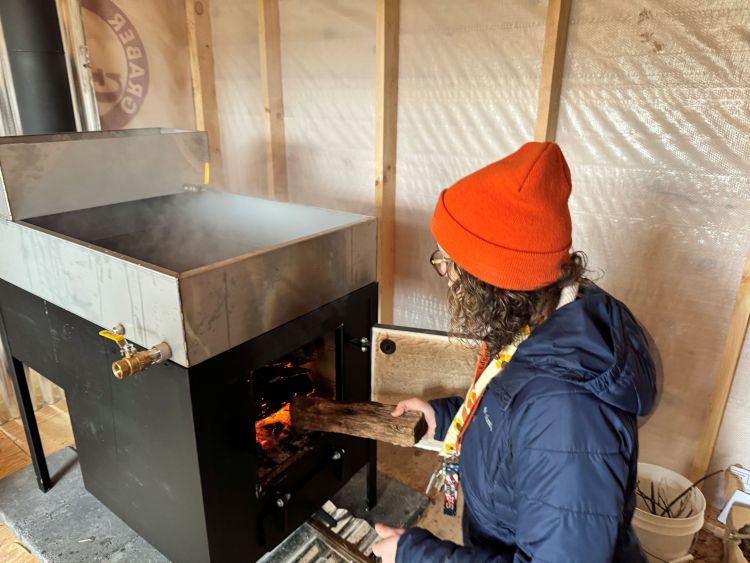
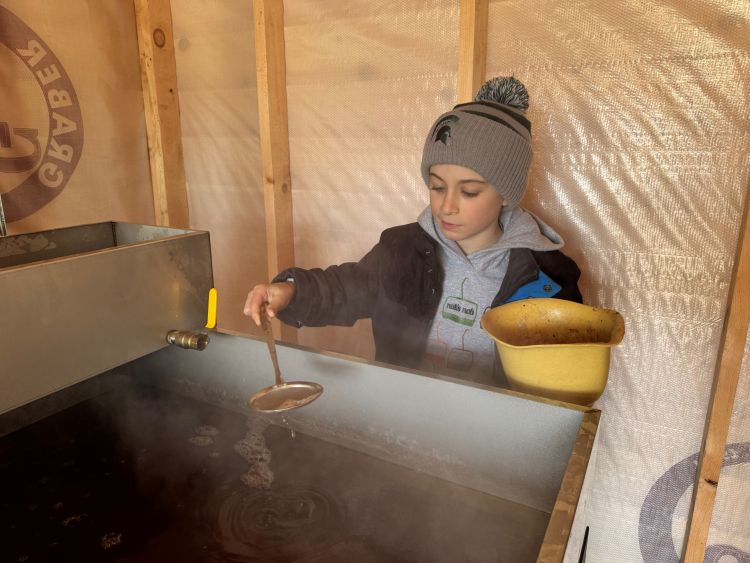
“This is where we hold all the sap that we’re going to turn into syrup. Then we take the sap out and we warm it up to then put in there,” she said, pointing to a woodstove-heated evaporator. “And then we turn it into syrup.”
“Basically, all the water is evaporating out of this, so the sugar stays in,” Andrew said as he grabbed a net to collect some of the foam from the surface of the evaporating sap.
“The foam is made up of dust and minerals,” Galena explained. “We can eat it, but it wouldn’t taste good.”
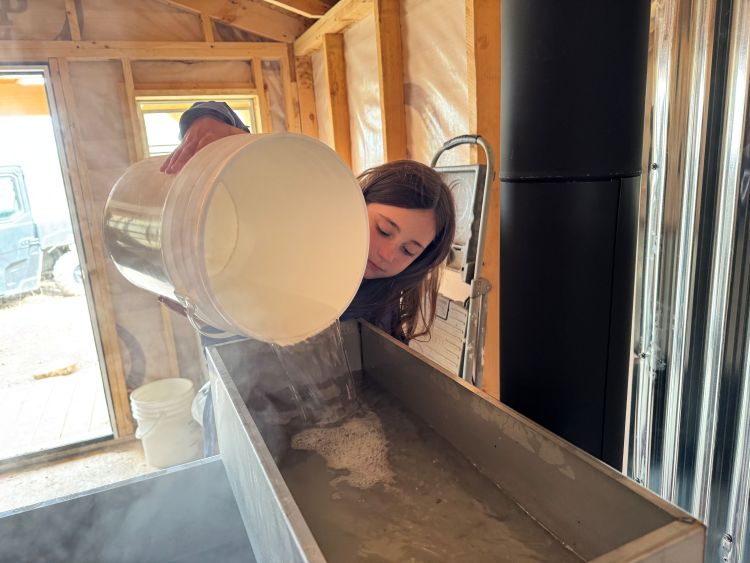
So what’s next?
“When we’re done over there,” Galena said, “we bring the sap over here into the finisher. It boils it and it turns it into syrup.”
Then the syrup is filtered and bottled, Dzirbowicz said.
It’s a lengthy process, which the three fourth-graders said was one of the most challenging things about it.
“It takes so long,” Galena said with a sigh. Shae and Andrew chimed in to agree.
Dzirbowicz said many factors play into how long it takes to process a gallon of syrup, but she estimates that on average it’s about a six-hour process.
Over the course of this year’s syrup season, Shae, Andrew, Galena and their classmates processed around 100 gallons of sap, but the work started long before the arrival of the sugar shack, or the tapping of the trees in February.
“Before we even collected sap they identified maple trees,” Dzirbowicz said. “Then they had to make sure the circumference was right, because it has to be a certain circumference to tap it — about the size of a basketball.
“They had to do all of that work before the trees lost their leaves. They’ve been working on this project all year.”
‘Seeing the whole process’
So what’s going to happen with the gallons of syrup the students have harvested?
“We’re going to have a breakfast!” Galena said, and Andrew and Shae started excitedly shouting, “Pancakes, pancakes!”
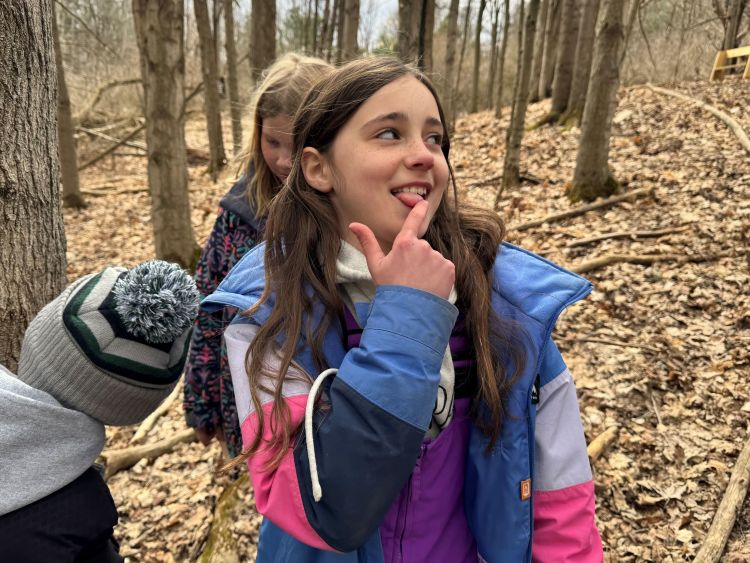
The students trudged out along the muddy trails behind the school to show off the maple trees, many of which were still leaking sap. They touched the trees, gathered a bit on their fingers and tasted it.
“Mmm! It’s yummy!” Andrew said after taking a lick.
Andrew, Shae and Galena are part of the Outdoor Learning program’s first class. Next year, when they’re fifth-graders and another group of fourth-graders joins the program, they’ll be able to help show the younger students the ropes of how syrup production works.
Their outdoor teacher, Jodi Noakes, said the sugar shack has been a blessing. Not only does it fit into all aspects of the outdoor curriculum, it also lets students see the practical application of what they’re learning.
“We’re just throwing in those life skills with it, and just seeing the whole process,” Noakes said. “I love being able to take a real-world thing, a real-life situation, and being able to tie it into our day.”
Read more from Rockford:
• ‘Master of all the schools’ gets back in the classroom
• ‘It just kind of sprouted’: Project brings new life to greenhouse


