


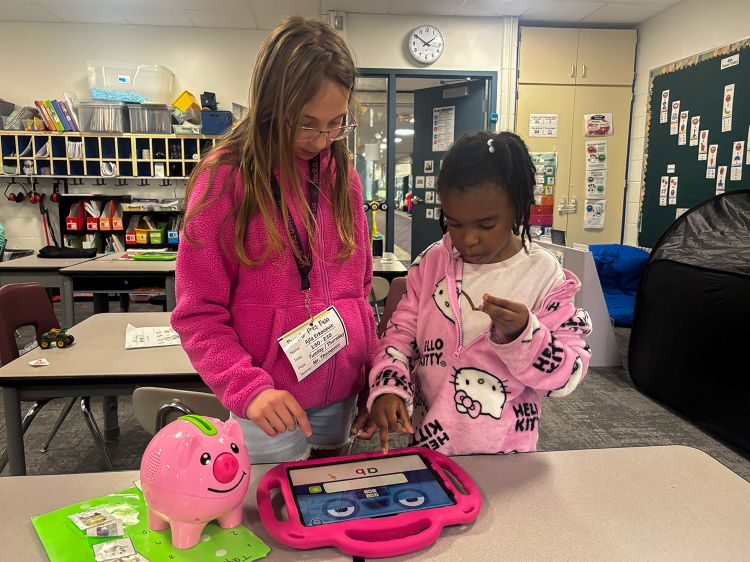
Caledonia — For several Caledonia Elementary students, their favorite part of the school day isn’t science, recess or even lunch time.
If you ask those involved in the peer-to-peer program, they will tell you visiting their friends in Ani Vardanian’s autism spectrum disorder classroom is the best part of their day.
Offered at several CCS schools, peer-to-peer provides the opportunity for students to support their friends, and to promote inclusion and a sense of belonging. Peer connectors commit to a 20-minute scheduled activity, once a week to visit the ASD classroom, a recess or lunch period.
Fourth-grader Ajla Erkocevik applied for the program last year at Caledonia Elementary and said she enjoyed it so much, she wanted to participate for a second year.
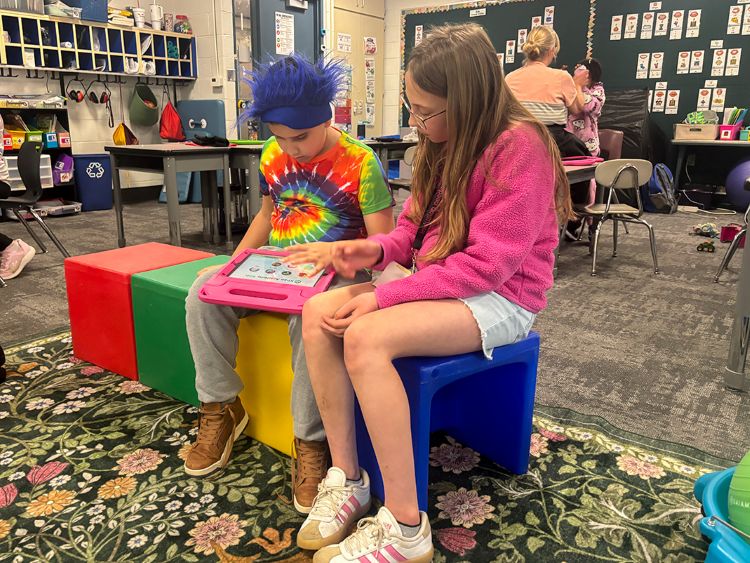
“I like hanging out with the kids and seeing what they’re learning about,” she said. “All of the kids are all different and funny and smart in their own ways.”
During a recent visit to Vardanian’s classroom, fourth-grader Jaylen Dugan spent time coloring with his friends.
“I like getting to understand my peers, so I know them better the next time I visit the class, and I’m better at solving problems,” he said.
With different peer-to-peer students coming to her classroom throughout the day, Vardanian said their time spent together looks different every day.
“Peers help model expectations for our students,” she said. “Sometimes this looks like whole-group lessons, where peers model engagement and help with discussions; other times, they’ll play or work alongside a student modeling independent work and encouraging them.”
Special education parapro LuAnn Lafontsee said she has witnessed peer-to-peer students serving as role models for the students she works with.
“The inclusion is great, and they’re very accepting,” she said.
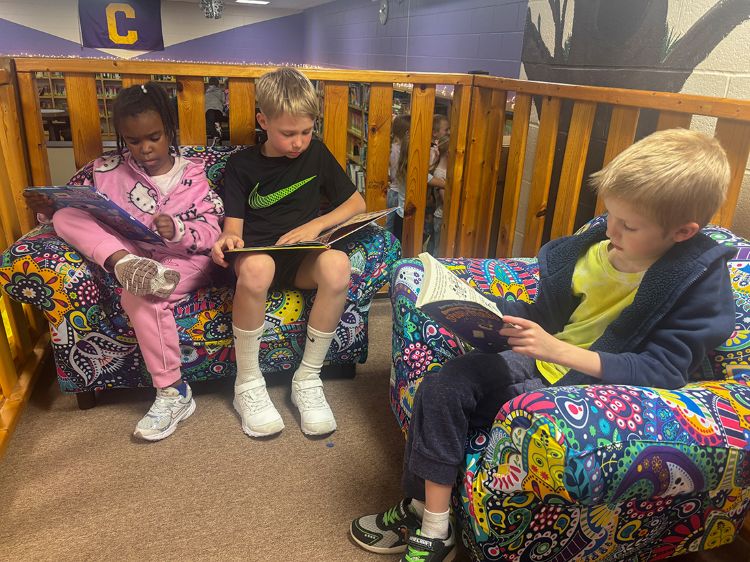
Vardanian added: “It’s a great experience for all the kids. My kids are the most popular kids in the school and everyone wants to be their friends.”
Casey Boutni, an autism spectrum disorder teacher at Paris Ridge Elementary, explained the goal for students in the ASD classrooms is to learn age-appropriate social skills by engaging with and watching positive peer support.
“This program also teaches the peer connectors empathy, patience and more about neurodiversity,” she said.
Peer-to-peer student volunteers meet during lunch once a month to share good news, discuss their experiences and plan activities, like spirit week for Autism Acceptance Month.
Ajla said she thinks schools would be a better place if they all had peer-to-peer programs.
“It’s a great choice (to take part), and more kids want to participate every year,” she said. “We all come from different cultures, and everyone is human. It’s fun to interact with kids with all kinds of abilities.”
Read more from Caledonia:
• Bond refinance projected to save nearly $1 million
• New communication boards give students an outside voice


