


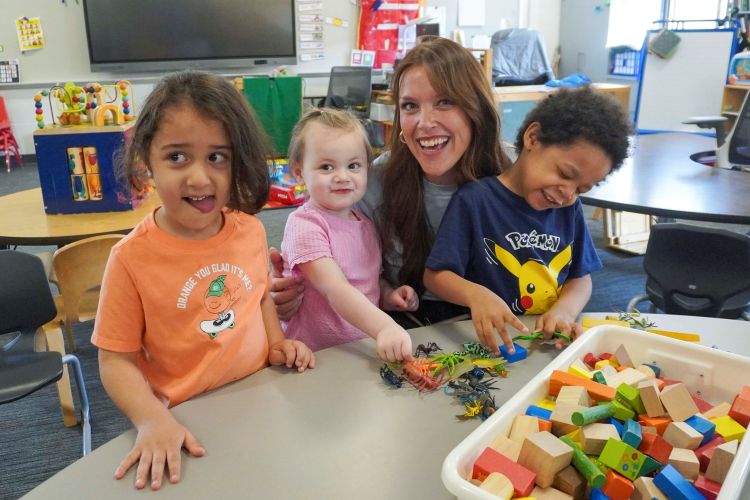
Northview — Laura Katerberg thinks all teachers “want to be that ‘safe person’” for students who need extra support, but don’t really know how, or it feels daunting.
“So to help teachers realize that they don’t have to make all these big changes — that even the smallest thing could be essential for that one kid to feel supported — it’s definitely a passion of mine,” said Katerberg, who joined Northview Public Schools as the new director of special services last August.
In her new role, Katerberg works with district social workers, speech pathologists and occupational therapists; meets with parents to discuss IEPs and other student support plans; oversees Section 504 and crisis response work for the district; and much more.
“My primary role is overseeing the special education department here, but on a day-to-day basis, my day never looks the same,” she said. “Everything I do is supporting our district-wide initiatives to ensure that all of our students are included, which Northview already does a fantastic job of. It’s a community that is really supportive of students with disabilities, which is really neat.”
‘Finding the best educational opportunities that are tailored to that one kid changes their whole educational experience for the better.’
— Laura Katerberg, director of special services
Get to know Katerberg further in this edition of Meet Your Administrators:
Other positions you’ve held in education: Katerberg started her career as a school social worker, first at Vista Charter Academy (of National Heritage Academies), and then in Caledonia and Kentwood.
She returned to Vista Charter to become the dean of intervention in special education, then later a special education supervisor at NHA. In that role, she supported and delivered professional development content for special educators and helped develop PD content for neurodivergent-affirming strategies.
What drew you to working with this population? “Getting to think out of the box in supporting our neurodivergent learners,” she said.
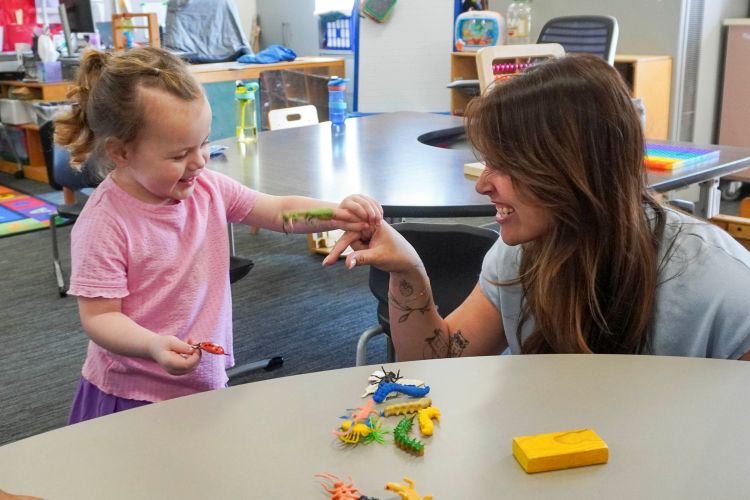
“The data shows that upwards of 30% of a classroom will have neurodivergent learners, and they all have varying support needs. … Some have really high support needs, and part of the day they’re out of the classroom receiving supports elsewhere. That’s who you usually think of. But there’s this other population of students that you might not even realize are neurodivergent — you don’t consider that they need supports, but they really do, because they’re masking all day and working really hard to keep it together. My son is one of those learners, so I see how hard it is.
“Being able to advocate for them and help make classrooms a safe space is always the goal. Finding the best educational opportunities that are tailored to that one kid changes their whole educational experience for the better.”
Education/degrees:
- Bachelor’s degree in social work, Calvin University
- Master’s degree in social work, Western Michigan University
- Special education administration certification, Grand Valley State University
Why Northview? Katerberg originally interviewed for a job with the district at the beginning of her career. She credits Northview’s former director of special services, the now-retired Dan Heitzman, for setting her on the right path — even though she didn’t get the job.
“(Heitzman) actually called me back after the interview and gave me very specific feedback: ‘These are the things that you did that were awesome, and these are the things that I want you to work on.’ Just the fact that he took the time to have a really kind, intentional conversation with somebody who wasn’t part of his community, who didn’t get the job — to help grow me even though that wasn’t his responsibility — that told me this was a special place. And I nailed my next interview and got that job.
“I feel like (Heitzman) set a legacy of creating a very inclusive space at Northview, and that’s something I wanted to be a part of.”
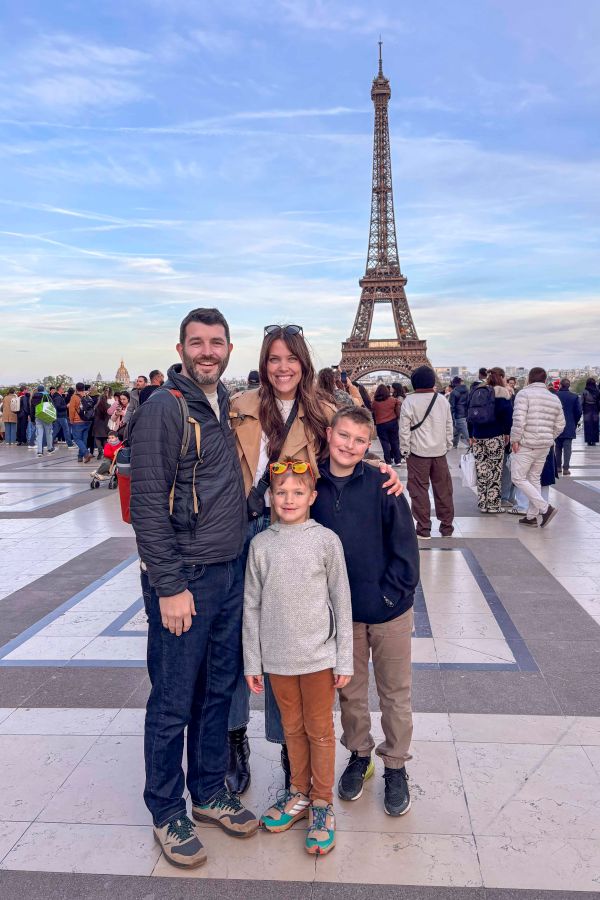
What would you like to share about your family? Originally from the Chicago area, Katerberg met her husband, Derek, at Calvin University; he now teaches sixth grade at Grand Rapids Christian Middle School. They have two boys: Emmett, 10, and Rory, 7. Other members of the family include two dogs, two ball pythons and an aquarium full of guppies, tetra and betta fish.
Derek also runs a nature center at Camp Roger, so the whole family lives at camp for several weeks every summer, eating meals in the dining hall and sleeping in a cabin.
“Every summer since 2013, we have lived out there, and I love that our kids know nothing different. They’re just ‘staff kids’ who get to run around and have fun. And I do some on-call social work support for (the camp) in the summer, too. Camp is a big part of our family.”
Dogs or cats, and why? “Dogs just love you, no matter what. They’re stupid fun, and cute and fluffy. It’s nice to come home after a day of making hard decisions and have a 95-pound lap dog climb on you and just love you.
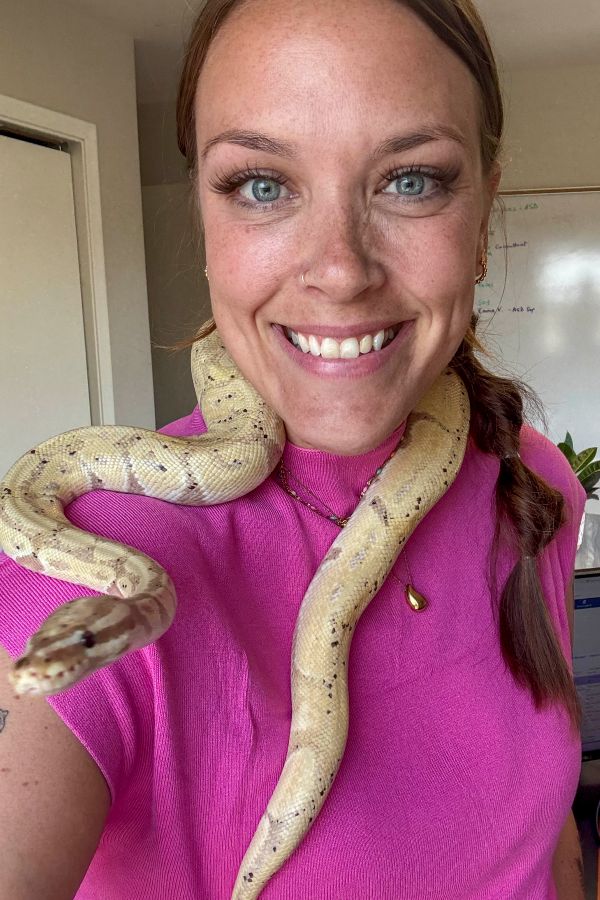
“But my husband also made me start liking snakes. I married into the ball python situation, but now I’ve learned that they’re gentle creatures and they’re actually kind of fun to hang out with. They’re so kind; they love to just be with you. … I grew to really enjoy them, and now I’ve even got a ball python tattoo. We like our critters!”
Is there a book, movie or podcast you’ve enjoyed recently? “I’ve really gotten back into reading in the last two years; I had a long hiatus with having little kids. … My top genre right now is probably historical fiction, but I love fantasy novels or a good thriller, too. It’s a fun way to escape the real world sometimes.”
What is the best thing about going into K-12 education? “As a special educator, one of my favorite things is truly team collaboration. The best day is when I get to sit down with a team to collaborate and problem solve and brainstorm on how to support a kid. Seeing everybody excited about being on the same page, that fuels me, that I get to work with such passionate, intelligent people that all have the same goal of supporting kids.
“And we get to help kids be their true, authentic selves and find what they want to do and how they can have meaningful engagement in this world. … That excites me so much, and makes me feel hope for our kids, since maybe even 20 years ago they might not have had the same opportunities.”
How does student voice play into the work you do? “Self-advocacy is probably, in my mind, the most important thing that we can teach our kids. That’s a big part of the work I do with parents and with the staff I support … I want our kids to be able to learn what they need and know what they need. It’s okay to have needs, and it’s OK to ask for what you need, because the world is not ready to just give you what you need without asking. So our goals and our IEPs are often heavily focused on self-advocacy: helping them understand that they have a right to ask for what they need, because that will carry them into (life) post education.”
Read more from Northview:
• Honing their approach to new phonics lessons
• Underground Railroad lesson stitches together history, quilting


