


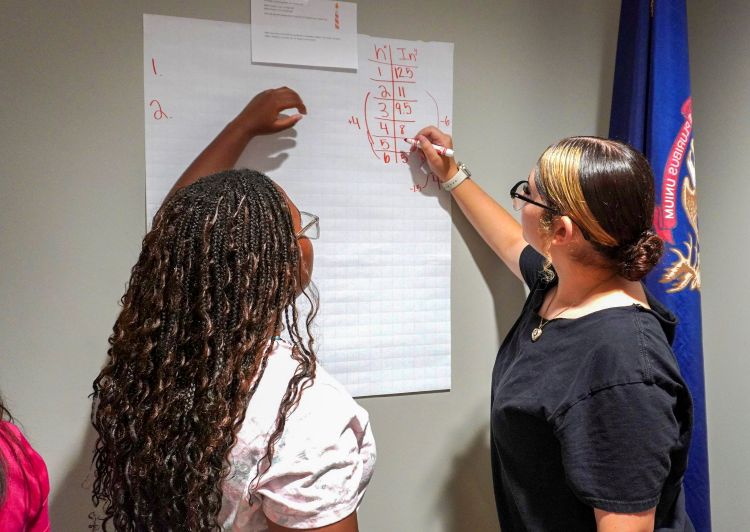
All districts — Rising ninth-grader Dailyn Gillen’s experience at a four-day summer math camp in Kentwood Public Schools went beyond algebra practice and tapped into something more abstract: his own sense of fortitude, or ability to “be brave,” as he called it.
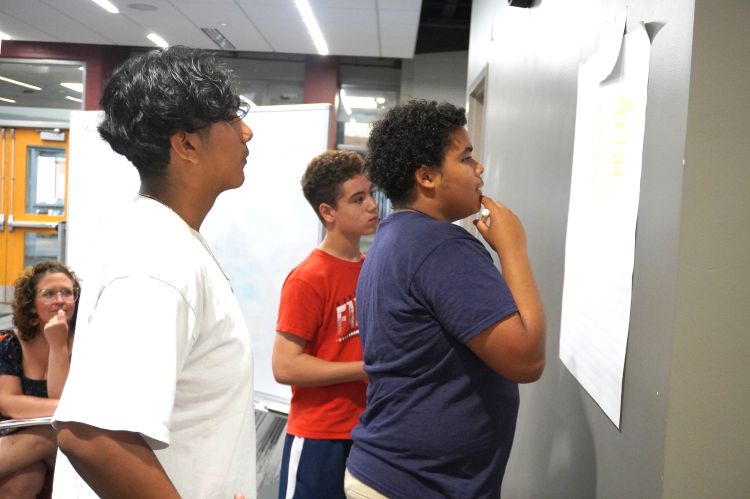
During the sessions, offered by Math Medic Foundation, Dailyn practiced math through real-world problems with various groups of peers. Students worked in trios in front of white boards, figuring out equations, discussing their thinking and presenting solutions.
“There’s a lot of bravery in people trying to speak up — telling everybody your equation, how you got the answer. I was already good at it, but I got better,” he said.
That personal insight is one that camp leader Sarah Stecher, Math Medic chief content officer and former KPS teacher, hopes all 20 participating incoming freshmen have gained.
“We share our rough-draft thinking, partial ideas, ideas we are not sure are right,” Stecher said. “All of that requires a level of bravery — to be able to put an idea out there you are not sure is correct. What we are working on this week is establishing culture and an environment where students feel comfortable sharing ideas.”
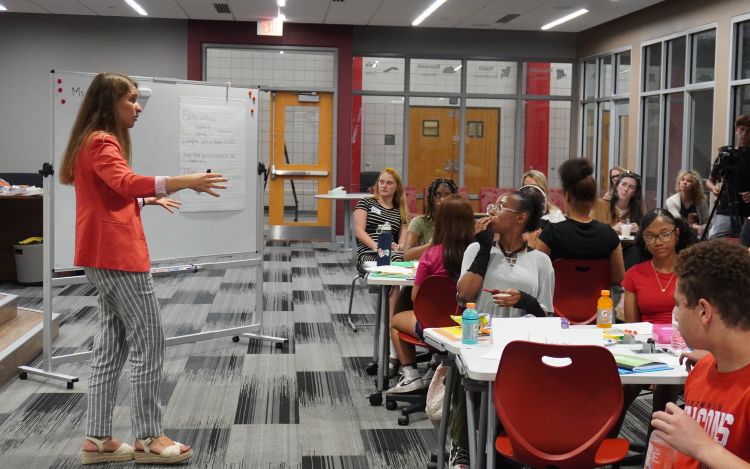
Stecher’s views on math go beyond the black-and-white perception of the subject and into the nuances of developing strong interpersonal skills. Along with the bravery required to solve math in public, these skills include collaboration, communication, problem-solving, perseverance and having a growth mindset.
This focus on these timeless attributes, or “durable skills,” as they are being called in education realms, aims to close gaps in competencies that help people navigate life socially, in careers and in pretty much every other aspect of being human.
Locally, districts are becoming more attuned to students’ need to develop these skills in tandem with core subjects. Some are assessing the skills outright. Many are making sure they are well integrated into instruction.
“Durable skills are what employers want in terms of social, interpersonal skills and work-related skills,” said Du Bui, a Kent ISD STEM consultant. “They are the items that employers want in their employees. They’re the high-flying skills that we always talk about as being important in a well-rounded person who is ready for the world of work.”
Skills that Go Beyond the Classroom
Bui has been working with local districts, including Kentwood, on how to embed durable skill development into classroom learning, with guidance from The Durable Skills Framework: A Guide for Educators, School Leaders and Policymakers. Previously called “soft skills” or “employability skills,” they include leadership, character, collaboration, communication, creativity, critical thinking, metacognition, growth mindset and fortitude.
Brooke Storms, a KPS instructional technology coordinator, is involved in those efforts, beginning with a focus on STEM and career-connected learning and moving durable-skill instruction into every other subject.
“In education, historically, it has been a lot about the academic content … We think of the ‘what’ and the ‘how,’” she said. “I think the durable skills come into the ‘how’ piece. Like, how are students processing this information? How are they listening to information?”
That thought process can be used in any subject or class, Storms said.
“You have your academic common core standards, but then you have what most subject areas refer to as practices: science and engineering practices, math practices,” she said. “Those practices are speaking to those durable skills we are talking about.”
Workforce data bolsters educators’ mission. A study from the nonprofit organization America Succeeds used data from 82 million job postings from 2019-2020 to quantify the demand for durable skills. Key findings showed that seven of the 10 most requested skills in job postings were durable skills; that employers seek these skills nearly four times more frequently than the top five technical or hard skills; and that demand for durable skills is greater for jobs more aligned to the future of work.
The survey also showed that 91% of management jobs, 86% of business operations jobs and 81% of engineering jobs demand durable skills. Also, jobs at greater risk for automation have lower demand for durable skills.
As the America Succeeds report states, “The key to success is embracing a lifelong learner mindset,” during a time when “artificial intelligence, automation and technology are reshaping jobs.”
“These are the human skills that a student carries with them from job to job, helping them respond and remain resilient in the face of change,” the report continues. “The best preparation in the face of uncertainty and rapid innovation is a combination of academics, digital literacy and durable skills.”
Employers, however, are indicating that students today are lacking the skills they need, Bui said, and data backs that up. The U.S. Chamber of Commerce in 2025 reported that 84% of hiring managers say most graduates aren’t prepared for the workforce, with 80% indicating that work readiness is declining.
Collaborating on Durable Skill Development
Kentwood has been the “exemplar” district on embedding durable skill instruction into core instruction and career-connected learning, Bui said, using tie-ins with the Michigan Career Development Model. He has helped in their efforts, serving on a STEM advisory group and a consulting group with KPS and presenting at different conferences so other districts see the district’s use of durable skill integration.
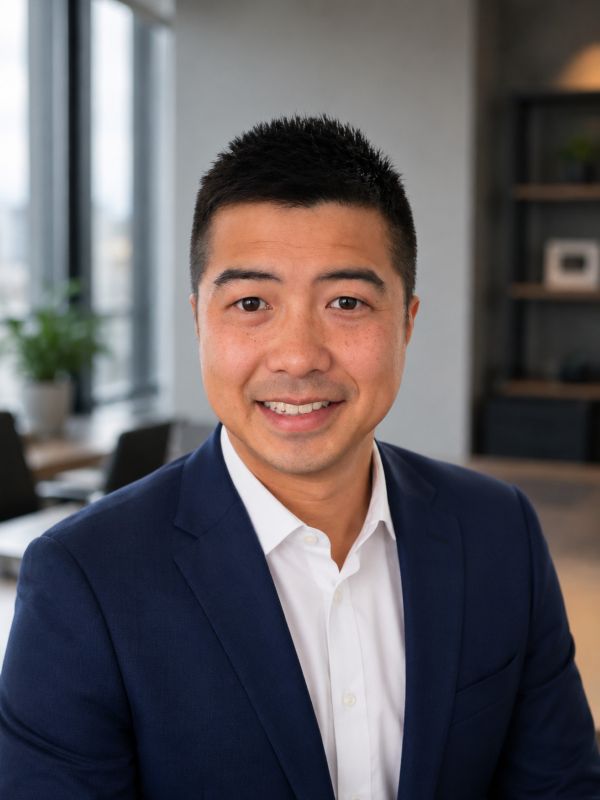
“I am really trying to utilize the Career Development Model and crosswalk with durable skills to be able to help (districts) start thinking about why it’s important … and what does it look like in each (grade),” he said.
Bui collaborates with other districts as well. He is working with Grandville Public Schools educators who lead the annual Amazing Shake competition to make the idea a resource for other districts. During the event, fourth-, fifth- and sixth-graders compete in 20 activities that test their professional and interpersonal skills, as well as their ability to think on their feet.
He is also working to provide feedback frameworks for teachers, such as Enhancing Learning by Improving Process Skills in STEM.
‘Durable skills are what employers want in terms of social, interpersonal skills and work-related skills.’
— Kent ISD STEM consultant Du Bui
“Using research and the rubric resource, the push is to help teachers create their own feedback forms,” Bui said.
Those forms can help districts be intentional about measuring skill development, he explained.
“A lot of times it’s assumed that these durable skills are being developed well in these experiences,” Bui said. “It’s just assumed that students are collaborating in this project that the teacher is leading, but there’s no callback to it; there’s no feedback to the actual skill that they are developing.”
Starting with STEM
STEM — science, technology, engineering and mathematics — naturally lends itself to durable skill development, Bui said; many schools run STEM as stand-alone classes focused on project-based learning and group work. He also noted STEM (or STEAM, incorporating arts) instruction has a clear connection to the jobs of the future.
In Rockford Public Schools, Freshman Center science teacher Matt Kimball sees his new class, Science of Prototyping through STEAM and Integrated Science, which launches this fall, as a perfect opportunity to teach durable skills. Kimball, who recently joined Bui on a Kent ISD STEAM Network event at Amway’s main campus, is hoping the two-trimester course will connect students with careers while helping develop durable skills.
With a focus on design and manufacturing, the class will operate as if it’s on the production floor of a company like Amway or Steelcase, with students learning to be organized, keep a clean work space, and know their tasks. Students will even have “shift changes” from one hour to the next, passing on information the next class needs to know about problems or other issues that have come up during class.
“It’s primarily going to be an engineering and designing course, but I’m using manufacturing norms as a logistical organization piece,” Kimball said. “We are trying to mimic skills a floor worker in manufacturing would encounter.”
While the production-floor simulation will give students an idea of a manufacturing workspace and career, the design focus will include a mix of engineering, physics and creativity. The plan is for students to create prototypes of bridges; “something that moves,” such as a car or spaceship; and a product that has a biological application, such as a 3D-printed artificial heart.
“We are going to be professional problem-solvers,” said Kimball, who has taught middle school, high school and college-level science over the past 15 years. “(Students will learn) what you would anticipate when you are trying to design a product: define problems, understand limitations, costs, supply chain — what does it take to make this widget, and how to make it better than the next widget?”
Students will also spend time on self-reflection, creating portfolios on their work and personal contributions to the projects. Collaboration and communication will be key components.
“They are going to be in teams all the time, running through brainstorming sessions, thinking of ways to grow ideas together in an organized way,” Kimball said. “They willI identify strengths and weaknesses and acknowledge that people bring different ideas because they have different backgrounds.”
A New Sense of Confidence
In Kentwood, at math camp, rising ninth-grader Delicia Kingsley said what she learned about working together and being brave can help her move forward in all her classes.
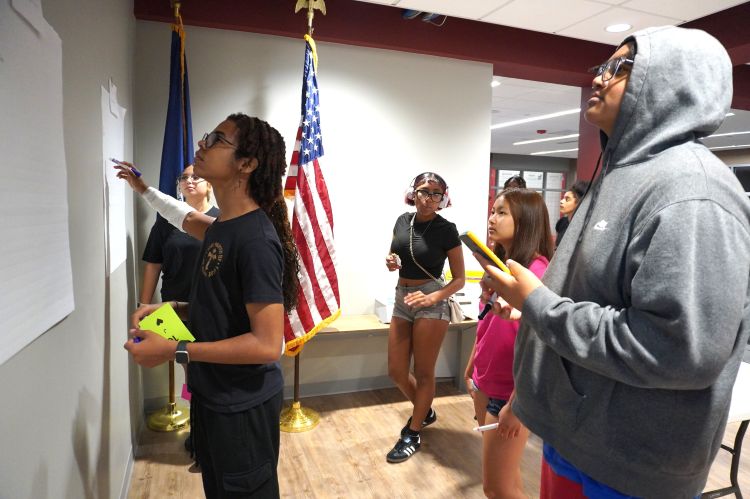
“We work with groups, solve equations with our groups and do individual work. It’s like extra support so you can get better,” she said.
And how has she become better and more confident in math?
“By answering the questions and talking out loud,” she said.
Delicia and classmate Dailyn can bring their increased assuredness into ninth grade, their extracurriculars, future jobs and everywhere else, said Storms, the instructional technology coordinator.
“The workforce is saying these are the skills that (people) need,” Storms said. “It will prepare them for post-K-12, but in addition, it will prepare them for the next day and the next year. It’s to help them on their academic journey and to prepare them for the future.”
Read more from our districts:
• Art Prize-inspired event integrates tech, soft skills
• New math curriculum spurs creative thinking


