


Editor’s note: This report from The Central Trend is presented as it appeared and is republished here as part of School News Network’s Student Voices series, in partnership with Forest Hills Public Schools.
By Brooke Cullinane
Forest Hills Central junior and The Central Trend editor-in-chief
Forest Hills — FHC’s debate team, forensic speech group, and Model United Nations (Model UN) club are some of the most prestigious academic extracurriculars the school offers, with all three organizations competing in national competitions or statewide conferences.
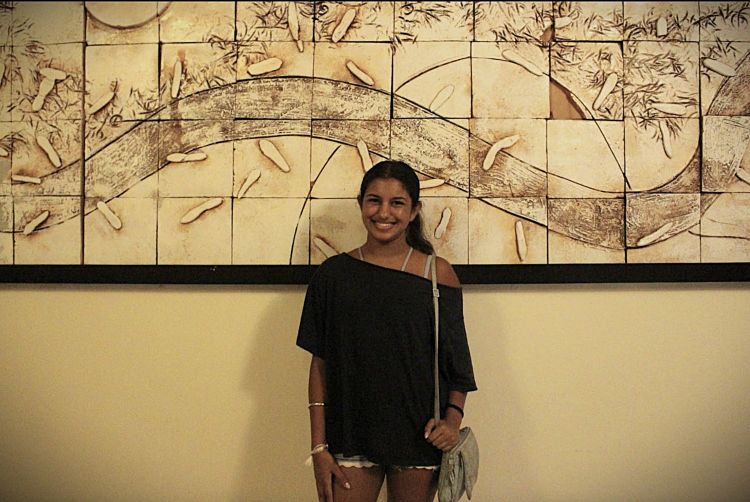
Junior Disha Sriram is the president of all three.
Joining all three clubs her freshman year and finding herself president of both debate and forensic speech the following year, and president of Model UN her junior year, Disha immersed herself in the world of public speaking from the get-go.
“I’ve learned a lot of public speaking abilities (from Model UN),” Disha said, “and I’ve learned how to interact with people, even when it’s just my first meeting with them. In Model UN, one big thing is that you have to get a lot of people to work with you. So I learned how to get up in front of a large crowd of people and grab their attention.”
Model UN is a voluntary club that teaches students real-world diplomacy skills through statewide conferences where students represent different nations lobbying for their own interests. Before earning the Model UN presidency through consistent participation, skill, attendance, and standout application, Disha participated as just a member of Model UN. This experience not only gave her familiarity with the club’s conference-based structure, but also taught her the importance of public speaking for all Model UN members.
Whether a student holds a leadership position in the club or not, Model UN is an opportunity to learn more about the world while developing public speaking and advocacy skills.
“[For] a regular student at a conference, it’s a really big deal for them to learn how to advocate for themselves and for their country,” Disha said. “Whatever country they get, they learn more about the world, and they’re also able to argue about whatever topic that they’re given because they know more about the world.”
Simultaneously joining the debate team — which becomes forensic speech second semester — and Model UN her freshman year, Disha was immediately introduced to the world of public speaking. Not only did she have to develop public speaking skills quickly, but she had to do so in an environment full of upperclassmen. She learned that she wouldn’t always be able to prepare ahead of time, and realized quickly that she needed to think on her feet to collaborate with others in Model UN and win arguments in debate.
“Both (debate and forensic speech) are quite similar to Model UN in the sense that you have to be able to make up a lot of speeches on the (go), and you have to fill in a lot of time just using your brain and what you have so far,” Disha said. “What’s different about Model UN (compared to) debate and forensic speech is that Model UN is more focused on working together with other people to get a solution, whereas in debate and speech, what you’re doing is trying to convince your judge why you specifically should win.”
Debate and forensic speech, although bearing resemblance to Model UN, help develop different skills in addition to public speaking. The focus on argumentation and rebuttals in debate, and the variety of topics in forensic speech helped teach Disha about the multifaceted nature of public speaking.
“In forensic speech, there are multiple different kinds of topics,” Disha said. “There’s storytelling, there’s impromptu speaking, there’s poetry writing, there’s marketing and advertising, and so certain speech competitions (are) going to have pre-made speeches. Others, (students are) going to be making up a speech on the fly.”
‘I’ve learned a lot of public speaking abilities (from Model UN) and I have learned how to interact with people, even when it’s just my first meeting with them.’
— Central High junior Disha Sriram
Through forensic speech and live debates, Disha develops her thinking skills to create stronger claims and rebuttals while still sounding confident speaking in front of a crowd. This skill was showcased in her sophomore year, when she took Advanced Placement (AP) Seminar, a class based on research papers and presentations.
In AP Seminar, students gave 30-second speeches: quick speaking projects that developed fast thinking. Disha’s experience with public speaking helped her master these short speeches and develop skills for her post-high school and post-college plans.
“It’s really important to be able to come up with speeches on the fly because, first of all, especially in larger classes like AP Seminar, you need to be able to come up with your own words without having to think for too long,” Disha said. “And also, it’s helpful (in) the real world, for going into a job or applying for a certain position or an internship. You need to be able to have charisma, and you need to be able to have good public speaking abilities.”
Ultimately, the best way to develop speaking skills is to practice and have confidence. As Disha hopes to translate her public speaking experience into an eventual career as a lawyer, she’s realized that her words matter more than the delivery, something that only comes with time.
“I’ve learned that not every single person is going to remember every trip that you make,” Disha said, “even if you stutter or you have a moment where you lag. Nobody’s going to remember, but as long as you do your best to make an impact and actually give meaning to what you’re saying, people will remember.”
Read more from Forest Hills:
• He’s looking forward to supporting teachers, kids and families
• Teen uses 3D-printing business to help others


