


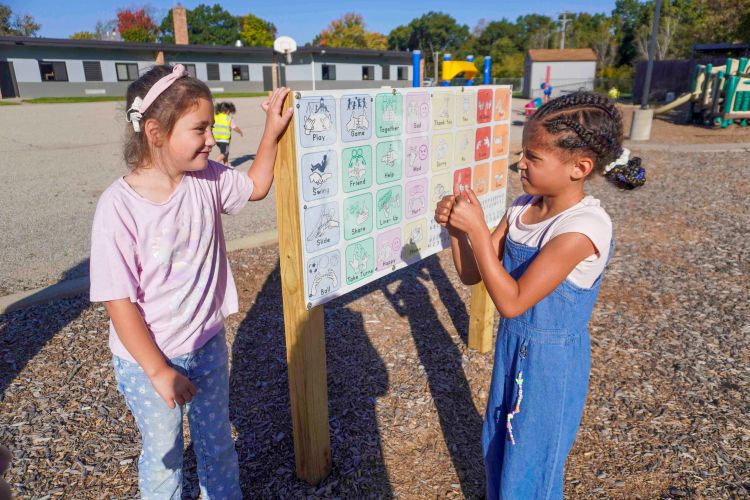
Northview — On a sunny fall morning at West Oakview Elementary, first-graders Aubree Ching, Melli Williams and Andi Miller were playing together when Melli ran over to a colorful sign at the edge of the playground.
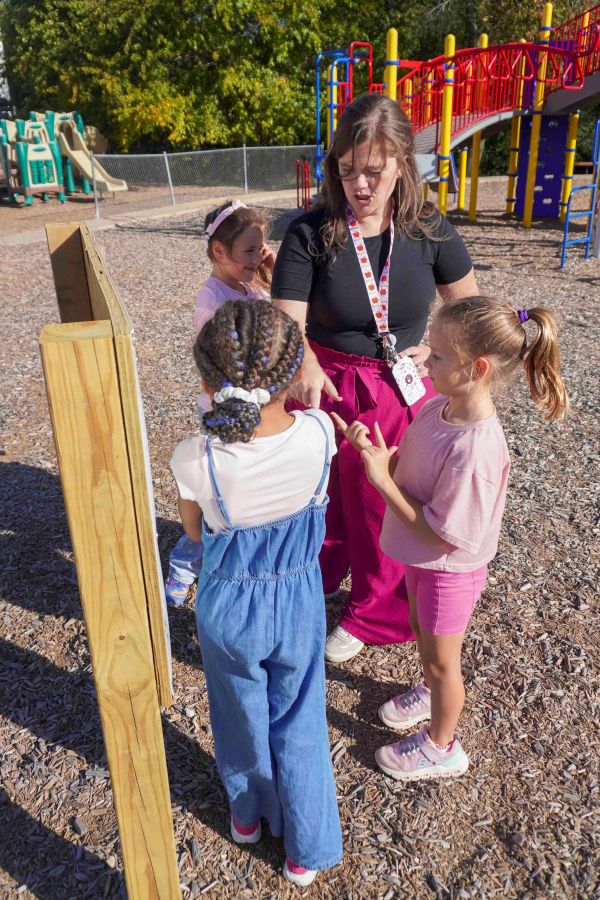
Turning to face Aubree, Melli bumped her fists together — the American Sign Language sign for “game.” Aubree grinned, turned and started running; their game of tag was officially on.
Aubree is a deaf student; her friends Melli and Andi are hearing and don’t typically use ASL to communicate. But the hearing students at West Oakview have been learning ASL this fall — and making new friends — thanks to new sign language communication boards that have been installed on both school playgrounds.
“I think they’re awesome because it helps kids learn how to sign,” said Melli of the boards. “I learned ‘swing,’ and ‘play,’ and I also learned ‘friends,’ and probably a lot more.”
The boards were put up in September at West Oakview, which houses the countywide elementary Deaf & Hard of Hearing program, to commemorate Deaf Awareness Month. But the goal is to build connections and foster inclusiveness all year long, said Marina Leja, a K-12 deaf mentor for the DHH Total Communication program through Kent ISD.
‘Our kids want to include everyone, they want to be friends, they want everyone to belong.’
— Deaf mentor Marina Leja
“We wanted to find a way to make communication on the playground easier and more inclusive for everyone,” said Leja. “You could see that some of our deaf and hard of hearing students were a little shy and didn’t feel comfortable approaching (their hearing peers), and so we just wanted to promote that inclusive environment everywhere.”
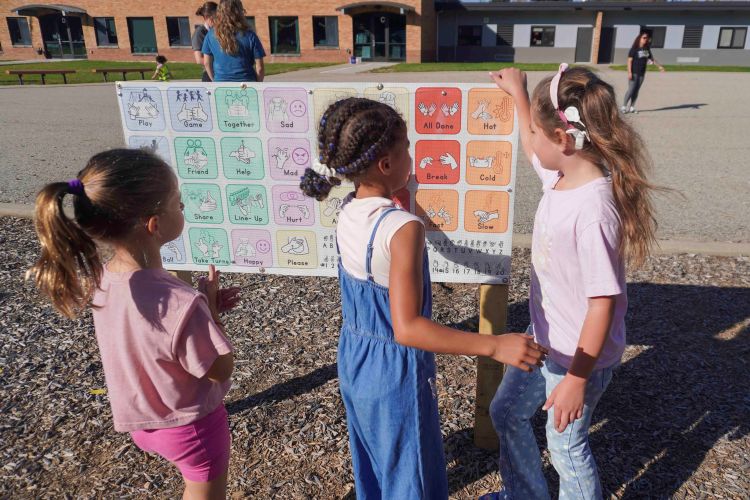
The colorful boards feature illustrated ASL signs for many basics that kids could need to communicate while at play outdoors. There are signs for playground equipment, like “swing,” “ball” and “slide,” and signs for “hot” and “cold.” Students can use the board to learn how to say “stop,” “please,” or “thank you,” indicate that they want to “take turns,” or declare that they are “all done” with an activity.
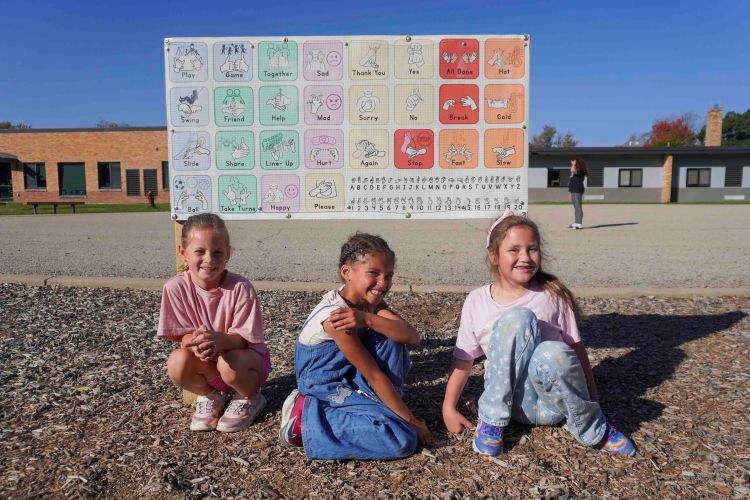
There’s also a sign for each letter of the alphabet and numbers 1-20, so students can spell or indicate something that’s not on the sign if needed.
“It gives them the tools they could use to at least start the conversation and start feeling more confident — both the deaf communicating with the hearing, but also the hearing (students) learning signs to communicate with our deaf friends,” said Leja. “Once they build that relationship, it’s really easy to ask, ‘What’s the sign for this?’ and they finger-spell it with the ASL alphabet. And then our deaf kids will teach them the sign, and that’s been really cool to see.”
Accessibility for All
For Principal An Kurosu, the boards have broadened the accessible atmosphere they strive to create at West Oakview, extending that accessibility outside to the playgrounds. She said they also add an additional level of safety on the playground and promote confidence and pride as students learn a new way to communicate.
“Obviously, you can play together just with using body language … but some of our students haven’t been able to verbally speak into what they want to do,” Kurosu said. “Now I have seen them advocate for themselves (and) specifically say, ‘I want to do this,’ rather than just joining in or following. And their friends can understand them.
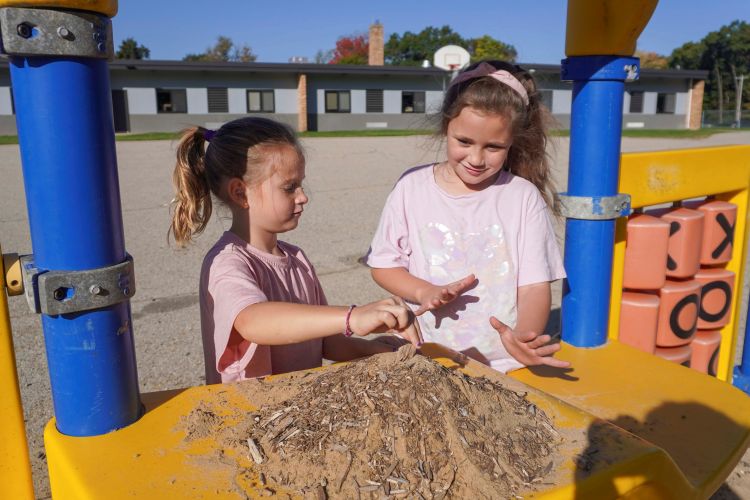
“That accessibility, not only for deaf and hard of hearing students, but the hearing kiddos too, is important.”
Melli said she became Aubree’s friend this fall thanks to the communication boards. The first-grader described how the interaction happened:
“Me and Andi and (fellow first-grader) Clover were playing with each other but then we asked Aubree if she wanted to be our friend and she said, ‘Yeah,’” Melli recalled. “Then I went to the board real quick to see (the sign for) swing, because I wanted to swing. So then I asked (Aubree) if she wanted to swing and I used the sign and she said, ‘Yes.’”
Melli said gaining a new friend and being able to talk while playing together made her feel “very happy.”
“My favorite thing to play (with Aubree) is maybe tag or probably hide and seek — she’s really good at hide and seek,” Melli said. “Learning sign language feels exciting because I get to learn new things.”
With the help of interpreter Jessica Novak, Aubree confirmed Melli’s account of their friendship and called the boards “awesome.”
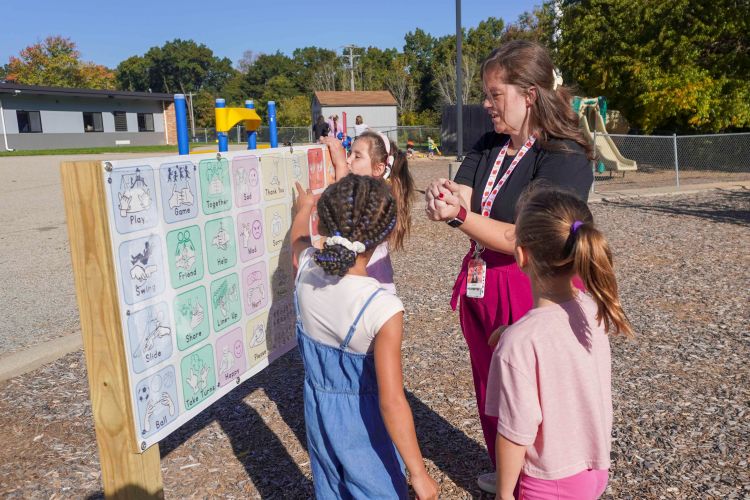
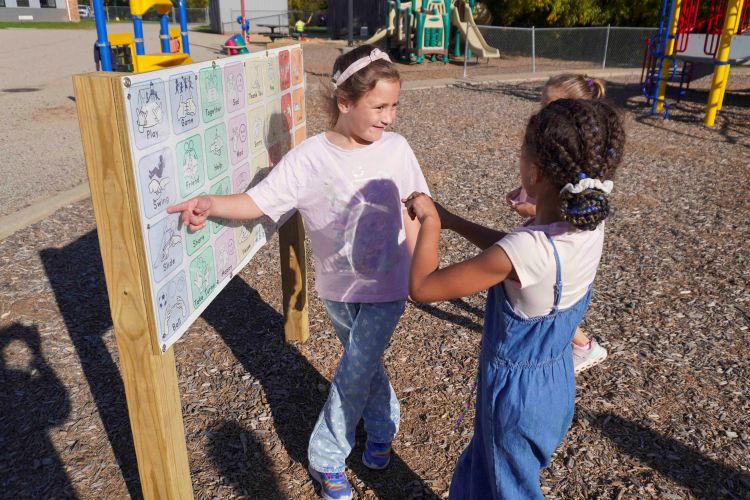
“It was exciting to make more friends, because now I am able to have more friends to play with,” Aubree said.
To be able to help foster new friendships like this is a “full-circle moment” for Leja, who is herself a graduate of the Total Communication program. She said the boards are one way to give back to a community that nurtured her as a student.
“Seeing (the boards) at work is really, really special to me … We’re not just putting a sign on the wall that says we support (DHH students); we’re making a place where they can interact and learn,” said Leja. “Our kids want to include everyone, they want to be friends, they want everyone to belong. This project just kind of ignited that.”
Read more from Northview:
• She makes an impact through creativity, conversations
• Opening doors: partnership brings MEERA labs to area middle schools


