


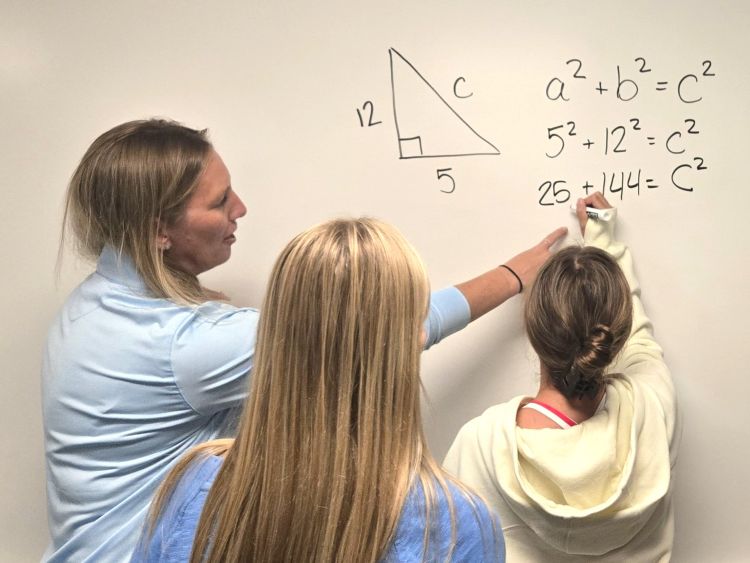
Rockford — Katie Sizemore knows that math isn’t the most popular subject, and she knows that many students — even those in her advanced classes — can find it daunting.
But she’s got a strategy to help them along: she gets them over the mental hump first, then she focuses on understanding, application and mastery.
Sizemore noticed early on in her career that boosting a student’s confidence can “trick” them into overcoming their fear of the material.
“Once they thought they could do it, they were willing to try and get through the struggle,” she said.
Sizemore, a Rockford alum, teaches advanced pre-algebra to sixth- and seventh-graders, and honors geometry to eighth-graders, at North Rockford Middle School, where she’s spent the entirety of her 15-year teaching career. She also just wrapped up a 20-year tenure as the high school girls varsity water polo coach.
Sizemore spoke to SNN about what led her to a career in education, and what makes her job so rewarding.
‘Sometimes confidence is the most important piece of (learning). Letting students realize they can do this. … And they will be able to do it if they keep working at it.’
— teacher Katie Sizemore
Why do you teach? Sizemore took an “unconventional” path to teaching. She actually graduated with an advertising degree from Michigan State University and worked in the business world for a while.
Then she started coaching, and everything changed.
“It was a spark, and I was like, ‘This is what I want to do. I want to work with kids, whether it’s coaching or being in the classroom with them.’”
As she spent more time with student-athletes, she found that helping kids grow and develop was the most rewarding part of the job.
“Working with them every afternoon showed me how much I loved guiding young people through those growth moments. It didn’t take long to realize that coaching for a few hours after school wasn’t enough; I wanted that mentorship and connection to be the main focus of my career.
“Teaching felt like the most natural way to bring that same supportive, coaching mindset into a classroom every day and help kids realize what they’re truly capable of achieving. Teaching isn’t always about the math skills (and) equations. … It is about the everyday lessons on perseverance and resilience. Math gives us the content, but the real impact comes from helping kids learn how to fail forward, stay patient with themselves, and build the confidence to tackle hard things both in and out of the classroom.”
What is your biggest motivator that keeps you excited about teaching? “I kind of created a love for seeing kids who weren’t confident in math, and helping them build the confidence. … Sometimes confidence is the most important piece of (learning). Letting students realize they can do this. Maybe not right now, this second, by themselves, but they can do it. And they will be able to do it if they keep working at it.”
Why math? What’s the most interesting thing about it? “Growing up, when I was in school, I always enjoyed doing math. … It almost felt like puzzles to me — like you were solving a puzzle when you were solving a math problem. If I didn’t know the answers, there was a way to figure it out, or somebody who could help me figure it out. I liked that idea: if I don’t know (how) to go from point A to point B, I could learn how or somebody could help me get there.”
What are some of the biggest challenges in your role and how do you strive to meet them? Sizemore said keeping students motivated is a big one, as is the fact that her math classes are sometimes the first to truly push students.
“It’s a weird feeling for them, where all of a sudden they’re being challenged, or they’re doing problems they can’t just do in their head right away,” she said.
She tries to make sure her students know that it’s OK to struggle, and that “mistakes are opportunities to learn.”
What’s the most amazing thing about your students? “Just watching them grow throughout the year. Seeing their eyes, their excitement, when they see they’re growing and they’re improving.”
It’s pretty remarkable, she said, to watch students become more self-reliant as their time in middle school progresses.
“I try to encourage them to ask me questions but also ask each other first. Seeing those conversations happen, it’s always amazing to see them start to finally be challenged, but then realize that they can help each other too.
“When all of a sudden you say one thing, or a classmate says something, and they have that a-ha moment, and their eyes get big, and they’re like, ‘Oh, I do know how to do this!’ It’s just super exciting and fun to see.”
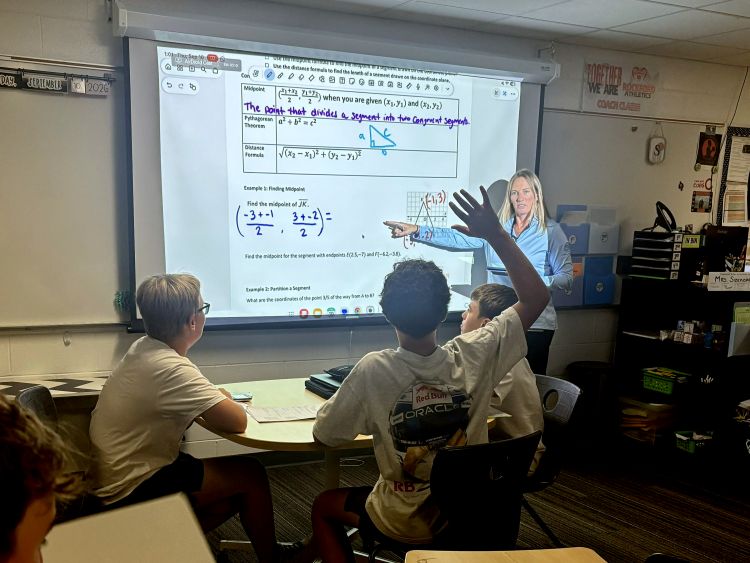
What would you say to someone considering teaching as a profession? “As a young teacher, you want to do it all and figure it out, but a building like North — any school building — has teachers that have been around a long time and they’ve seen a lot of things and a lot of changes, and all those changes teach you something. So ask for help and ask for advice and observe other teachers. It’s amazing what we can learn from each other.”
What’s one thing you’ve learned from your students? “Besides lingo? Just their grit. Like, when we were in school, we didn’t deal with half of what kids are dealing with nowadays. Things have changed. Middle school lives have changed. Just seeing them deal with and work through all the stuff they have to work through, it teaches you how to get through.”
How would your younger self feel about where you’re at now? “I think she’d be shocked, because I was always super afraid to talk to people. … In the classroom I was always very quiet, very shy. … I think they would be proud of what I’m doing. … And I think they’d be happy that I followed my heart.”
Read more from Rockford:
• Middle-schoolers use math to make a menagerie
• Student investors share secrets to their success


