



Wyoming — For help in developing his business plan for a yearlong class project, Wyoming High School senior Engel Tejada headed to a local park and asked soccer players about how they like their fields.
His business idea is a service that keeps athletic facilities in tiptop shape. At the park, he received input from his target audience — athletes — to guide his vision. The soccer players, Engel said, indicated that they would love more maintained fields that are root-free and with level grounds.
“We could renovate or maintain any type of field — football, soccer, baseball, softball,” Engel said of his aspirational business.
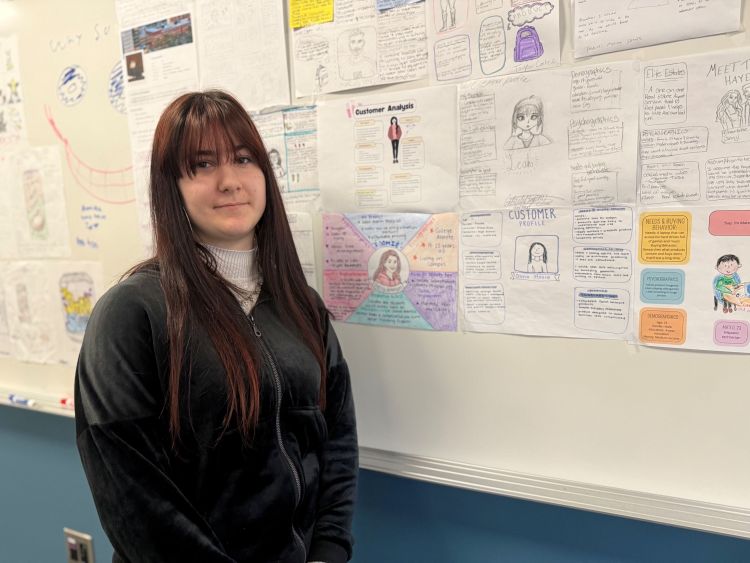
Engel and his classmates in AP Business with Personal Finance class are developing plans for the course’s culminating Business Canvas Project, which they’ll present in May. The project requires students to learn the many steps required to bring a business plan from idea to sustainable operation, from surveying a target audience to financing, said teacher Shawn Veenstra.
“I’ve learned many things. I’ve learned about having a target customer,” Engel said. “I’ve also learned that it’s important to accommodate a customer, too.”
What Does It Take to Create a Business?
The brand-new Advanced Placement course is an introductory college-level class introduced by the College Board this school year. The curriculum focuses on entrepreneurship, marketing, finance, accounting and management, with personal finance sprinkled in, Veenstra said.
The class is more project-focused than traditional AP courses and designed to be a good first AP experience for students, he said.
“The big thing is being able to understand the steps from start to finish of coming up with a product idea … that it’s more than just having an idea to start a business,” Veenstra said. “There’s a lot of market research that goes into that process.”
Students have already pitched their initial business ideas in class, Shark Tank-style, and will present marketing plans at the end of the semester. Ideas include a vending machine with healthy options for night-shift workers, a laptop with an abundance of ports, a skincare line, a silent alarm bracelet and a tattoo shop and cafe.
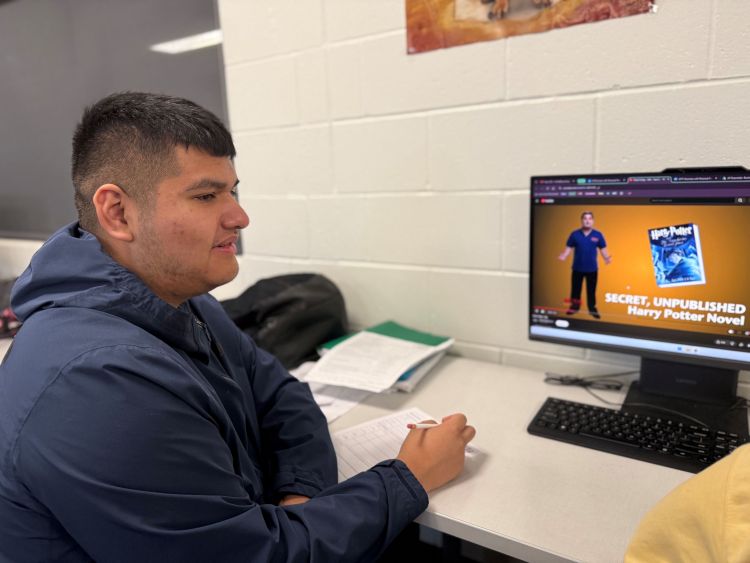
During a recent class period, the budding entrepreneurs drafted potential customer profiles, including demographics, needs and buying behaviors; a plan for how to reach their demographic; and what assumptions to test.
“My target audience is between the age of 18 and 25, (people) who are looking to stay healthy and stay engaged with their workouts and stay efficient,” said senior Ethan Hernandez.
Ethan’s business idea is for a protein powder that helps people stay motivated and energized through workouts. He surveyed students in strength-training class and at a local gym and said most people indicated they would use such a product.
Ethan said the process helped him learn there’s a lot that goes into a business if it’s planned well enough to be successful.
“With marketing, you have to take your time to see if people would actually like your product,” he said. “If you make a product and no one will use it, you’re not making a profit; you’re just losing money.”
A Plan for the Future?
Senior Peyton Takus hopes to make her business plan a reality in the not-too-distant future. Her idea for a one-on-one real estate agency called Elite Estates has a target audience of people in their mid- to late 30s with higher-end incomes.
She interviewed 11 current and prospective homeowners about what they thought of the house-buying process.
“Eleven out of 11 said they would use an agent because it would help relieve stress and make it an easier process,” she said.
She said the class is helping her dig deeper with her goals to make sure her business stands out.
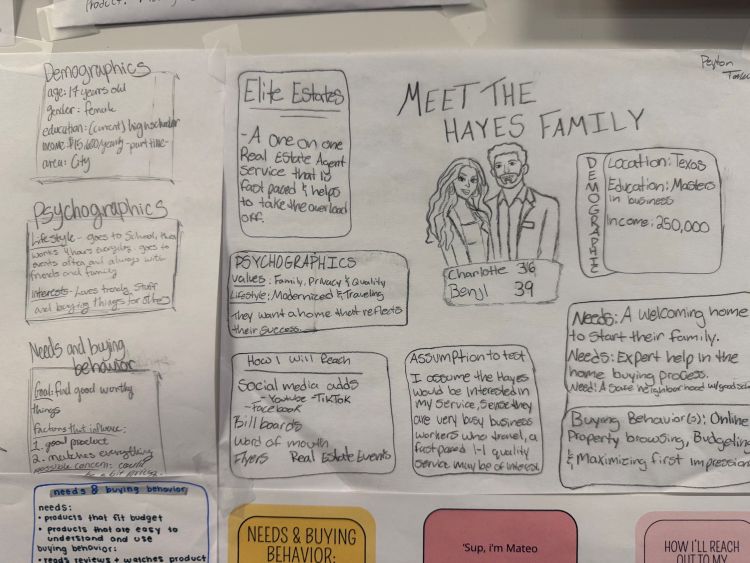
“It is helping me realize you have to differentiate yourself from other businesses because there is so much competition,” she said.
Peyton said she plans to go to college for business and finance and then own her own real-estate business, so creating this plan is great preparation.
“I want to get the basics learned so I have prior knowledge,” she said.
Veenstra said he loves seeing the real-life applications students are finding through the course.
“A lot of times, when I teach business or marketing, they don’t always get the chance to see the real-word relevancy of some of this stuff,” he said. “With this project, a lot of them are getting a chance to say, ‘Hey, this is something I could do in real life, and these are the steps that it’s going to take for me to get there.’”
Read more from Wyoming:
• Assistant principal shares Native American culture through museum exhibit
• Two years after fire, new transportation facility opens


