


East Grand Rapids — What does it mean to be part of a community? Is an “A” grade that comes easily worth more than a “B” that you really have to work for? How does technology impact mental and emotional health?
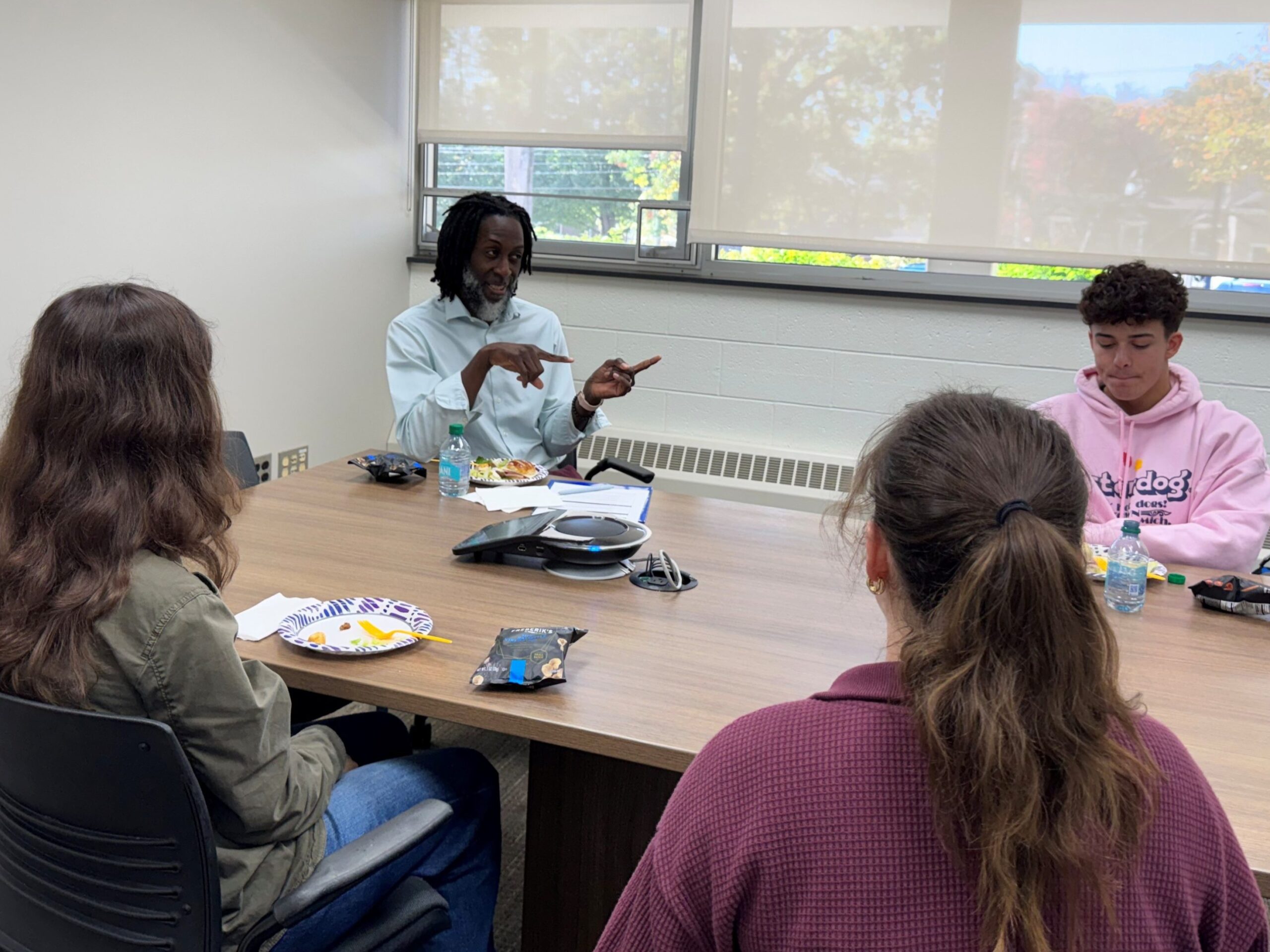
These and other questions came up during neuroscientist Nii Addy’s recent sitdown with students at East Grand Rapids High School.
Addy, a Yale professor and class of 1996 EGRHS alum, visited the high school to chat with students about mental health, community, achievement and other concepts that turn up in the study of how the brain works. After speaking to a large student group, he led a pair of lunch discussions for interested students to talk with him in a smaller setting.
“I find the brain fascinating and wanted to hear about his current research,” said sophomore Joe Krajewski. “This was a great opportunity for me to explore a unique area of medicine.”
Fielding Questions
Senior Clare Assaf asked for Addy’s take on how technology is impacting social interaction.
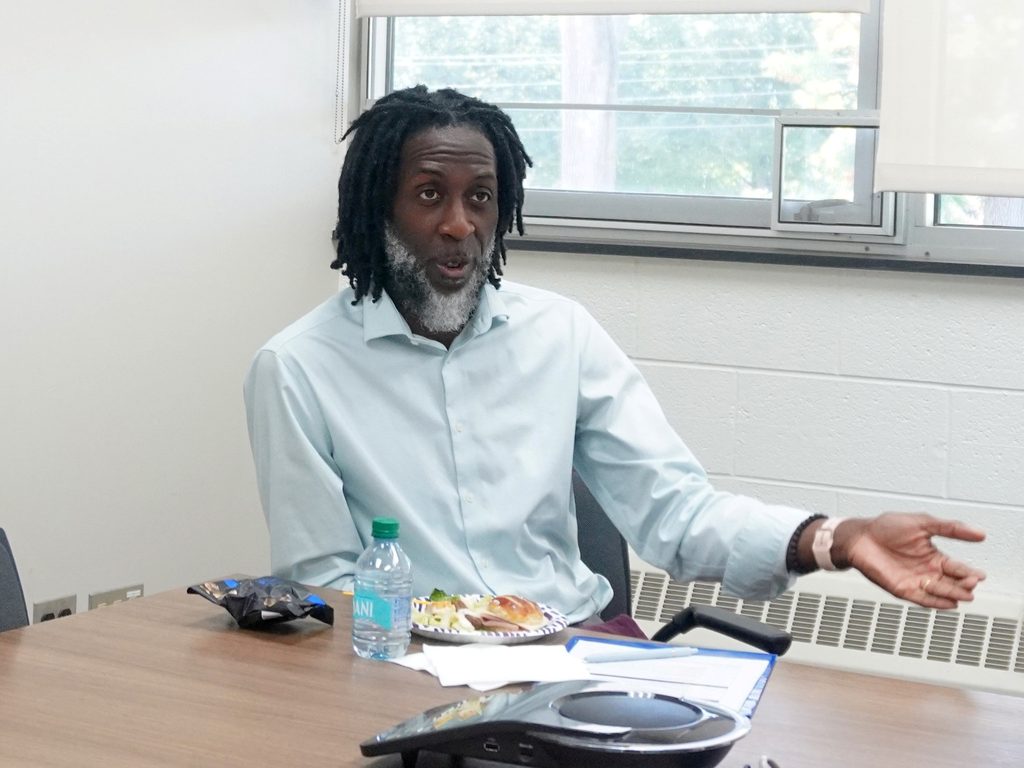
“It’s easier for people to connect online than in person, which, to me, feels like a problem sometimes,” Addy said. “I think we need to push more to have in-person supports there, because sometimes people feel like the online support is replacing the in-person support.”
When the subject of resilience came up, Addy asked students to weigh in on a question: Is it better to choose classes that you’re pretty sure you can get an “A” in, or to challenge yourself and risk getting a “B”?
“Always try to choose the harder option,” said Joe. “Not to punish yourself, but to try to grow as a person.”
Addy approved of that answer.
“If you can get some of those experiences early on, and learn how to kind of navigate through challenges, it’s going to help you later in life,” he said. “You’d be surprised how many adults get to places where it’s too easy to coast into something without really keeping that critical thought going.”
The Value of Community
Addy also talked about how his research, which predominantly focuses on addiction, factors into the study of community.
Studies suggest that being part of a community can decrease the likelihood of engaging in addictive behavior, he said, using laboratory experiments with animals as an example.
“Rats and mice will actually take substances that people will take, whether that’s nicotine, cocaine, heroin, amphetamine, whatever the case may be,” he said. “But if you put those animals together in a community, they’re less likely to take the substances.”
Those findings are inspiring researchers to dig into what it is about community that has this effect.
So, how can people be active in building and fostering community?
“One of the main things is to be the kind of person who’s willing to listen to other folks,” Addy said. “And I always make this joke that the best way to be a good listener is to stop talking.”
Curious and Engaged
The discussion resonated with Joe and Clare, who are both interested in broadening their knowledge of neuroscience.
“I was inspired to hear from an alum who walked our halls and is now performing groundbreaking research at Yale,” Joe said.
Clare, who is interested in medicine, as well as “the mystery of human consciousness, and why we are the way we are,” said she found the discussion illuminating.
Addy was in town to accept the Distinguished Alumni Award from the East Grand Rapids Schools Foundation. He was selected as this year’s winner based on his work as a researcher and on his “Addy Hour” podcast, which pushes topics in mental health and neuroscience toward the mainstream, said Jay Forstner, the foundation’s director of communications.
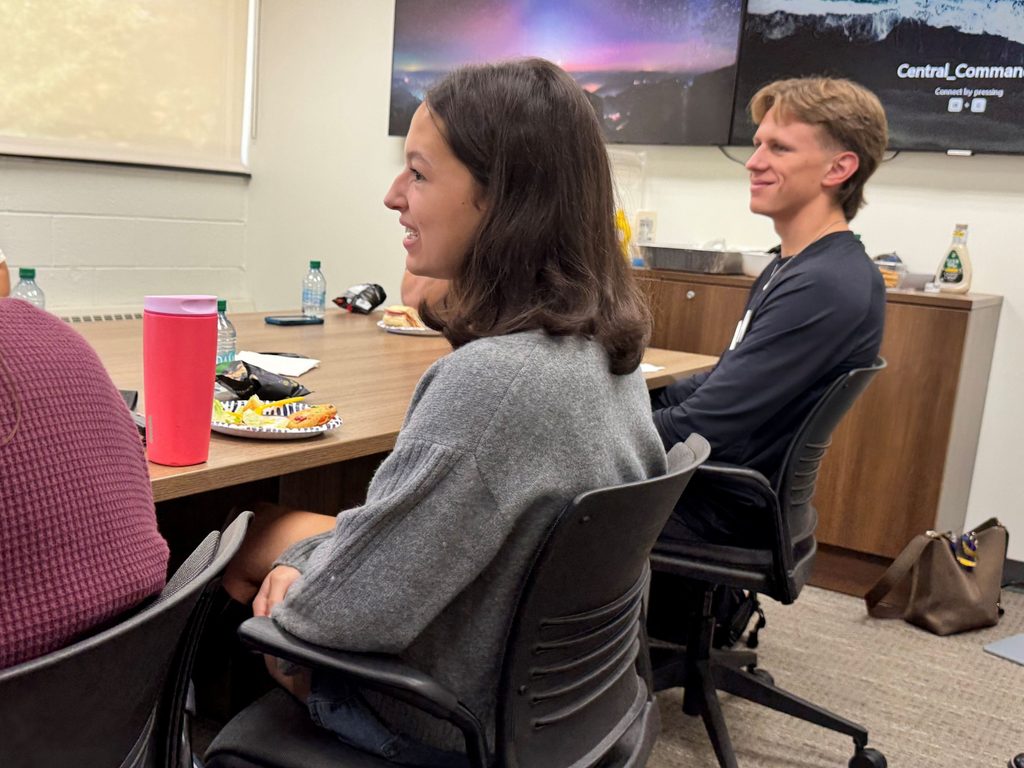
Addy said he was impressed by what the high school students brought to the roundtable, calling them curious and engaged, with thoughtful questions.
If there’s one thing he hopes they walk away with, he said, it’s a better understanding of “the importance of creating an environment, among their friends and among their peers, where they can really talk openly about who they are as real people, and to have space to support each other and their overall mental health.”
Read more from East Grand Rapids:
• She’s the ‘backbone’ of the building
• New AD: athletic fields are ‘an extension of the classroom’


