


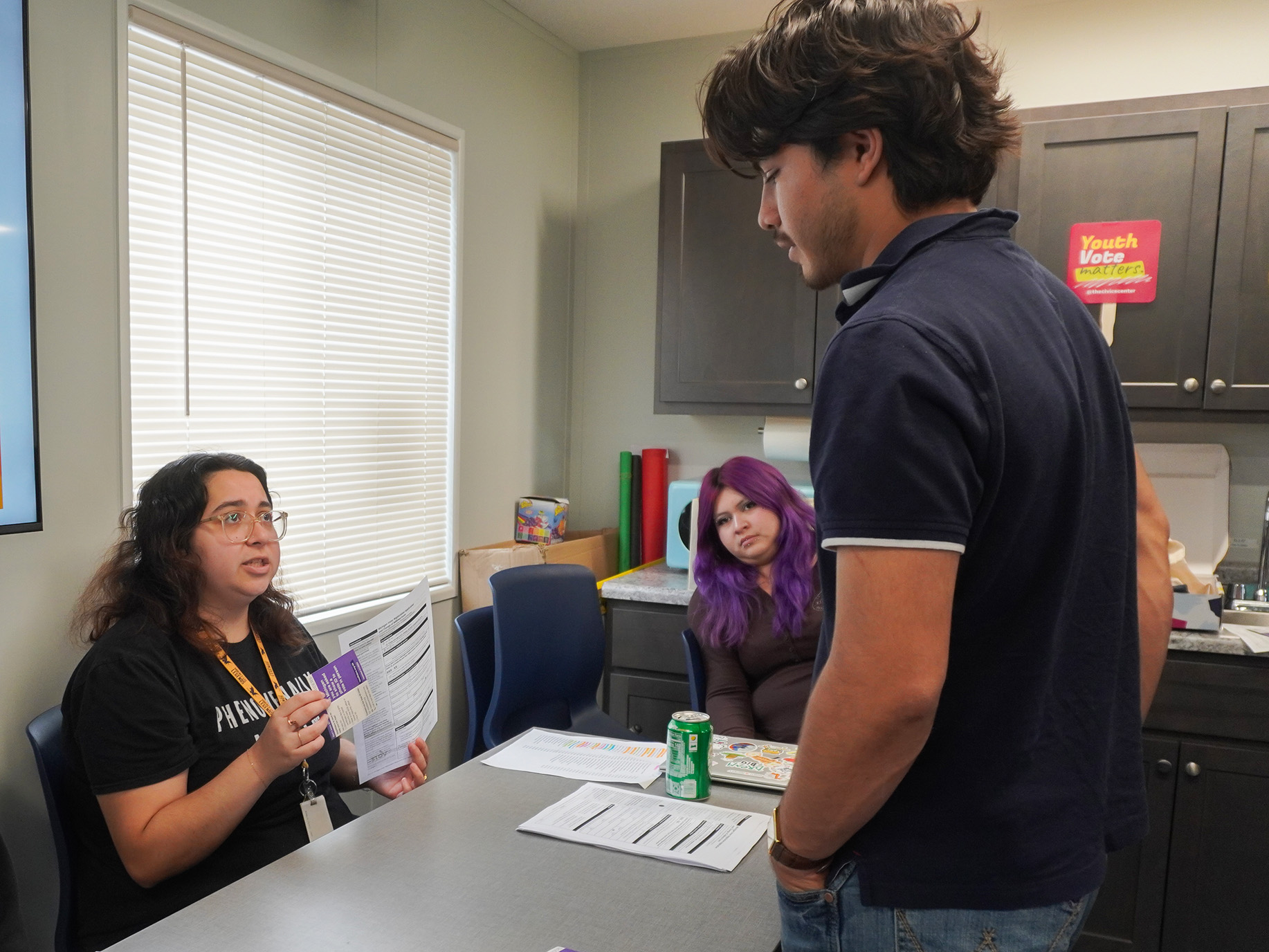
Godfrey-Lee — As a sophomore at East Lee, Marylin Martinez is looking forward to graduating in a few years and charting her own course.
Thanks to her school’s Informed Voter class, she has also learned how to utilize her voice and influence the future of her community and country.
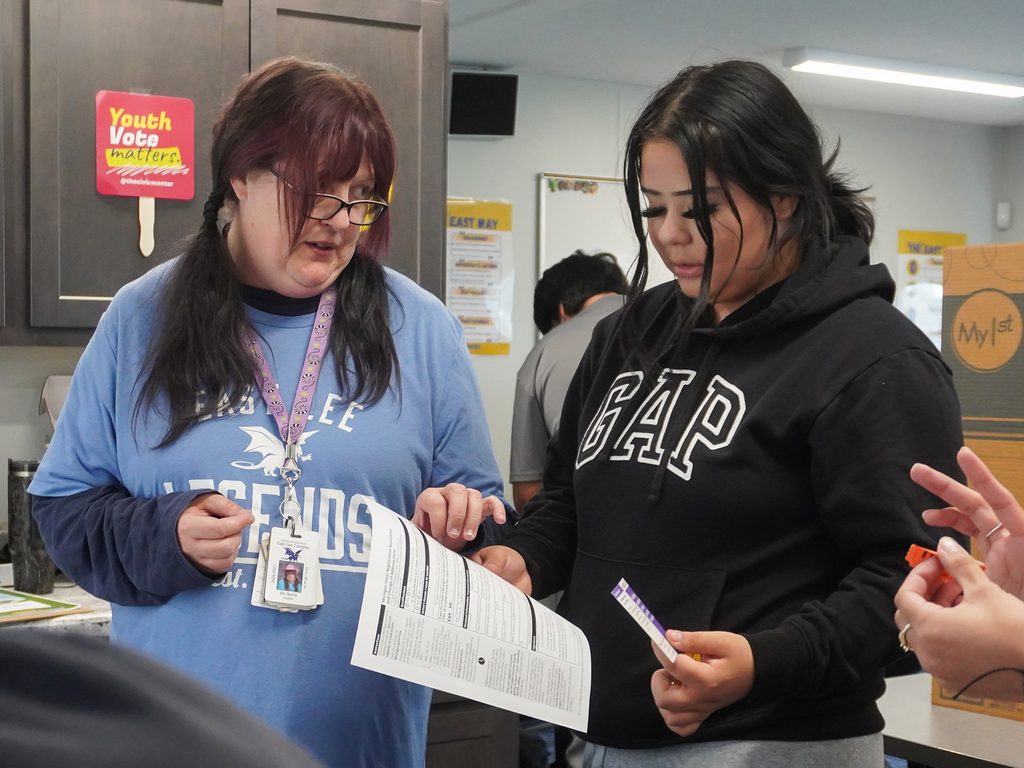
Last week, Marilyn and several of her classmates got the opportunity to register to vote if they will be 18 by election day, Nov. 3, or preregister if they are 16 to 17 ½, per Michigan law.
“I feel like everyone should get the right to (vote) because everyone has their own opinions and we want to live in a better place, not a worse place,” she said.
English teacher Sarah Byrne teaches a combination of English and civics curriculum to help students understand the three U.S. branches of government, the history of democracy, and how governments function in other parts of the world.
She previously developed the class alongside former East Lee site coordinator Justin Noordhoek, and has been teaching it for the past few years.
Byrne reached out to The Civics Center, a national organization that helps eliminate barriers for teens to register to vote, and received free paper handouts, informational materials, stickers and T-shirts.
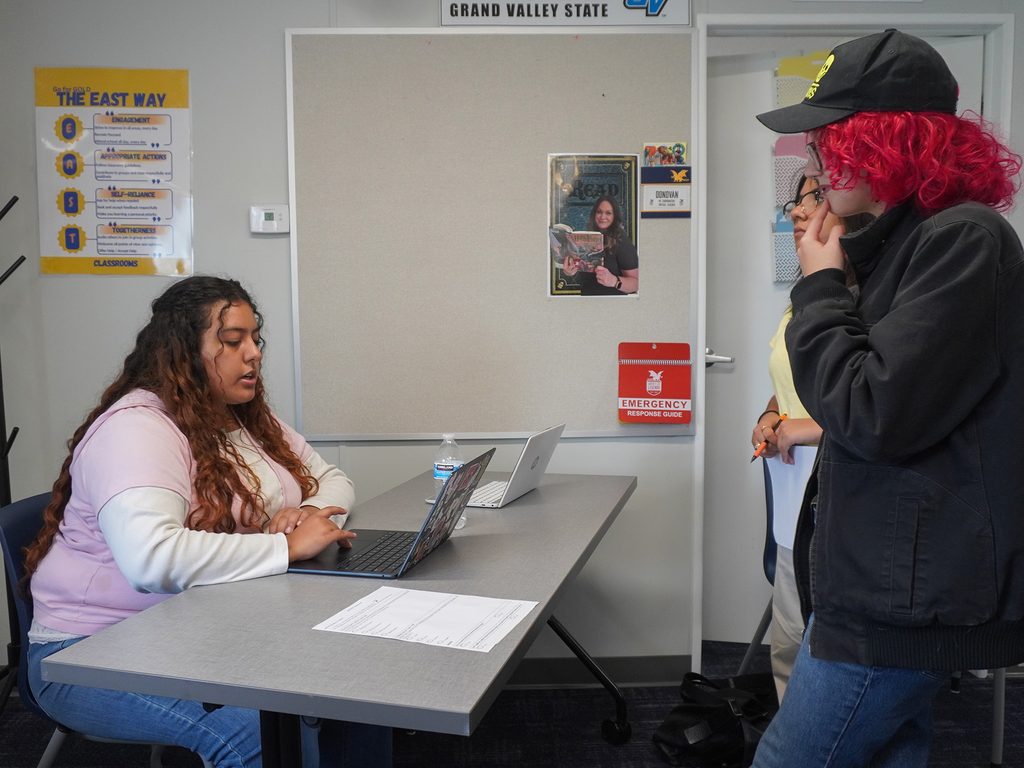
One of the class goals is to guide students toward getting informed and involved in the social issues that matter to them. Byrne is also passionate about empowering her students to use their voices when it comes time for local and national elections.
“I want (my students) to know what issues are affecting real people and how that will impact the rest of their lives,” she said. “I also want them to know how to vote and what to expect when they go to the polls and see a ballot.”
The Next Generation of Voters
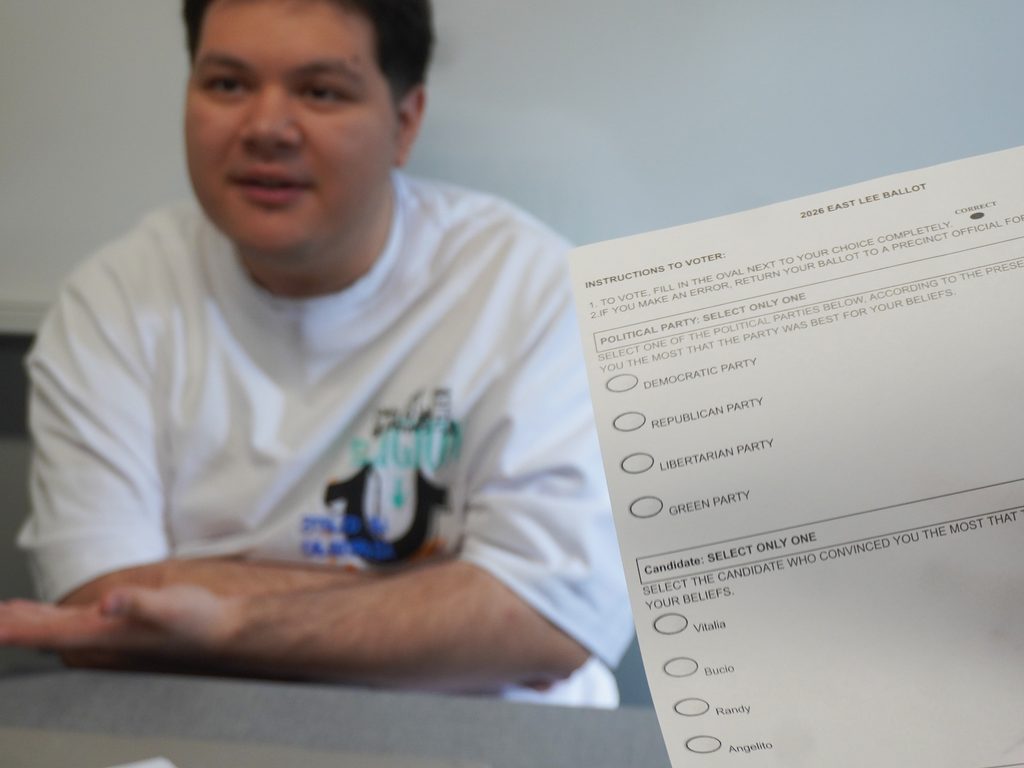
The semester-long class culminated in a mock election, where students practiced campaign speeches, how to read a ballot and how to cast their votes.
Four students researched four political parties — Democratic, Republican, Libertarian and Green — and wrote a campaign speech based on the values and beliefs of their chosen party.
“I only thought there were Republicans and Democrats and then I learned there’s the Green Party and the Taxpayers Party,” senior Evolet Espinal-Gomez said.
Marilyn said learning about the different political parties influenced which mock candidate’s goals aligned best with her own values as a citizen.
“(Who you vote for) honestly depends on what you think of the world,” she said. “There are people in charge right now who think they’re making things better and they’re making things worse, especially for families and mainly immigrants.”
Senior Randy Vasquez represented the Democratic Party in the mock election. He campaigned to make classes easier, offer more support to students and fund more field trips to “make school easier and make school fun.”
Running as the Green Party candidate, senior Vitalia Chumg spoke about fair-share taxation, universal health care and increasing public school funding.
“We’re sitting at a point where our choices really matter and I’m running for president to put the community first and achieve progress, equality and real change,” she said.
After listening to all the speeches and asking questions, students learned how to fill out a paper ballot, “just like filling in bubbles on the M-STEP test,” Byrne told students.
“Voting is anonymous, so you can vote for who you truly believe is the best,” she added.
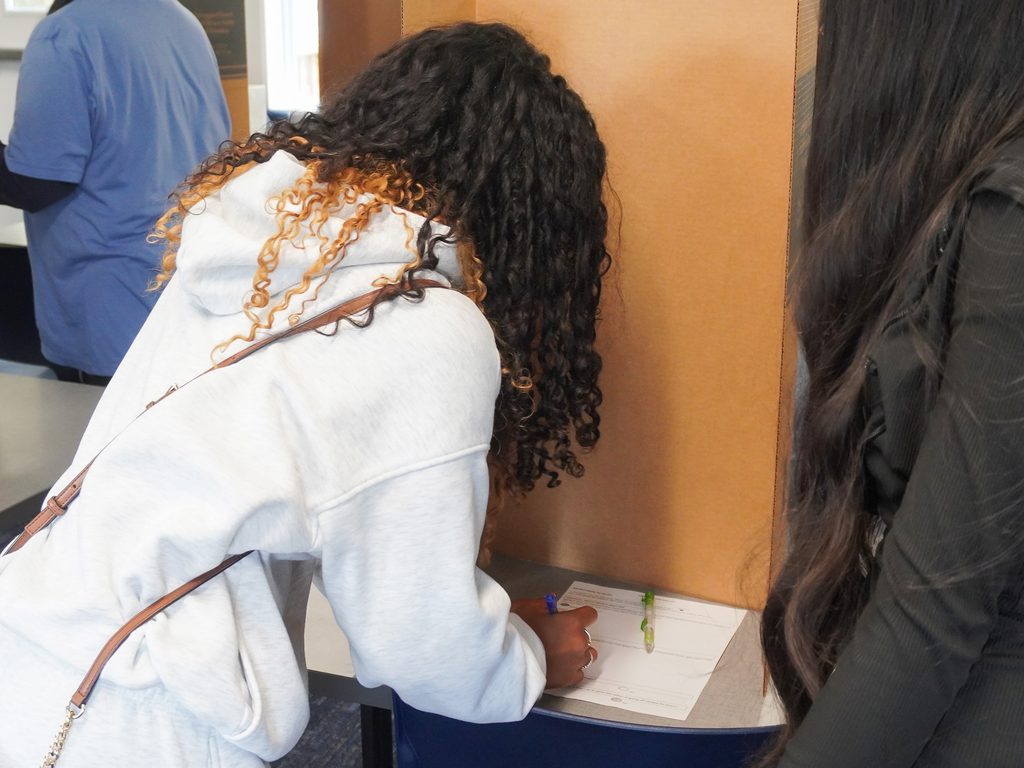
Excited to vote in a real election in a few years, sophomore Harper Meyers explained why she believes it’s important for young people to be informed, even if they’re not yet old enough to vote.
“Older people often think that young people don’t know anything, but in reality, anything the president does today will affect us longer than it will affect any other old person,” said Harper.
“There are things happening in the world that affect us currently, (especially) if you’re a person of color or if you’re gay,” Harper added. “It’s important that you learn what they think about you and how to make your opinion known and make change happen.”
Read more from Godfrey-Lee:
• New secondary principal an experienced district leader
• District ‘caretakers’ keep schools clean, and so much more


