


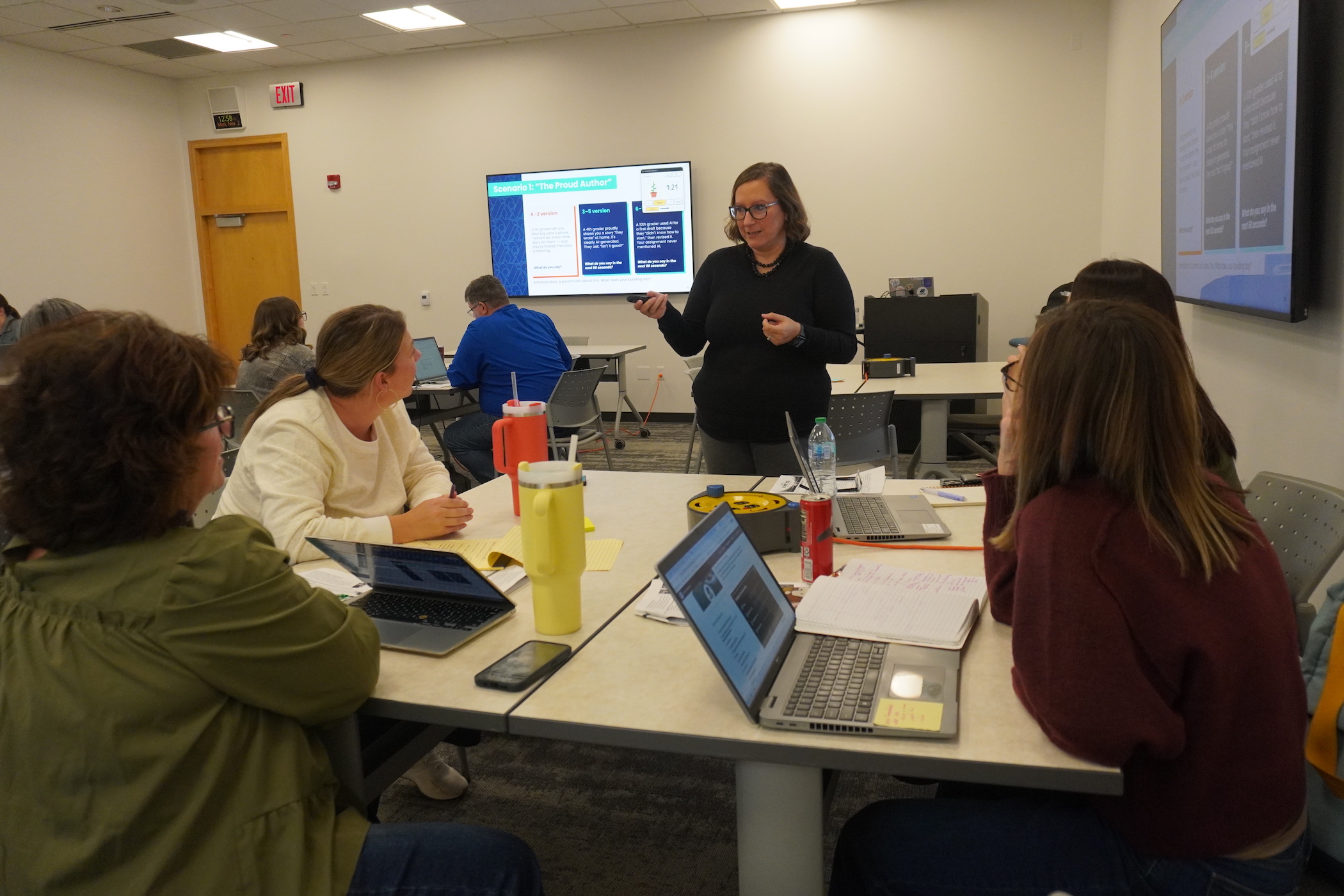
Kent ISD — This year’s AI Summit focused on empowerment, highlighting practical ways artificial intelligence and technology can support learners, amplify student voices and expand equitable access to innovative classroom tools and resources.
More than 90 educators from across Michigan and several other states attended Kent ISD’s fourth annual summit in early November.
Sarah Wood, Kent ISD education technology consultant, said the goal was to help educators explore how AI can make learning more accessible and engaging for students while simplifying teachers’ work.
“We are really looking at how Gemini can empower you to create things, reduce barriers for your students, and make teaching and learning hopefully a little bit easier on the teacher end and embrace engagement for the students,” Wood said.
‘We are preparing (students) for careers that we may not know are out there yet.’
— Sarah Wood, Kent ISD education technology consultant
Keynote Speaker Focuses On Equity
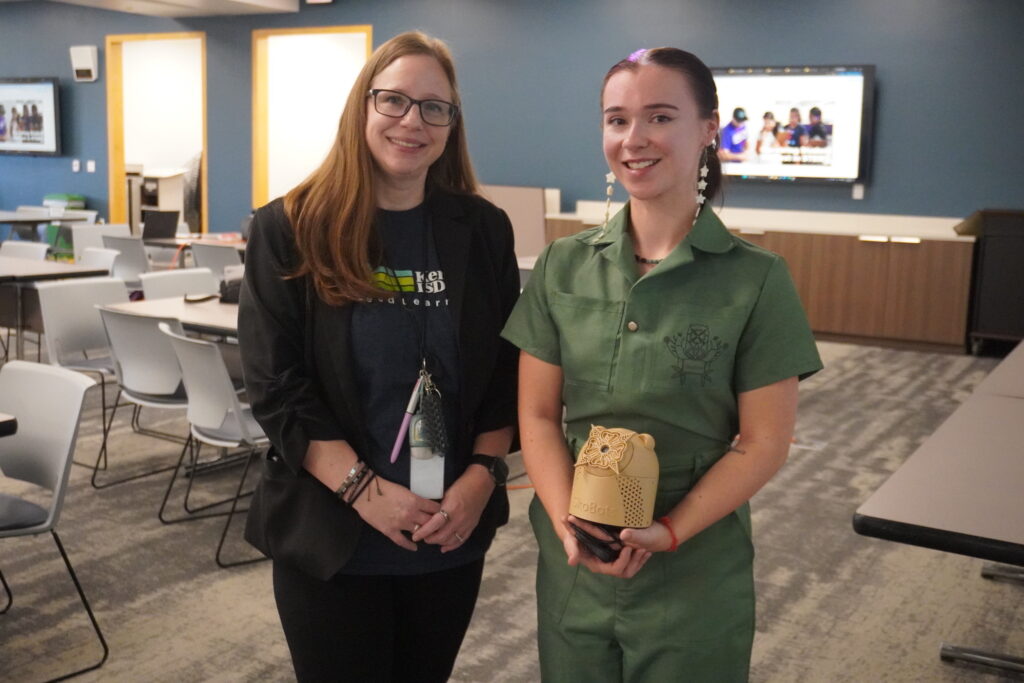
Kicking off the event was robotics inventor and youth advocate Danielle Boyer. A member of the Sault Ste. Marie Tribe of Chippewa Indians, Boyer has spent much of her career exploring how emerging technologies can be ethically used to safeguard Indigenous cultures and languages.
Because of her own struggles in accessing STEM opportunities, Boyer founded The STEM Connection, which works to democratize technical education and provide culturally responsive robotics and STEM learning for Indigenous and minority youth.
To help prevent the loss of her own Native language, Anishinaabemowin, Boyer also created SkoBots, a robot that responds to English vocal prompts with recorded phrases in Anishinaabemowin. Her robot can be found in the new Grand Rapids Public Museum Native American exhibit, “Anishinaabek: The Original People of This Place.”
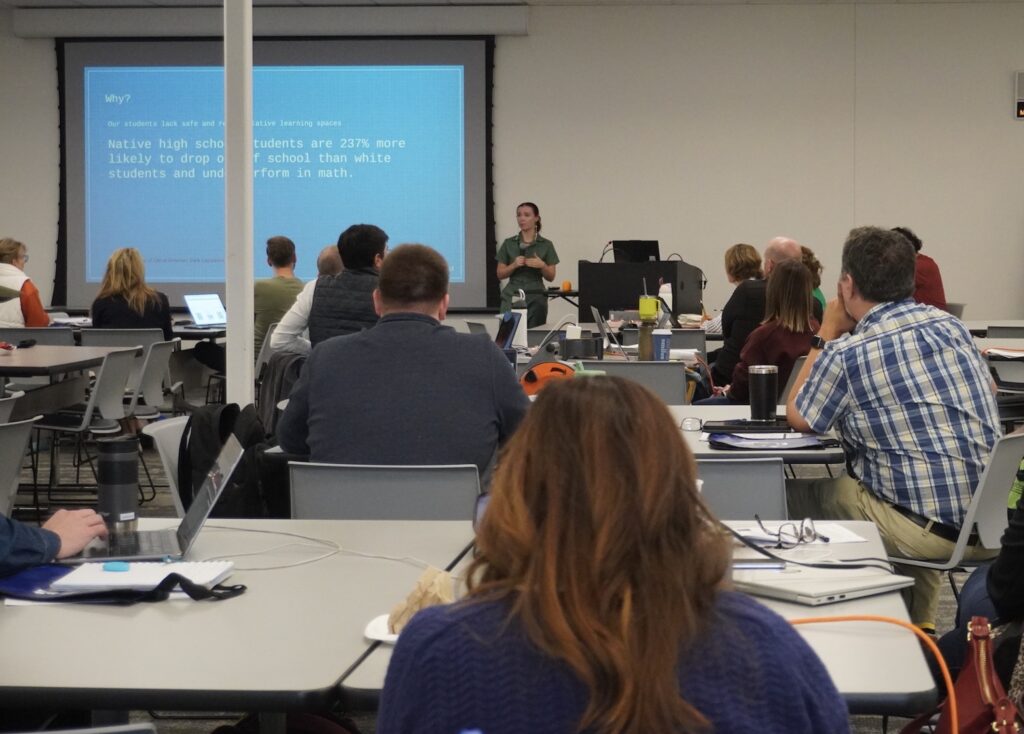
During her presentation, Boyer talked about data sovereignty; the right of Indigenous communities to decide how their languages, stories and other information are used; and cautioned against technology built without community consent or accuracy, including generative AI that can misrepresent Indigenous languages and cultures.
When working with AI and other tech tools, Boyer said educators should ask themselves the following questions:
“Who is this for? Who is it by? Who does it help or who does it harm?” she said. “If I could condense everything I’m saying and that you’ll take with you into the future, it would be this: How can we use these things in positive ways for more good than bad?”
Wood said Boyer’s message is an important one for educators to hear, “because our students are the future and if we provide opportunities for them to flourish in these environments, it’s going to be an amazing future, which really empowers them to have choice and voice in their learning and creating,” she said.
Learning to Use AI for Good
One way to help students use AI effectively is to understand when and why it is being used, said Aaron Romoslawski, Forest Hills Public Schools’ director of AI strategy and instructional innovation. Romoslawski was among several presenters who led breakout sessions during the summit.
“We need to know why we are teaching the lesson and what skill or standard we want the students to learn from that lesson,” Romoslawski said.
He used an English writing assignment as an example. If the goal is to teach students how to write a thesis statement, having them put their writing into an AI tool may be appropriate, he said. If the assignment focuses on grammar, students might be allowed to use AI to generate ideas for what to write about.
Kristen Kayser, senior lead for Midwest programs at aiEDU, a nonprofit AI literacy organization, said clearly communicating whether and how students can use AI on assignments is important to helping them understand expectations.
“Modeling to students how you use it helps them see best practices and strategies to use,” she told participants during her breakout session on guiding student use of AI.
Wood said organizers hope the breakout sessions and the keynote speaker will encourage educators to consider how AI could create new opportunities for students.
“How can we use these tools to empower us to make new opportunities for our students?” she said. “Try things that have never been tried before, and really encourage our students to think outside the box, because we are preparing them for careers that we may not know are out there yet.”
Read more from Kent ISD:
• Kent ISD close to doubling enrollment in career & technical education
• ‘Pushing the plot in a new direction’ for each student’s story


