


Kenowa Hills — There are vampires lurking in the Great Lakes.
Sea lamprey, known as vampire fish, are an invasive species with many rows of sharp teeth and a hankering for native fish, like trout and salmon.
Good thing Central Elementary fourth-graders recently learned how to utilize artificial intelligence to help nature and technology exist in harmony.
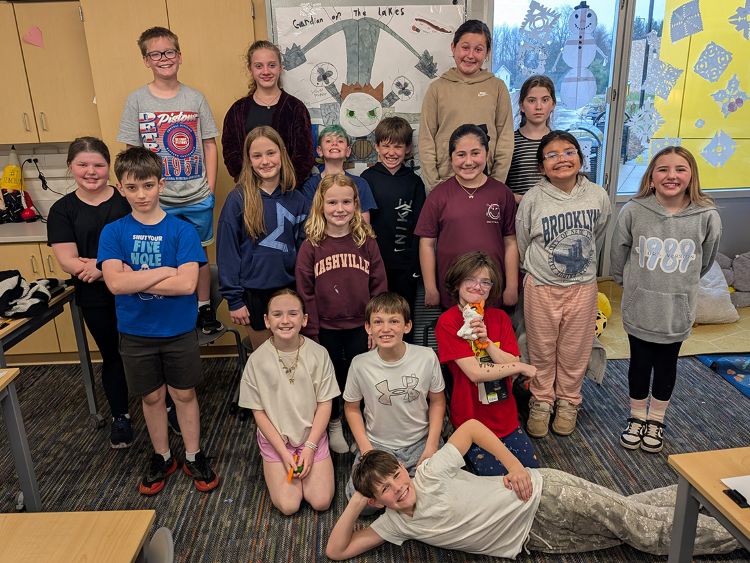
Jessie Wiercinski’s class voted to take on the challenge of defending their home state lakes for the Presidential AI Challenge, a competition that inspires young people and educators to use AI to come up with solutions to community challenges.
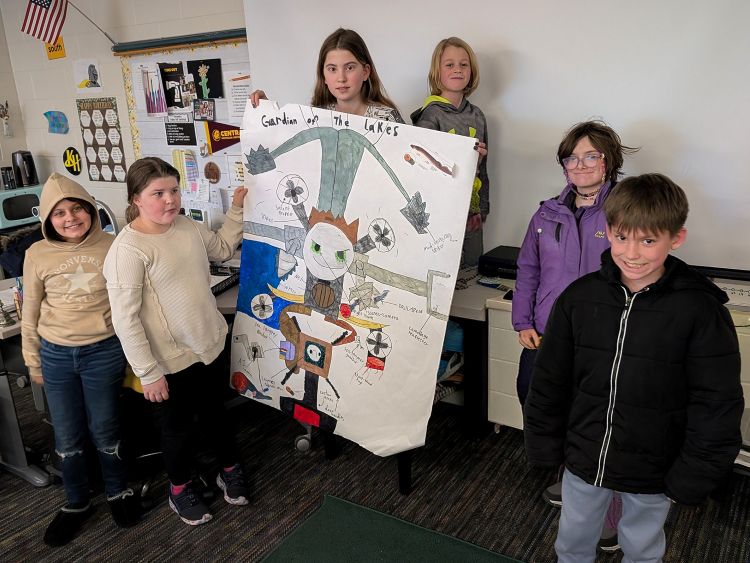
Small groups divided and conquered the work to create plans for the Guardian of the Lakes, an AI-powered drone that would identify and capture sea lamprey, while leaving native fish unharmed.
Students learned how and when AI could be a useful “think partner,” Wiercinski said, and when to avoid using it.

“We learned (AI) can help you learn and give you feedback to your questions,” fourth-grader Lucas Kasper said. “You can use AI to build stuff that helps out the world, but we have to use it safely. We can’t use it to track people or private information in public.”
Their drone earned them first place out of 2,800 entries in Michigan. They advanced to the regional level, where a small group presented to a panel of judges earlier this month via Zoom.
“We had a big party and a lot of people were yelling, screaming and dancing,” fourth-grader Matthias Adams said. “We got a break from work to celebrate that we beat every elementary school in the state (that entered the contest), and even some older students.”
They didn’t win regionals, but Wiercinski said it was still “great to be a part of the challenge, and my kids are AI pioneers.”
A Plan to Protect the Great Lakes
The class began working on the project around Thanksgiving and spent a month becoming experts on the species, designing the drone’s structure and preparing their presentation materials.
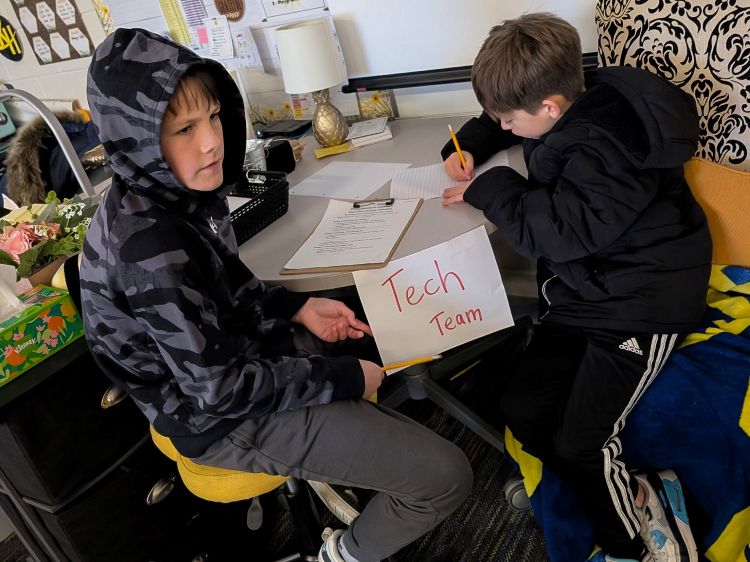
The research team used primary sources, like the Great Lakes Fishery Commission and U.S. Fish and Wildlife Service to learn more about sea lamprey behavior. They collaborated with the essay-writing team to communicate their project’s importance.
A section of their essay reads:
“We think the President would care about this project because it helps protect our nature. The Great Lakes are a huge part of our country’s heritage, and we need to keep them clean and full of life. Our drone also helps the economy because it keeps fishing communities safe so they can keep doing their jobs. By using smart AI, we are showing the world that American kids are great at inventing new ways to solve big problems and save the environment.”
A well-known artist in her class, fourth-grader Kyla Grassmid, aligned her art style to illustrate her peers’ vision to the judges.
“I sketched the entire thing out, and the rest of the group colored in and I labeled it,” Kyla said. “We each did a chunk of the work and added the trout blood bag to lure the sea lamprey, because they eat blood.”
Fourth-grader Matthias Adams worked with his peers on the tech team, tasked with learning the ins and outs of AI and vampire-fish-slaying technology.
‘You can use AI to build stuff that helps out the world, but we have to use it safely.’
— fourth-grader Lucas Kasper
“Our team experimented with the problems of our design and solved for solutions,” he said. “Using ropes to capture the sea lamprey could get tangled in the drone’s propellers, so we switched to vacuums.”
The drone needed to navigate through dirty, low-visibility water, so the students thought about issues like getting stuck in the mud and dead batteries, and brainstormed potential solutions. They also considered how to protect friendly native fish.
“Our drone uses AI to detect sea lamprey patterns,” Matthias said. “If it moves like a snake and has seven gills, it sucks it up.”
Computer Vision AI and a designing a linear logic formula ensured their drone would follow pre-programmed instructions.
Explained Lucas, “We designed it to have night vision and camouflage, like octopuses, so it can sneak up on the sea lamprey to capture them.”
Read more from Kenowa Hills:
• Trio of area schools recognized for literacy achievements
• Kenowa Hills board selects next superintendent


