


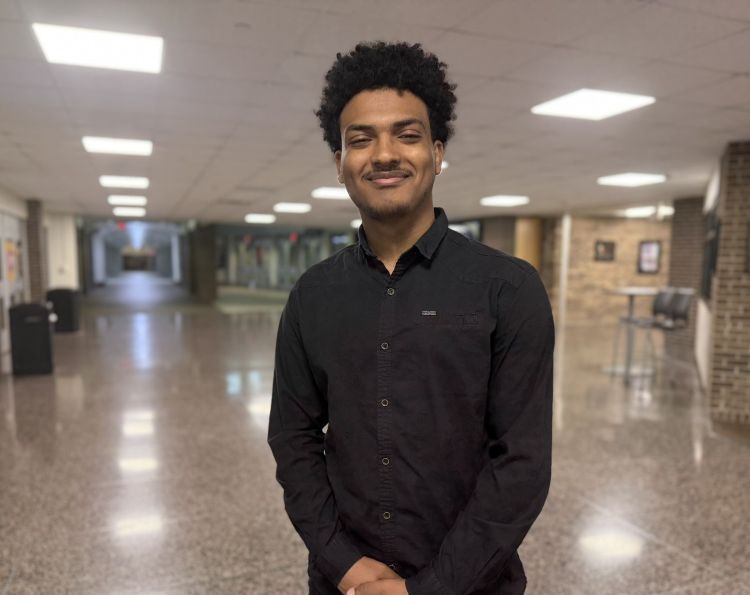
Kentwood — Flash back to three years ago: Ahmed Elkwad sat in a classroom for English language learners at East Kentwood High School feeling very alone.
He had fled Sudan, the only home he had ever known, with his parents and two brothers due to ongoing civil war. Surrounded by other U.S. newcomers whose native languages were not his own, he felt like he had no one to talk to.
“My sophomore year, I was very disconnected from my community. I just went to class and went back home,” he said. “That was my life, every day. I sat alone at the lunch table; I didn’t know anybody. (My English) was very broken, so I didn’t have the confidence to go out and talk to people. I was very shut down.”
Part of the reason Ahmed struggled was due to a frustrating reality: He had to complete high school for a second time. In Sudan, where high school is a three-year program, he was a month away from graduating when his family fled. He thought he would be a senior at East Kentwood, but had to begin again as a sophomore since his credits didn’t transfer.
“I really thought about quitting high school,” he recalled.”I didn’t want to restart.”
‘Refuge is not just a place you reach; it is something you build out of community and out of the courage to begin again. I did not arrive here with much. But I made the most of it.’
— 2026 graduate Ahmed Elkhwad
His parents, however, told him to think about his Sudanese classmates and consider how fortunate he was.
“That really made me lock my mind to do it. Most of my peers that I still talk to are still struggling. They are all over the world — some in Egypt, some in Saudi Arabia. They really struggled to get back into high school.
“I’m really lucky, and I chose to make the most out of the opportunity.”
Leaving Sudan
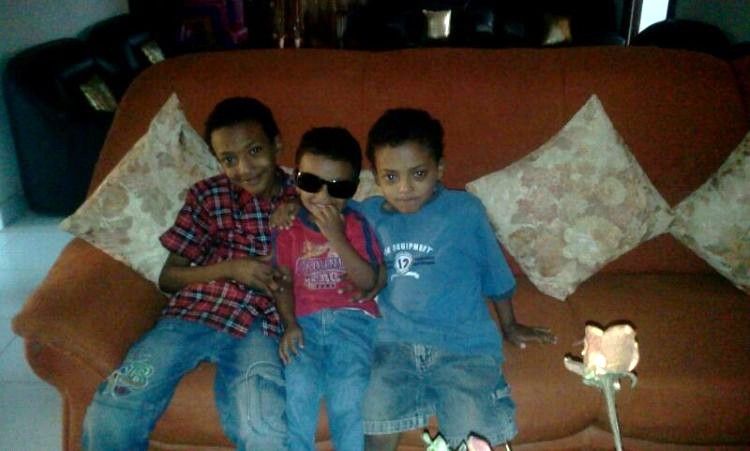
Ahmed lived in a tight-knit community in Sudan, where everyone in the neighborhood knew one another, played soccer and drank tea together. His mother, Lubna Hassan, was a bank manager and his father, Amir Elkhwad, a high-school teacher.
“I miss the community, to be honest. I found an amazing community at EK, but when I went outside my house in Sudan, everybody in the street said ‘hi’ to me. I knew everybody; we had local aunties and uncles with their children. Everyone was kind of like my cousin.”
His family obtained a visa to immigrate to the U.S. in 2021, and were going through the required multiyear process to move.
“My original plan was to finish high school in Sudan, then come to the United States to do college, but before I got to finish high school the civil war started.”
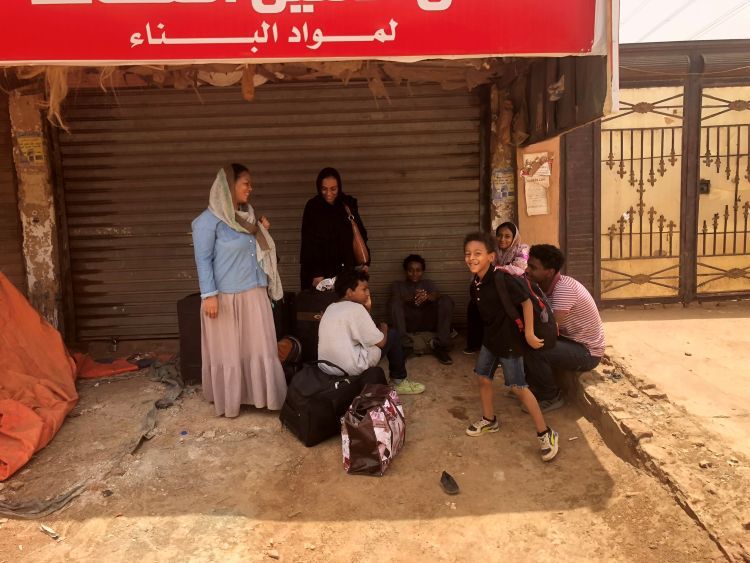
Sudanese people are used to unrest and military conflict, he said, and they expected things would calm down quickly. But two months on, Ahmed’s community had no power, no water and resources were becoming scarce. The war is now in its fourth year and the country is being described as the world’s largest humanitarian challenge.
The family moved to an area near the Egyptian border to wait out the conflict. More time passed before they decided to cross into Egypt by way of a six-hour walk through the desert.
“My parents were very hesitant to leave everything. Our bank accounts, our house and our cars were still (in Sudan). They couldn’t just leave it behind.”
But the war continued, and they ultimately decided to leave. They boarded a plane to the United States, first arriving in Lansing to live with Ahmed’s aunt until his father found a job in Grand Rapids, which led them to move to Kentwood, serendipitously home to the most diverse high school in Michigan. His younger brother is now a junior at East Kentwood and his older brother is a student at Grand Valley State University.
There are some major differences — and a few paradoxes — when it comes to U.S. and Sudanese schools.
Sudan’s education system, Ahmed explained, has few resources – “almost zero funding; teachers barely showed up.”
“But something that helped me … is that we had a very strong curriculum. We do Calculus 2 as seniors in high school in Sudan,” he said. “When I came to the U.S. from being a senior who studied Calculus 2 to taking geometry, it was easy, but every other topic was pretty hard. I had my worst grades in English when I came to the U.S, but any of the scientific stuff kind of transferred naturally.”
Seeing Opportunity & Stepping Up
Fast forward to today: Ahmed Elkwad was class valedictorian, and with a GPA of 4.53 and a stack of Advanced Placement credits from 14 AP classes, he is headed to Stanford University in the fall.
The fact that he is in an incredibly unlikely position isn’t lost on him, and he gives credit to the opportunities he was given at EK. When he told a counselor he wanted to take AP classes, they agreed, even though he spent his sophomore year in EL classes.
“It’s really the community of the people that tried to push me through. They didn’t try to gatekeep knowledge. They invited me to their clubs, into the hard classes, the robotics team, etcetera, etcetera.”
Ahmed began to step out of his shell in December of his sophomore year. He decided to join the swim team, despite not knowing how to swim.
“I just flourished from there, because I started to know people. The team really brought us together.”
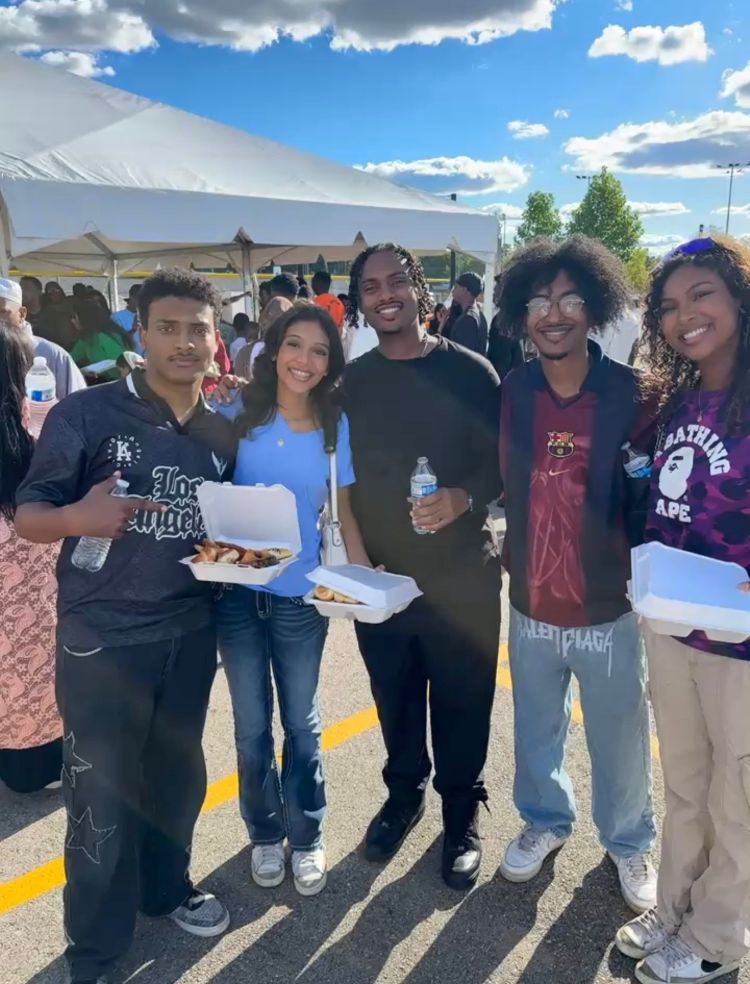
He met senior and fellow swimmer Daris Nasup, who helped him make some important connections, introducing him to AP classes, then the Muslim Student Association.
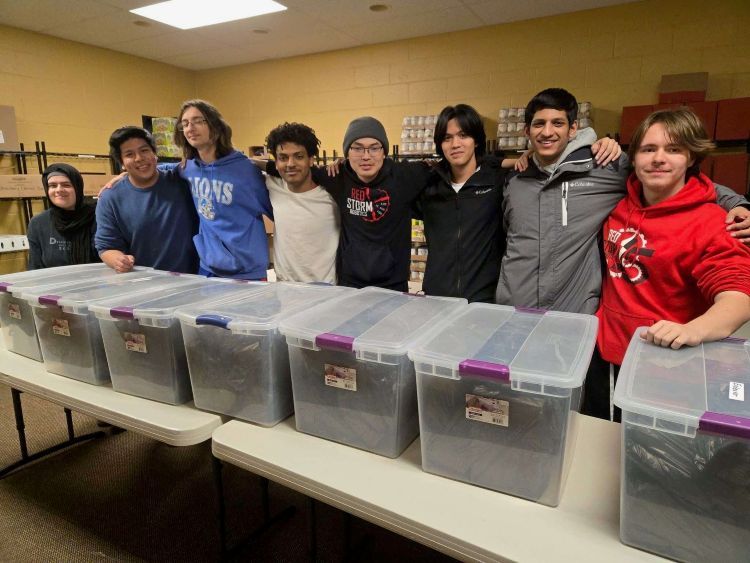
From there, Ahmed began his trajectory to the top of the class, layering AP classes and extracurriculars to his schedule. He joined the water polo team, Red Storm Robotics and We the People, learning about the U.S. Constitution at a level that surpasses many American peers.
He founded the STEM Club, was vice president of the National Honor Society, vice president of Future Health Professionals of America, and AP Ambassadors. He served as president of the Muslim Student Association and design captain for robotics.
Ahmed participated in a program — Minority Introduction to Technology, Engineering and Science — at Massachusetts Institute of Technology last summer, which led him to start thinking about applying to elite universities. Through QuestBridge, a program for low-income, high achieving students, he applied to Stanford as his first-choice school and got in. He has a full-ride scholarship and plans to major in aerospace or electrical engineering.
At East Kentwood, teachers describe Ahmed as someone who advocates for himself and doesn’t quit. Science teacher Laura Sloma first met Ahmed during his junior year when she taught him in AP Physics 1.
“One of Ahmed’s greatest strengths is his strong work ethic and excellent time management skills,” she said. “I cannot believe how much he can accomplish in a day. He plans ahead, starting assignments early so he can complete them thoughtfully and ask questions when needed. He utilizes every bit of time toward productive work. He is a self-directed learner who grasps new physics concepts quickly, and willingly helps classmates who may be struggling.”
AP Government and We the People teacher Justin Robbins shared how Ahmed worked to become a competent debater about a government that was brand new to him. As a junior, Ahmed was asked to join the Google Classroom AP Government, because he was hoping to join the class in the second semester to pursue his goal of being on the We The People team as a senior.
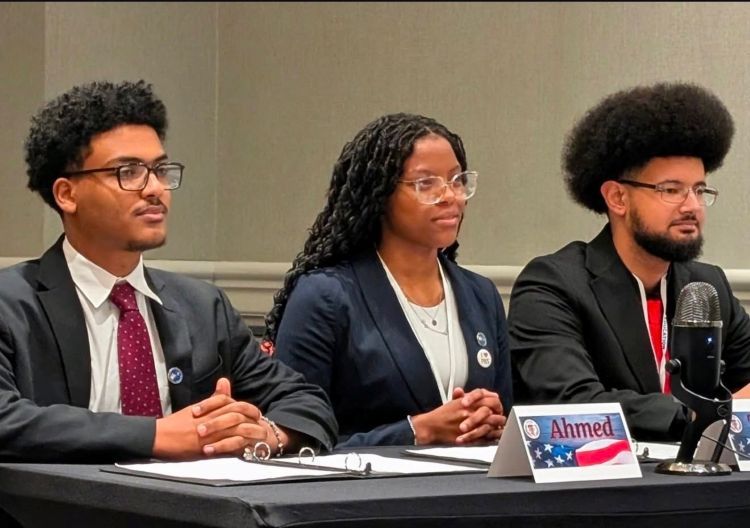
“So he prepared for AP Government on his own as an extra class, and was able to execute the plan that led to participation in We The People for senior year,” Robbins said.
Once on the team, Ahmed thrived.
“He is able to take direct feedback about his work or arguments and utilize it to improve his understanding of an issue in a way that many students struggle to. This enabled him to grow his public speaking and analysis skills rapidly this season in We The People,” Robbins recalled.
“Working with Ahmed, you could always trust that he would come to a meeting with a deeper understanding of content and try to use it; he demonstrated a curiosity about getting to the ‘why’ behind many complex political issues, and I suspect this type of thinking will be a unique asset for him as he considers a STEM-related career path.”
Sharing his Story
Ahmed recently shared his story during “Composite Community,” a project and event created in partnership with East Kentwood and the Grand Rapids Public Museum to document and archive the stories of immigrant families.
To conclude his piece, he referred to his first days at East Kentwood.
“Weeks before my graduation, I look back at the boy sitting alone at the lunch table as a sophomore and I barely recognize him, not because he has been left behind but because he is still there. Underneath everything, quite stubborn and unbroken,” he read.
“He lost a country and found a home in the community of West Michigan.
“He is about to graduate at the top of his class and head to Stanford University to study aerospace engineering.
“Refuge is not just a place you reach; it is something you build out of community and out of the courage to begin again. I did not arrive here with much. But I made the most of it.”
Read more from Kentwood:
• First-generation college students bring ‘level of grit, perseverance’
• Program pairs mentors with high school students


