


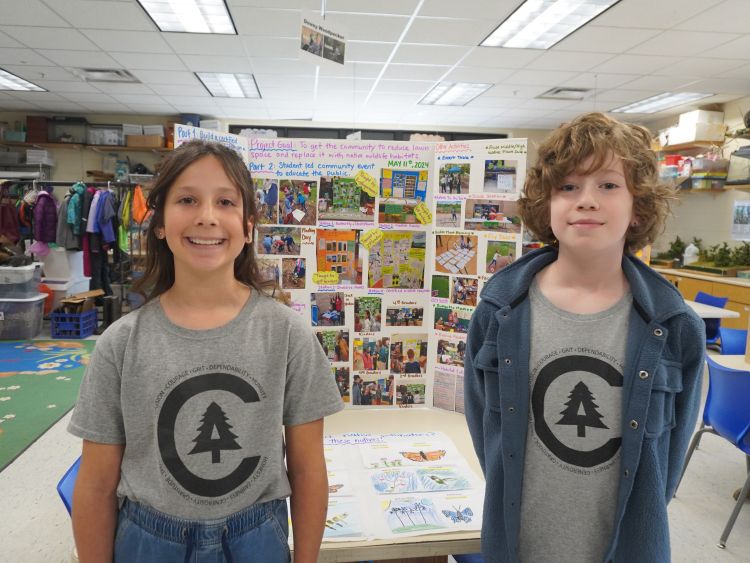
Grand Rapids — For the past few years, C.A. Frost Elementary students have been learning all about how to create wildlife habitats at school and in their neighborhood, and now they want to pass that knowledge on to you.
The brand-new Lawns to Habitats website, launched in May by Amy Paul’s e-lab students, not only documents how they learned to turn sections of yards into thriving wildlife habitats, it also shows others how they can do the same thing.
Lawns to Habitats features general information, student-created books, drawings, videos and other resources to help the Grand Rapids community follow the students’ lead and support local wildlife.
‘Kids are just as capable as grown-ups when it comes to helping the environment.’
— fourth-grader Ben Johnson
‘This is a problem; we need to fix it’
The website launch is the culmination of a multi-year project that started with students identifying a local environmental problem to address, then coming up with a strategy for how to do so.
“I like to use a lot of place-based education, and with that, you get your students to really analyze the place you’re at — the community, the native plants and animals nearby, everything as a whole,” said Paul. “I said, ‘What’s an issue? Something we can work on? What’s a project we can do?’”
Students took note of the fact that the construction of new apartment buildings near the C.A. Frost campus was impacting nearby wildlife.
“Some trees were being taken down, and they noticed more roadkill on the roads, so they said, ‘Hey, this is a problem; we need to fix it,’” Paul recalled.
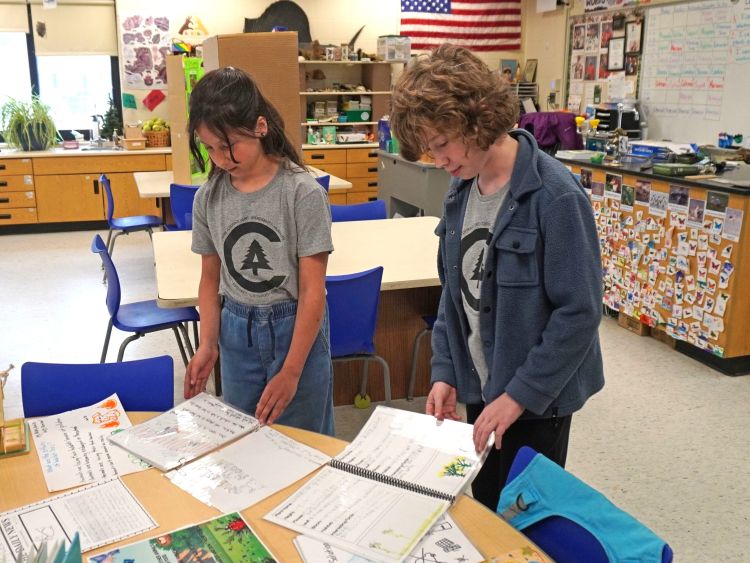
With her help, students developed an action plan. It involved leveling up grassy areas by replacing sections of lawn with native plants like goldenrod and milkweed, and installing bird feeders to help pollinators flourish.
They started with a portion of the lawn at C.A. Frost, then turned their attention to the surrounding neighborhood. They surveyed residents to see if anyone was interested in having part of their yard converted into a habitat, and a few people took them up on the offer.
Local companies and organizations donated design expertise and plantings.
Fourth-graders Ben Johnson and Evelyn Wiegand told SNN about what the process entailed.
“We renovated their yard by kind of digging up grass, because for lawn spaces, grass isn’t really helpful for animals and bugs. So we planted native plants there,” Ben said.
Native plants are much better for bugs and other animals, Ben and Evelyn explained. They won’t take over the way invasive species do, and they offer necessary shelter and nourishment for pollinators.
‘We started small … and I think we can strive for the whole of Michigan.’
— fourth-grader Evelyn Wiegand
“If we get rid of the invasive plants, and we put in native plants, there’s a higher chance of my favorite bug, the monarch butterfly, coming back from hibernation and actually living,” Ben said. “If there aren’t enough of those plants, they might go extinct.”
The first step was helping a few neighbors get started on making their yards more pollinator friendly. With the new website, Ben said, the students are asking the Grand Rapids community to follow their lead, and equipping community members with the knowledge to do so.
“The website is telling you the information we have learned so you can help those plants and animals and bugs,” Ben said.
The project also involved creating workbooks and a mural with information about building habitats, as well as presentations that the fourth-graders shared with younger C.A. Frost students.
‘I really like how we can make a change’
Evelyn said one of the best parts of the whole project was learning firsthand just how big an impact kids can have.
“We started small, in the school, then the neighborhood, now we’re doing Grand Rapids, and I think we can strive for the whole of Michigan,” she said.
“I really like how we can make a change, as students at this school, and we don’t have to just let adults do all the work. We can teach people how to do it and how we can make a difference in our native plants and gardens, and we can help animals.”

Ben shared that sentiment.
“Kids are just as capable as grown-ups when it comes to helping the environment,” he said.
That was music to Paul’s ears. The e-lab teacher said one of the main goals of the project was to empower students and teach them that they have what it takes to make the world a better place.
“I hope they realize that they can make a difference,” she said. “It may start off as something small that they think doesn’t matter so much, but they are very powerful, and they can use their words to help change the world.”
Read more from Grand Rapids:
• ‘Leading by example’: District celebrates arrival of first EV buses
• New Native American library is ‘connecting scholars to their heritage’


