


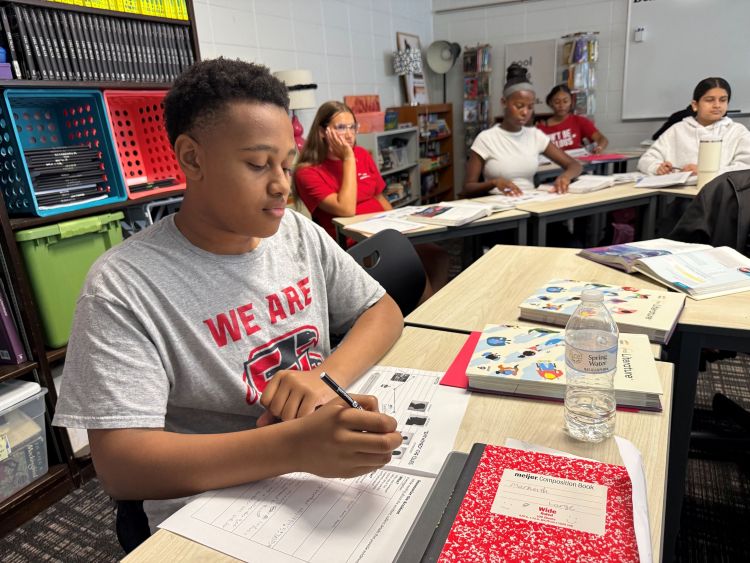
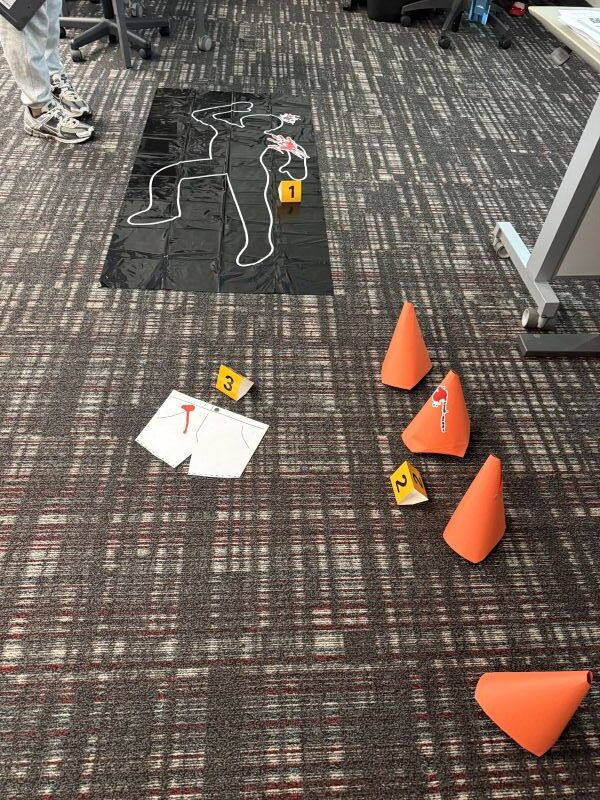
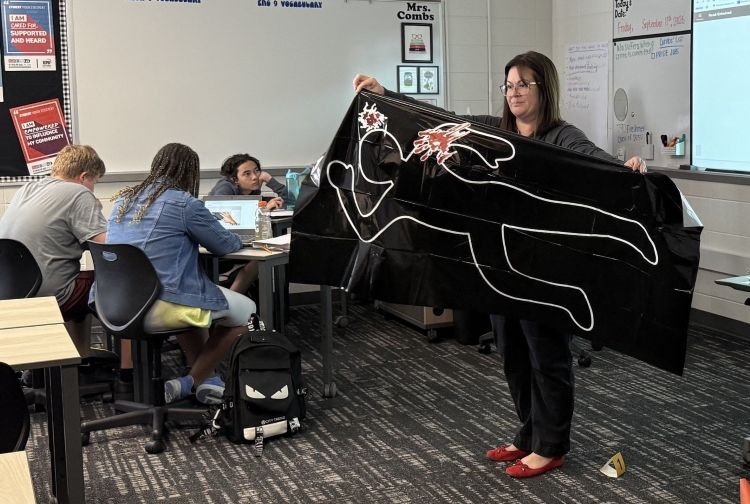
Kentwood — Ready to gather evidence, ninth-graders at the East Kentwood Freshman Campus observed their classroom-turned-crime-scene, complete with yellow police tape, an outline of a body and debris from a car crash.
English Language Arts teacher Stevie Combs, playing a college secretary, set the stage: It’s 1994. You are freshmen at Howland College in upstate New York. Cell phones and computers aren’t commonplace and there is no social media. Rock music and hip-hop rule the music scene. People move freely without the presence of cameras everywhere.
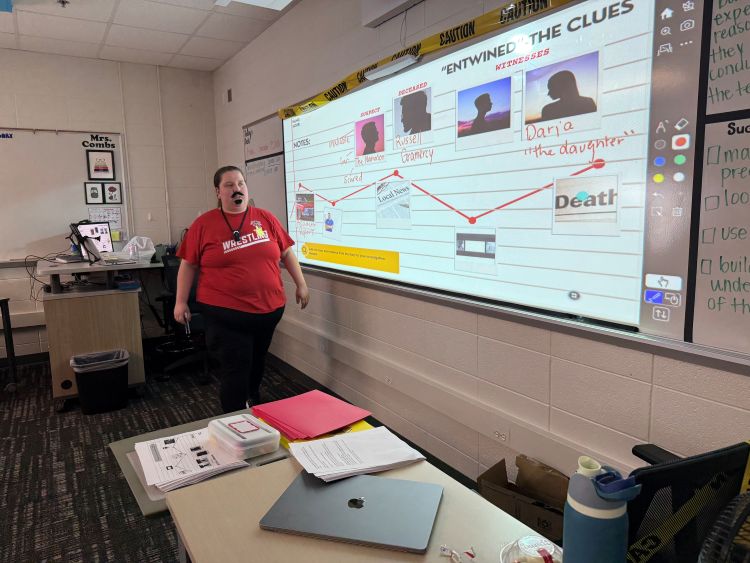
As students imagined the days of yore with rock band Pearl Jam’s “Alive” playing in the background, teacher Shannon Dent entered the classroom playing “Detective Dave Pedrosian,” a large goatee affixed to her face and ready to pass out “detective sheets” for students to document clues.
“I am here today because I’m going to need your help,” the detective told the student sleuths. “Your professor is not going to make it to class today. Unfortunately, your professor has passed away. We now have to investigate his death.”
The ninth-graders began working on the first piece of evidence — a suspect’s account of what led to the death — by reading and listening to the first few pages of the short story, “Entwined,” by Brian Tobin. They paid close attention as they read about a distracted college student who strikes and kills Professor Russell Gramercy during a traffic accident.
They analyzed what they read: Did the details add up? Were there any inconsistencies with the suspect’s story? While the investigation would continue past the class period, they considered the circumstances by closely reading the text before them.
“He’s a liar!” yelled one student.
“He’s unreliable,” said another.
“He’s scared! If he accidentally ran someone over, how do you think he would be?” chimed in a third.
Picking Apart Evidence in Text
The activity was an introduction to “Entwined,” one of several components in a unit on crime scenes in the ninth-grade ELA curriculum.
In learning how to analyze clues, students were learning to dissect text.
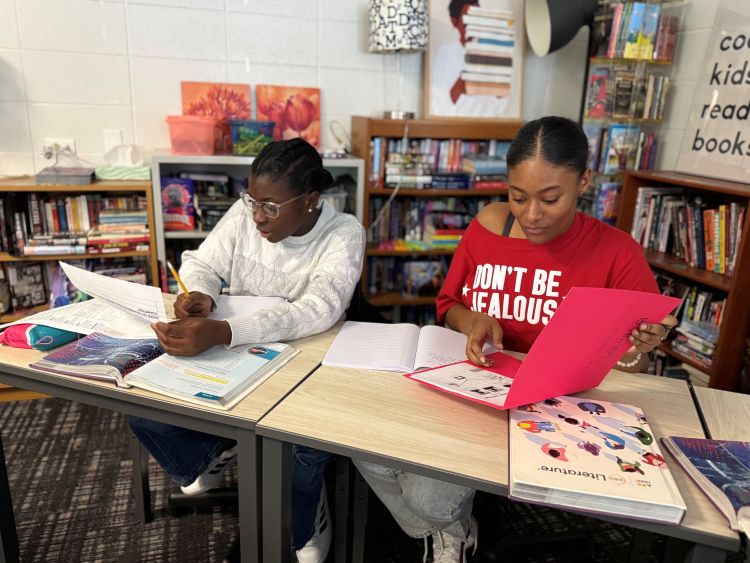
“With this particular story, we are really getting them to work on the ‘telling’ details of the story, so you can pick out what is important to pay attention to and what is OK to leave behind,” Combs said. “We move into characterization too — how do those telling details help you infer things about characters?”
The story, which is fiction but inspired by true events, is included in a unit that covers true crime, which Combs and fellow ELA teachers “amped up” to make immersive. Students also read the article, “Why are we obsessed with true crime and what is it doing to our minds?” by Laura Hensley and listened to the episode, “Bully,” from the podcast, “Criminal.”
“What we did with the article is, we got the kids into the unit and (considering) how we are immersed in true crime stories — how they are everywhere now,” Combs said, noting that they also consider related mental health issues. “What kids gleaned from that is (that) why we are interested in true crime is because we are curious people, and when things are out of the ordinary we want to figure them out.”
Students said the unit got them hooked on engaging in stories, trying to solve mysteries and consider all the clues.
“I learned how to find evidence better and use proof from the text. It’s interesting. It keeps me entertained and wanting to learn more and more,” said Paris Fourcha.
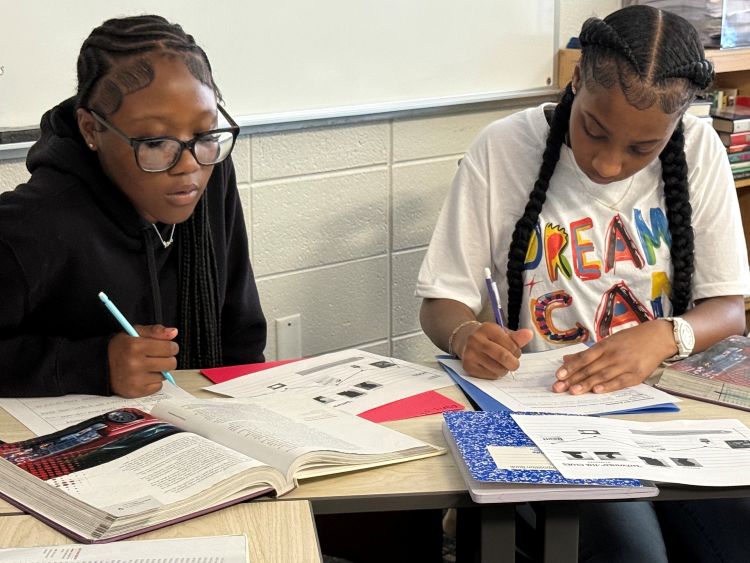
“I like how we learned about new crimes and mysteries and what type of evidence happened in the story,” said Everlyn Chester.
After collecting the class’ thoughts on the suspect’s story, Dent left the students with an assignment — a four- to eight-sentence summary covering the details.
A detective’s work is never done, it seems.
“We are going to return on Monday and see if there is any new information about what’s happened,” she said.
Read more from Kentwood:
• ‘A flashpoint for everything’: Teaching 9/11, 25 years later
• New policy brings consistency to 6-12 grading


