


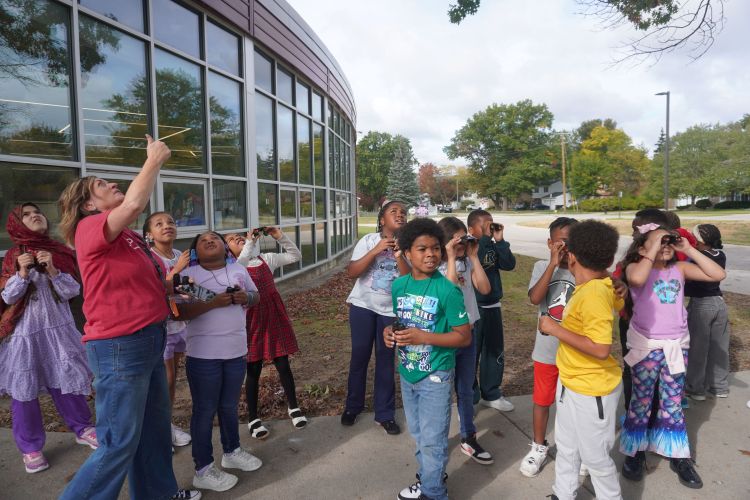
Kentwood — Third-graders stepped onto the schoolyard, careful not to crunch the hundreds of acorns beneath their feet, and peered at the oak tree branches above their heads.
“The quieter we are, the more likely we will see squirrels balancing,” said Glenwood Elementary School teacher Mindy Geer in preparation for the activity.
Through binoculars, students scanned the trees and landscape around them, spotting just one busy squirrel gathering acorns in the distance and a promising nest high up in the oak tree.
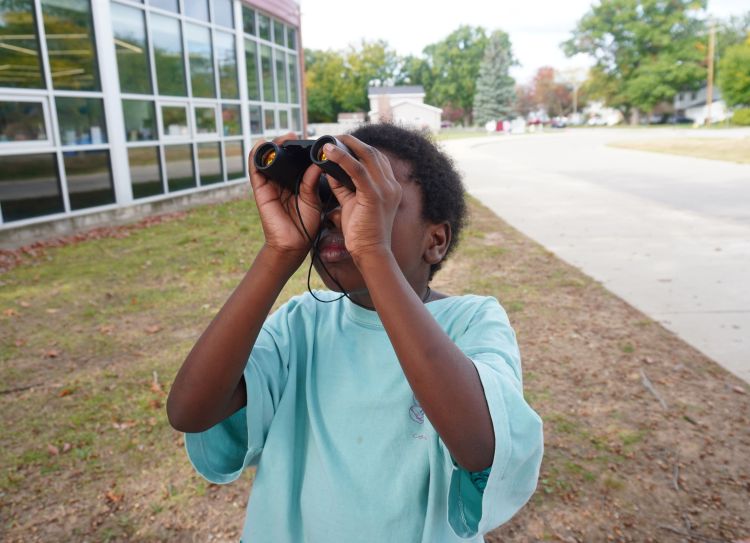
“I see one crossing the road!” said the student who spotted the squirrel, his voice a bit above a whisper.
While none of the creatures were spotted walking along a branch or wire during the 15-minute observation, students noticed the nimble body and quick movements of the animal they did see before they returned to class.
Inside, it was time to mimic a squirrel during their own kid-friendly activity.
Balance Like a Squirrel
Geer has been leading the project-based learning lesson on how squirrels balance, part of a science unit on animal adaptations, for nine years. Students study the biology and anatomy of squirrels, including their skeletal structure.
“We are learning about how the structure of the squirrel helps it to survive,” Geer said. “We were hoping to see squirrels balancing, but we did watch videos of squirrels balancing and talked about what parts of their structure helped them to balance.”
While considering the purpose of nimble claws and bushy tails, students hypothesized why squirrels balance so well and wrote plans for how a human could walk across a rope, squirrel-style.
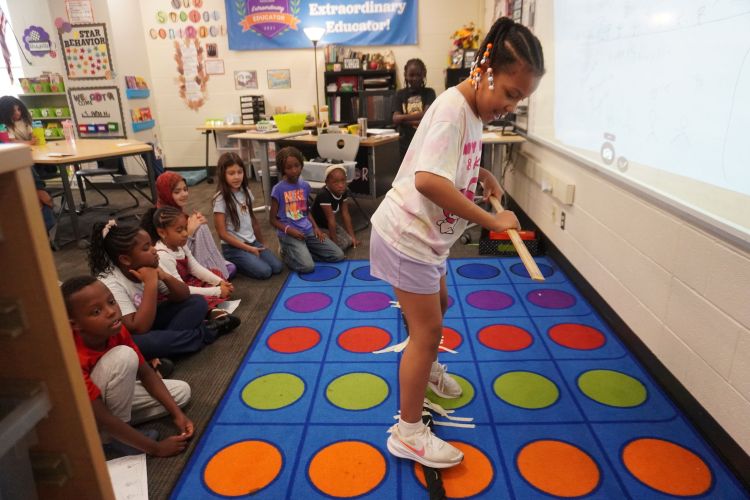
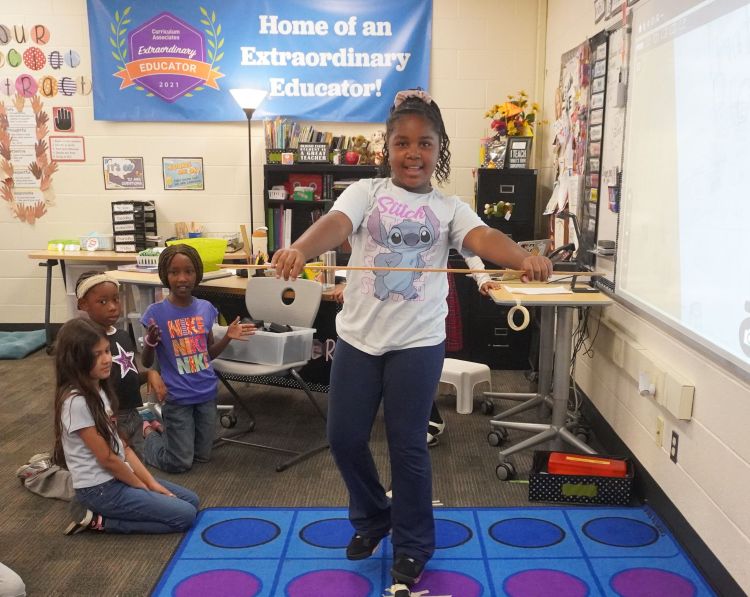
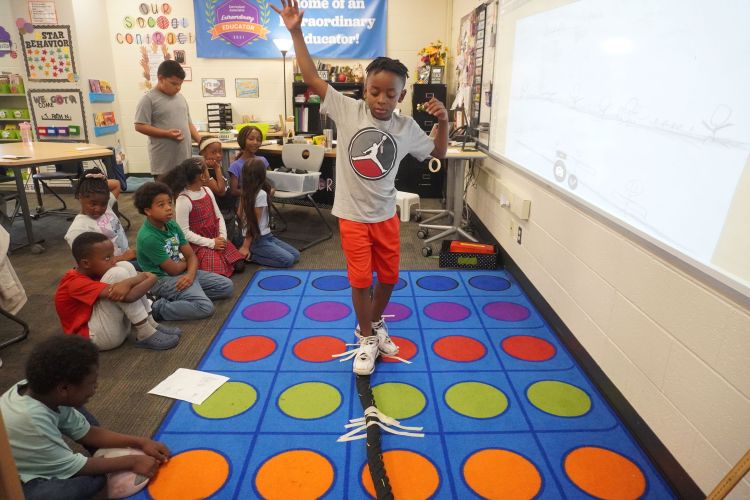
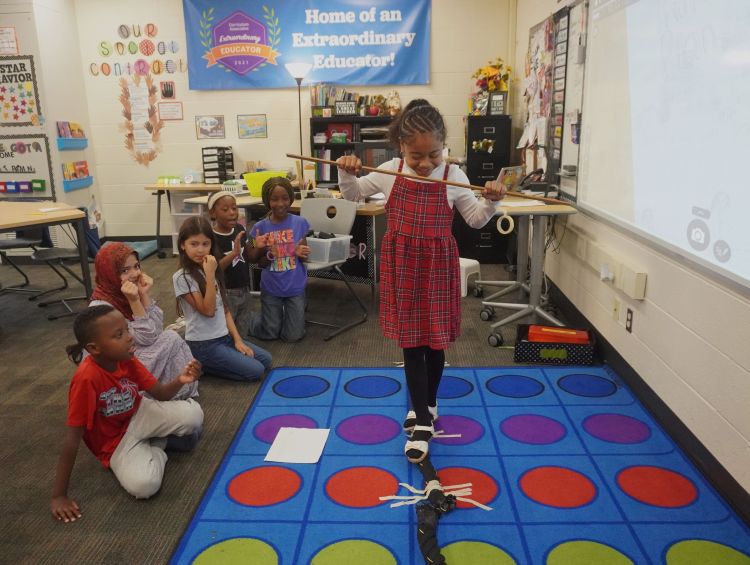
Back in the classroom, they took turns testing their plans, walking across a thick rope taped to the floor, often teetering and stepping off. They walked forward step by step, shimmied sideways and even crawled on their hands and knees. Some students carried meter sticks or walked with their arms straight out to their sides to see what would work best.
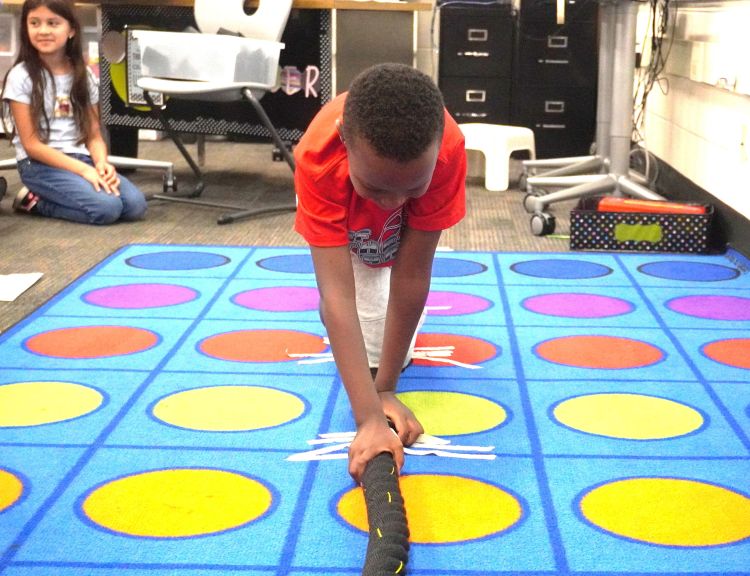
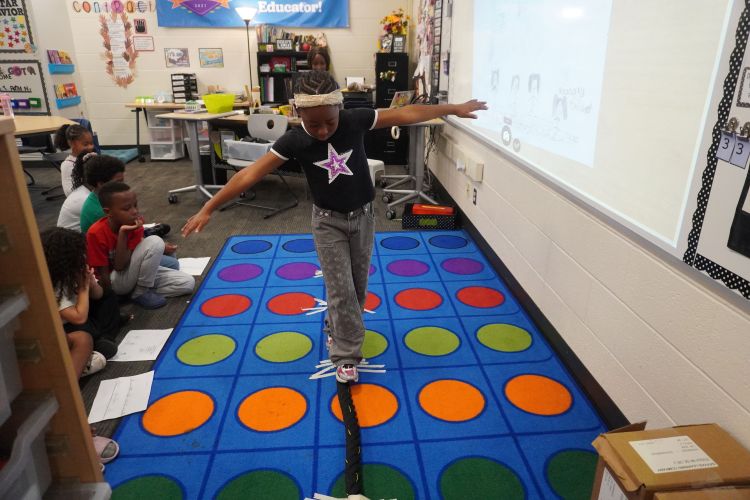
“It’s so shaky,” said Journey Nkurunziza.
“It was hard. It keeps moving around and my leg doesn’t stay in place,” said Lucky.
“My feet were slipping off,” said Imani Oakes-Owens.
They then pondered what they learned.
“A squirrel has a special structure so it can jump and climb and balance,” said Michelle Morgo. “I learned that they are good climbers because of their tail and claws.”
“Squirrels are very flexible and have good balance because of their tail and front arms,” added Journey Rutherford. “I’m different because humans are not good balancers and their legs are not structured like a squirrel.”
Geer said the activity helps students learn through observation and investigation.
“I really have noticed that my students have become better questioners. They are more willing to ask questions and then answer open-ended questions,” she said.
Read more from Kentwood:
• Award-winning teacher: ‘It’s an honor to be part of their journey’
• Students sleuth their way through text to solve crime


