


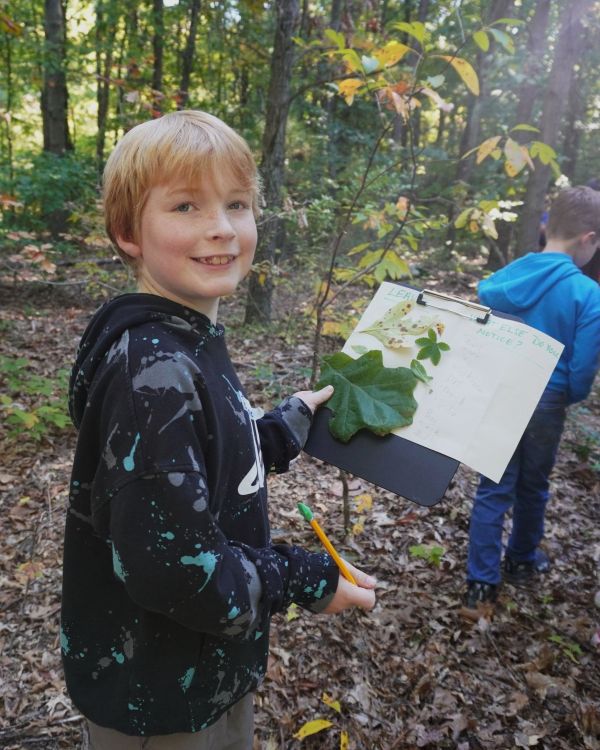
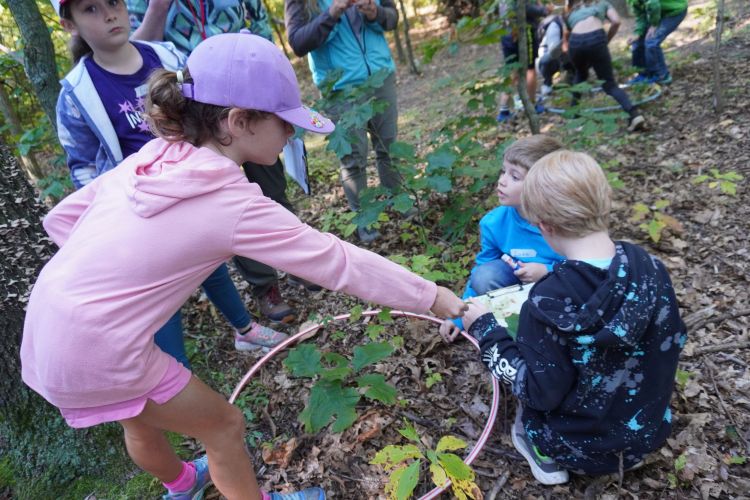
Lowell — In the Wittenbach Wege Center nature preserve, Cherry Creek Elementary third-graders examined all the living and nonliving things they could see inside a hula hoop that lay on the forest floor.
“Bark, an acorn, twigs, mushrooms, dirt, trash, a spider, a bug,” said Bennett Price. “There’s a dead tree above us.”
Students noticed the many things that can exist inside the circumference of a hula hoop within the vast woods while also collecting leaves and listing their observations.
The lesson, “Earth & Me & Ecology” at the Wittenbach/Wege Agriscience and Environmental Center, had students exploring the earth beneath their feet and then working to help it thrive.
‘Being outside is priceless — seeing this great resource they can come to.’
— Cherry Creek teacher Lisa Anderson
“There are many kinds of trees and plants everywhere,” observed third-grader Ronin Cutler. “We can help the environment in the future by not throwing trash on the ground and by throwing it in the trash can. … The world can become healthier.”
The WWC, 11715 Vergennes St. SE, provides outdoor education for Lowell Area Schools, with K-5 classes district-wide attending field trips at the facility and its surrounding woods at least twice a school year.
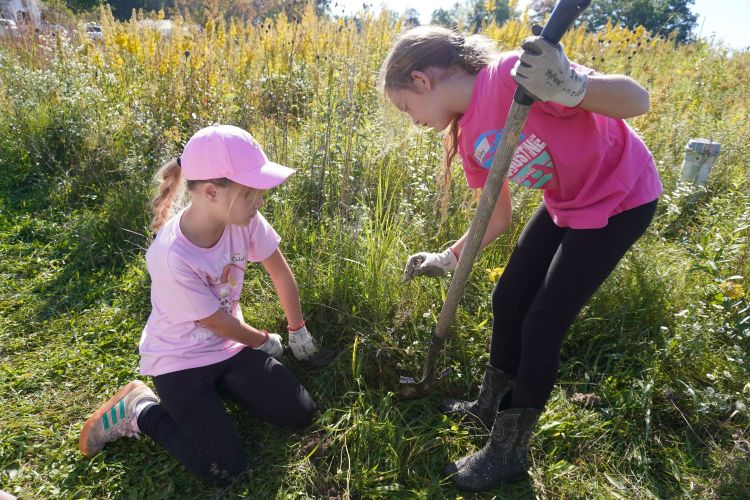
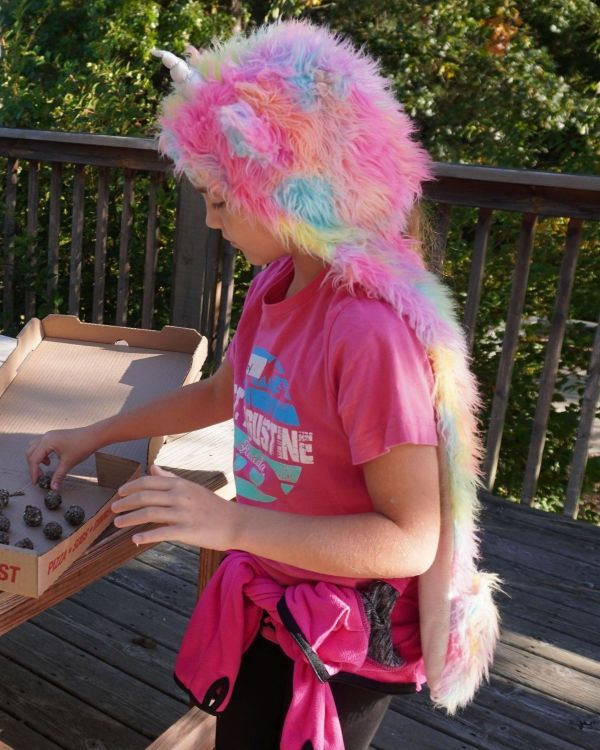
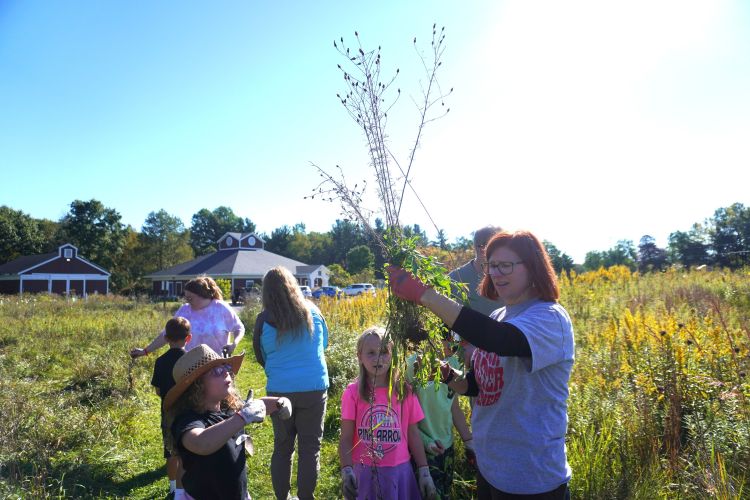
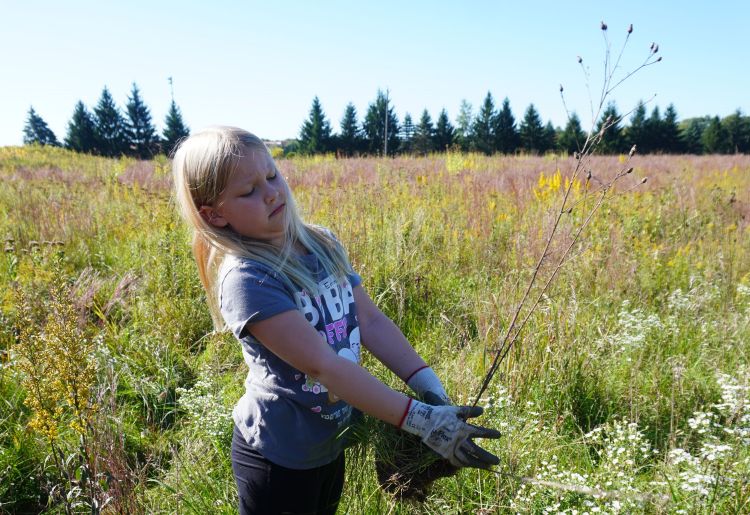
By day’s end, Cherry Creek students in teacher Lisa Anderson’s class had created balls of native seeds to toss onto the land when they return to the center this winter in hopes they will sprout; they pulled invasive spotted knapweed and replaced it with native grass; and they left with a challenge from center Director Courtney Cheers: “Do something good for the Earth every day.”
“An interesting thing I’ve learned is this is an invasive species, because I just thought it was native to this area because I see it a lot,” said third-grader Emma Kipfmiller, as she yanked tall knapweed out of the ground. “I am helping by digging it up.”
Why We Need Healthy Soil
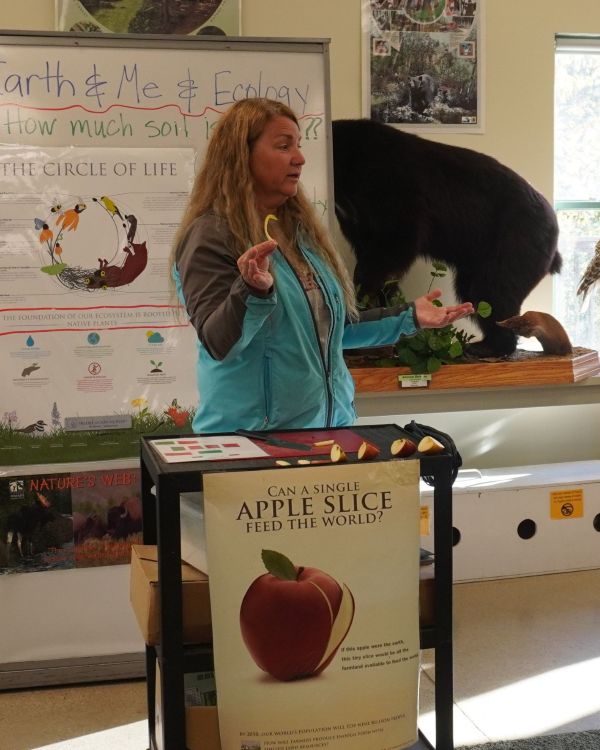
Cheers began the lesson with a question related to land uses. With an apple representing Earth, she demonstrated how three of four apple slices represent water versus land; an eighth of the apple represents where humans live; and just 1/32nd of a slice represents land humans live on. A peel of that tiny piece represents how much soil on Earth can be used to grow food for 8.5 billion people.
“Do you think it’s important to take care of our soils?” she asked. Students responded with a chime of yeses.
Cheers said “Earth & Me & Ecology” teaches science through examples students can see as they traverse the center’s grounds.
“We are looking at biodiversity and ecology, introducing the relationships animals have to each other, and between the plant and animal world,” she said.
Anderson said that back in the classroom, the class will continue learning about species diversity and invasive and native plants. Along with science, third-graders also touch on native species in the social studies curriculum, and will write about their favorite part of the visit.
The day spent outside is the best way to learn about those things, Anderson said.
“Being outside is priceless — seeing this great resource they can come to,” she said.
Cheers said a goal is always for students to learn how they can help the planet. Along with making the seed balls and planting the native grass, students weighed their lunch trash in a lesson on reducing waste.
“It opens their eyes, and hopefully what they learn today they can share with their families,” Cheers said.
Read more from Lowell:
• His motto: ‘The grass is green where you water it’
• Grad returns to district as architecture intern for renovations


