


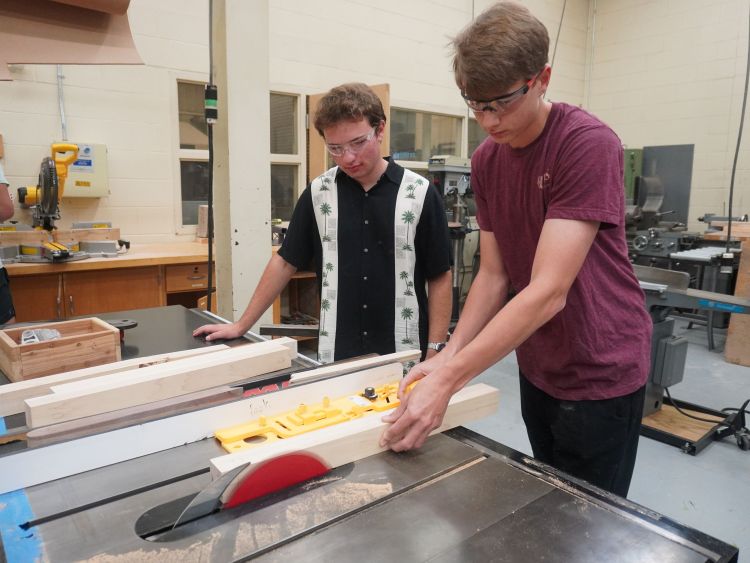
Lowell — In a room whirring with the sound of machines and smelling of fresh-cut timber, students measured, cut and built, transforming pieces of black walnut, cherry, maple and other types of wood into handiwork.
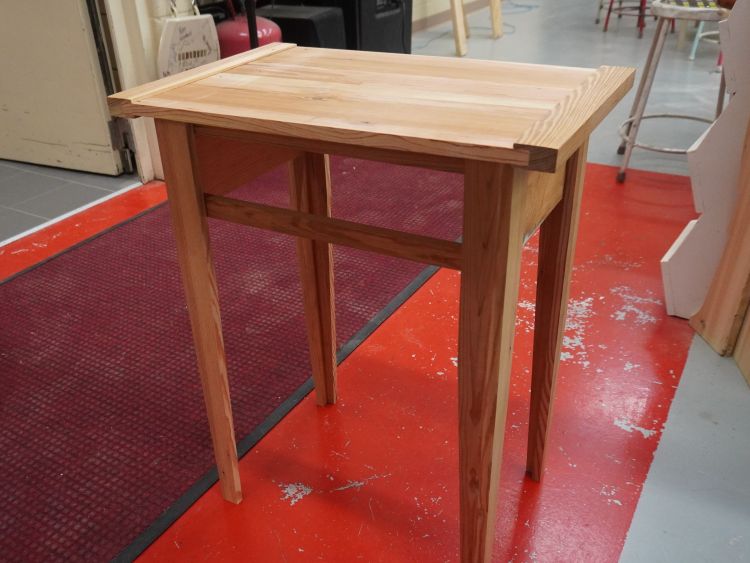
They were crafting cutting boards, shaker tables and other wood pieces in the Lowell High School woodshop, using precise measurements and calculations as they worked.
“This is going in my room,” said junior Zaden Perfitt as he worked on the legs of his shaker table, which he plans to use as a nightstand. “I wanted to use a dark wood — black walnut — with a lighter maple. I will sand it down and I will stain it.”
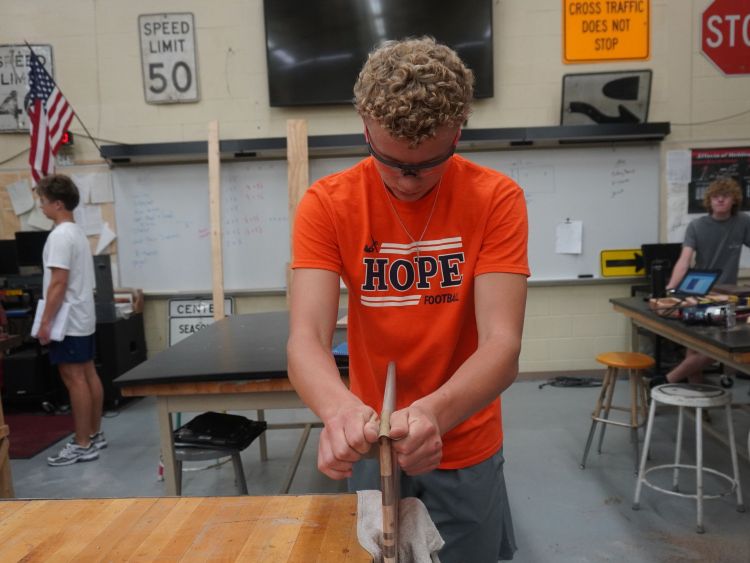
The approximately 20 students in the 12-week trimester Advanced Woodworking and Metals elective have already completed Home Essentials class as a prerequisite. Teacher Tony Ellis said they receive a math credit for the course and can take the advanced class as many times as they want, taking on projects with increasing difficulty.
“Every time, I push them a little higher in skills,” Ellis said, explaining the progression from cutting board to shaker table. Three or four students each year even build large, multi-piece Adirondack chairs.
“I’ve made other things in this class too, and it’s really shaping my future on what I want to do when I get older,” said Zaden, who wants to be a carpenter. “That’s what my grandpa was and he really showed me a lot, so I decided to take this class and I really like it.”
‘Attention to detail is the biggest thing because every single measurement needs to be precise.’
— senior Wyatt Putnum
Sturdy Tables, Lasting Lessons
Students customized their minimalist-style shaker tables with wood colors and inlaid designs for a specific place in their homes, gifts or whatever they like. They used reclaimed wood from 1910, brought in from old doors from Ellis’ house.
The project — and woodworking in general — requires applying math constantly, through accurate measurements and calculations, Ellis said.
Students must find the center of a piece by creating diagonals on a regular polygon. Projects also require making parallel lines and perpendicular bisectors. Applied physics at work includes Newton’s third law of motion on equal and opposite forces, rotational forces and torque.
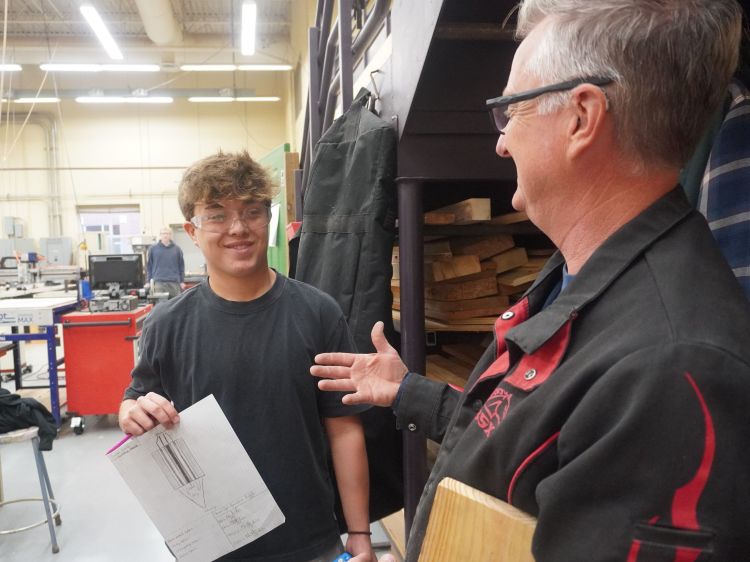
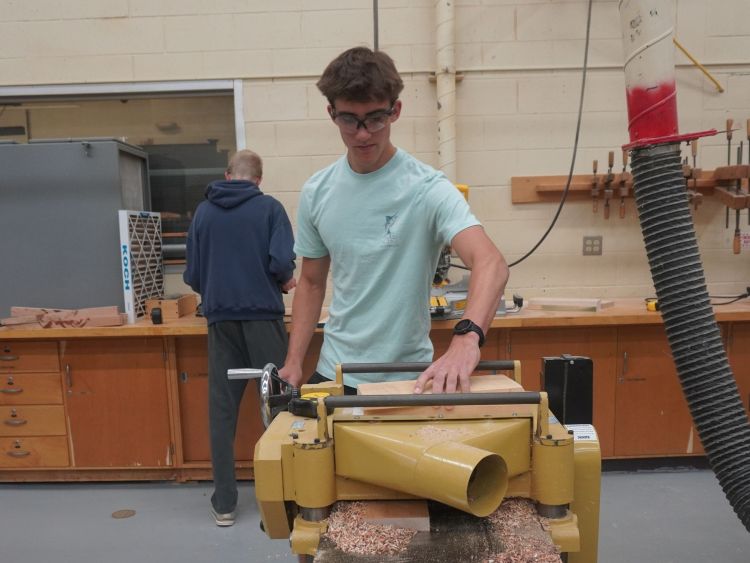
The class also figures the cost of wood into all of their projects.
“There are literally hundreds and thousands of different ways that they use math every day and they don’t even realize it,” Ellis said.
Senior Jaxson White said he hopes to sell his shaker table.
“These legs took a lot of work,” he said as he assembled his piece. “I had to make sure they were all the exact same length, exact same width and make sure they were identical. We had to do the math on where we wanted the taper (on the legs) to start and end.”
Senior Lilah Wood worked on a cutting board out of black walnut, red cherry and maple to give to her dad, who is a hunter. She planned to inlay a design of antlers and her initials on it.
She said she’s learning math as she works.
“In measuring, it’s making sure it’s the perfect length. If it’s not, your (piece) isn’t going to turn out right,” Lilah said.
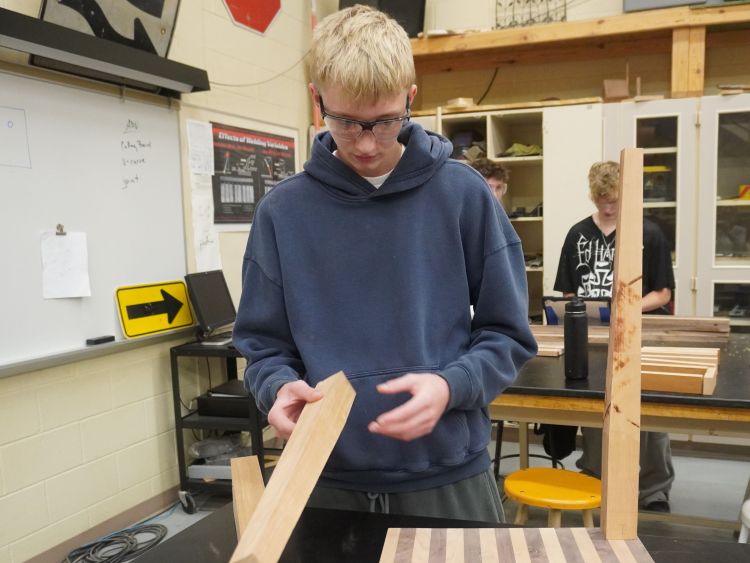
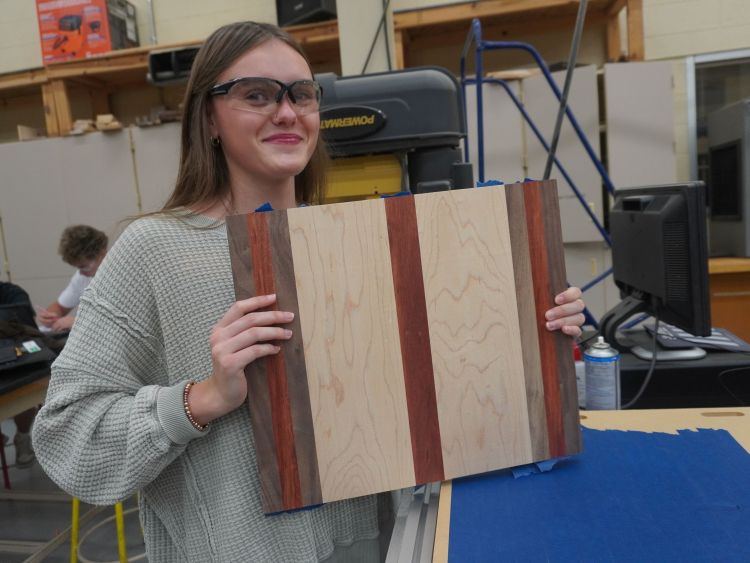
Senior Max Munger said he has learned “the importance of being square,” in creating his table and the precision needed to work on tapering and angles.
“You need all your measurements to be accurate, especially with table legs, and if they are not … your table will be wobbly,” he said.
He said he likes learning math in a way that he can apply to his life.
“You don’t actually learn from a textbook; you are going to forget all that,” Max said. “This is applicable and you are going to remember the skills you learned a bit more because they’re hands-on, and you have a memory to go with it.”
Senior Wyatt Putnam also worked on a cutting board, which he plans to give to his grandmother for her birthday. He said he wants to work in construction someday and exact math is crucial for building safe, secure homes.
“Attention to detail is the biggest thing because every single measurement needs to be precise. … Every single detail needs to be perfect,” he said. “Knowing the right measurements, doing the right calculation while making something is really cool to know.”
Read more from Lowell:
• What lies on the forest floor? Third-graders observe and record
• His motto: ‘The grass is green where you water it’


