


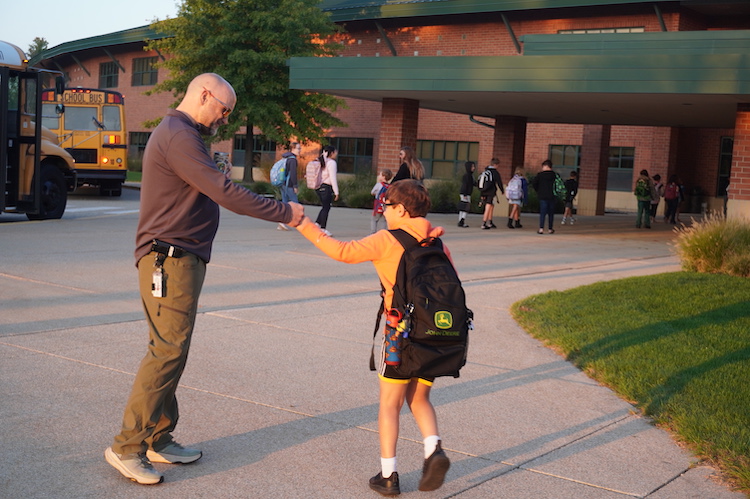
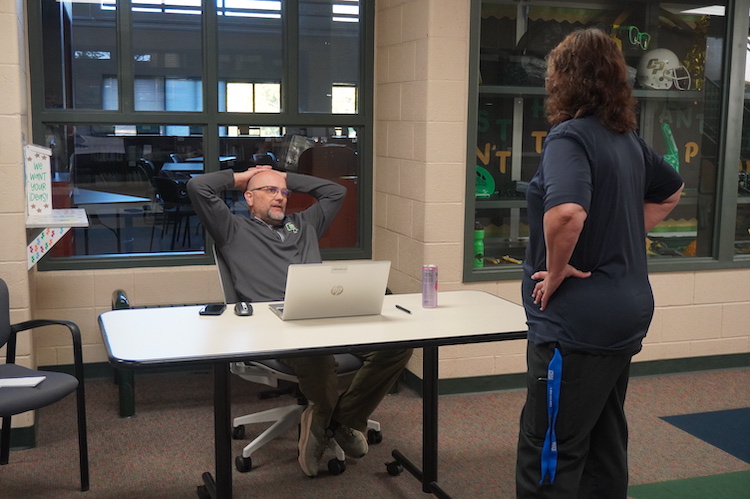
Comstock Park — At 8:40 a.m., Brian Morrison packs up his laptop, grabs his mouse, and rolls his chair out of his office. He moves through the main office and into the hallway, where a white folding table awaits.
There, the Pine Island principal positions his chair, sets down the mouse, opens his laptop and takes a seat. Just like that, Morrison’s office is open.
“I want to be in the hallways to see the kids,” Morrison explains, noting that some of the best conservations he has with students and staff have been while sitting in the hallway.
In recognition of October as National Principals Month — which highlights the role principals play in shaping their schools, supporting staff and guiding students — Morrison agreed to let School News Network follow him for part of his day.
There is no data on the number of principals in West Michigan. According to MI School Data, of the approximately 28,336 West Michigan public school staff in 2024-25, around 814 were school administrators. That group includes building administrators such as principals who manage the daily operations of individual schools, and district administrators, who are responsible for overseeing the broader functions of a district.
Morrison says it’s the administrators in the building who have the most direct impact on both staff and students. For that reason, he explains, he has never considered moving into a district administrative position.
“Actually, if it hadn’t been for my wife, I’d probably still be teaching at the high school,” Morrison says. She gave him a Dale Carnegie book on leadership, and he eventually would become an assistant principal at Hamilton Middle School, then five years ago became the principal of Pine Island.
The Relationship Builder
By the time Morrison sets up his hallway office in the morning, he has already been at Pine Island for an hour.
“It’s never a dull day at Pine Island,” he says as he walks through the front doors.
He greets staff, chatting about their lives outside of the elementary building, before setting his backpack down in his office and making a quick check of emails and messages.
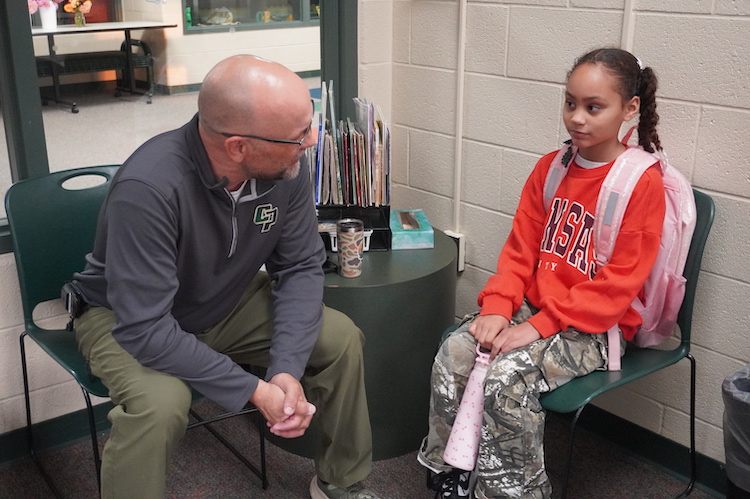
He meets with Dean of Students Pat Calkins, then prepares to head outside to greet students, with a slight detour as he is introduced to a new student, third-grader DeShya Sandifer.
“Well, welcome to the Island!” Morrison tells her.
Later, Morrison explains that the nickname, “Island” — which has been catching on among staff — serves as a kind of rallying cry for the school, aimed at fostering a sense of unity and community among both students and staff.
A collector of inspiring quotes, Morrison is especially moved by Theodore Roosevelt’s “Man in the Arena,” which emphasizes the value of action over criticism.
For Morrison, the quote reflects his goal of community and shared purpose.
“The Island is our arena,” he says, while showing a framed copy of Roosevelt’s quote. It’s a gift he gives to every new staff member.
Each of these elements — setting up in the hallway, the “Island” nickname and Roosevelt’s “Man in the Arena” — reflects Morrison’s intentional approach to fostering relationships.
“I’m a relationship builder,” Morrison reiterates often throughout the day. That attribute also was affirmed through Gallup’s CliftonStrengths assessment, which the entire staff has completed.
Morrison says understanding an individual’s strengths enhances team collaboration, as a relationship builder is better able to connect with and support those deemed an executor, who is focused on accomplishing tasks.
“Knowing what our strengths are and how to work together utilizing those strengths, we have a much better chance to help our kids,” he says.
Breaking the Stigma
Building relationships also goes beyond students and staff to families and the larger Comstock Park community.
“There is a stigma that comes with being a principal,” Morrison says. “Whether it’s a kid or teacher or parent being ‘called to the principal’s office,’ or when the principal calls, they’re nervous. They have that feeling in their stomach.”
While today’s tools — such as social-emotional learning and positive behavioral interventions and supports — have helped educators address the root causes of students’ challenging behaviors, Morrison acknowledges that traditional perceptions of the principal’s role have been slow to shift.
“We can’t fix things outside of these walls,” he says. “What we can do is provide a safe, seven-hour positive experience all day long.”
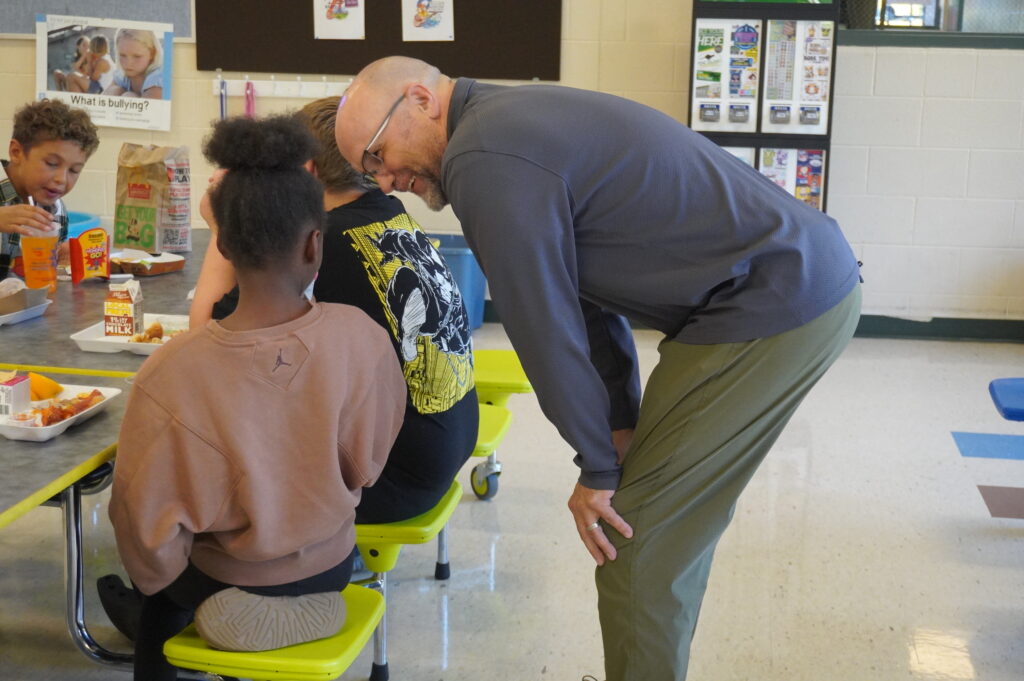
For Morrison, that means being a consistent presence for both students and staff — whether it’s offering encouraging sticky notes to staff during classroom visits or taking a moment to check in with a student about their day.
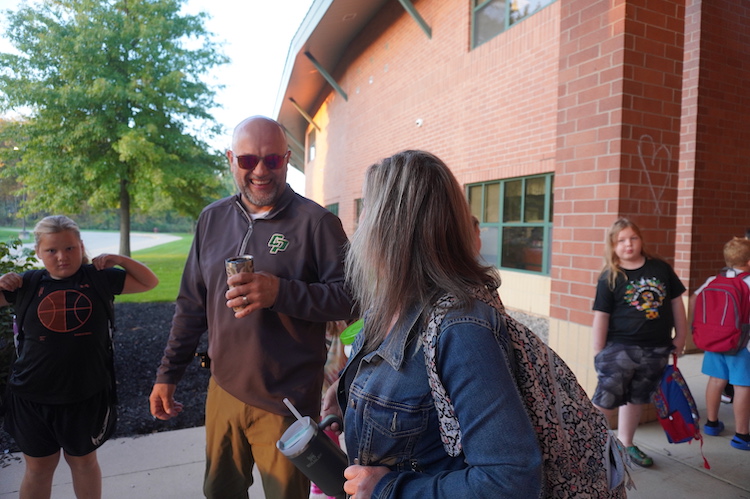
“I liken my position to the rover in Little League,” Morrison explains. “I float around the field — a rover in the building — helping staff solve problems by working together, and then I move on to the next one.”
It’s just after noon, and Morrison is in the teacher’s lounge — another way for him to check in with staff. As he tosses an empty soda bottle into the trash, teachers point out the collection box nearby for returnables that are turned in to support the school store.
Plucking the bottle from the trash, he laughs and admits he’s been at the school for five years and never knew about the box.
“I love being a principal,” Morrison says. “Doing the sticky notes with teachers, interacting with students — it’s about being shoulder-to-shoulder with them in the arena.”
His radio crackles with a request, and he heads back into that arena.
Read more from Comstock Park:
• Students go 3D with pens
• Houses for sale — ghosts, monsters and adjectives included


