


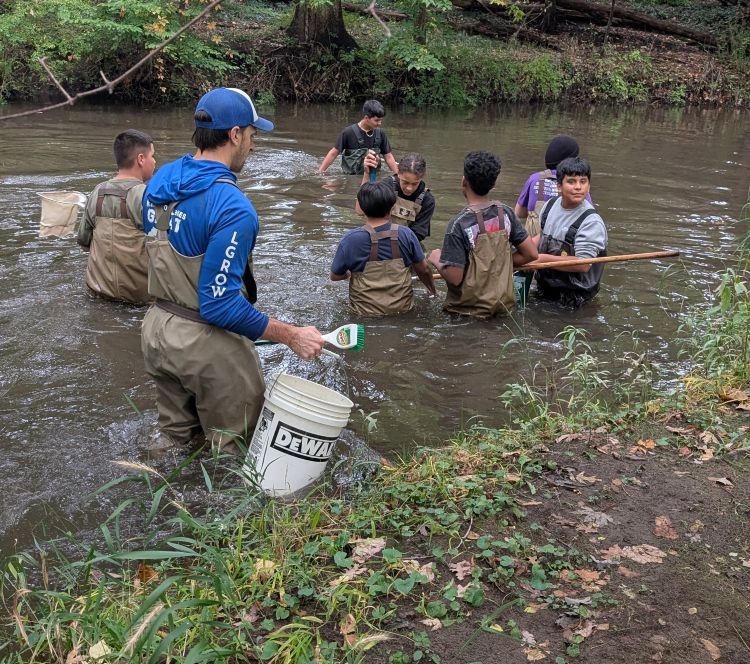
Wyoming — Wyoming Junior High School eighth-graders Rigoberto Ramirez Bautista and Jeremias Guevara Heredia have a request for the Board of Education: Can they install a native plant garden near Buck Creek?
In learning about environmental engineering, students in teacher Maddie Juliot’s semester-long engineering class, including Rigoberto and Jeremias, studied the local watershed and came up with ideas to help protect it from erosion and pollutants.
They recently presented those ideas to the Board of Education.
“Wastewater that leaves the city eventually enters Lake Michigan, (which is) the source of our drinking water and the site of many recreational opportunities,” wrote Rigoberto and Jeremias in their presentation.
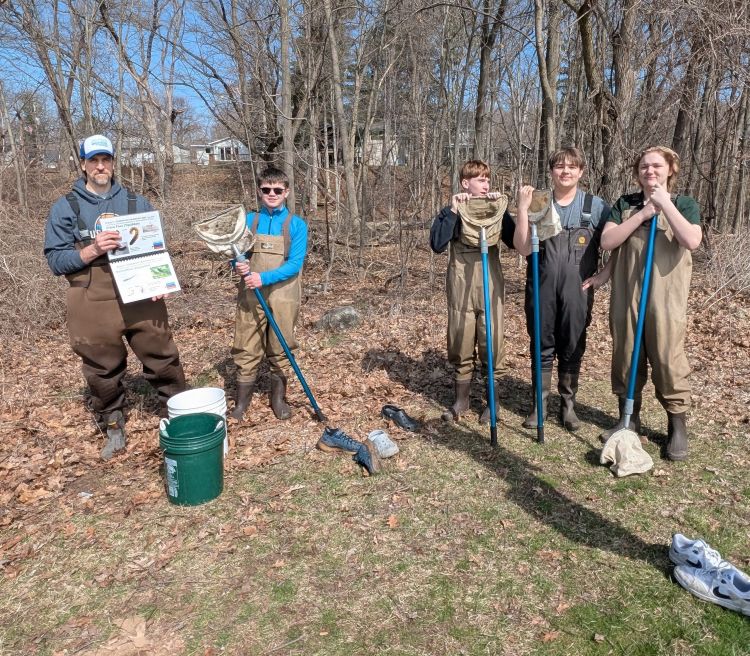
The students worked on the project in partnership with the Lower Grand River Organization of Watersheds, an environmental program of the Grand Valley Metro Council focused on understanding, protecting and improving the lower Grand River Watershed.
To analyze water quality in the community, they waded into Buck Creek in Lemery Park and Sand Creek in Aman Park to collect fall and spring water samples. They then determined the water’s taxa richness, an indicator of health also known as species richness. They also observed threats to the watershed such as litter and stormwater runoff.
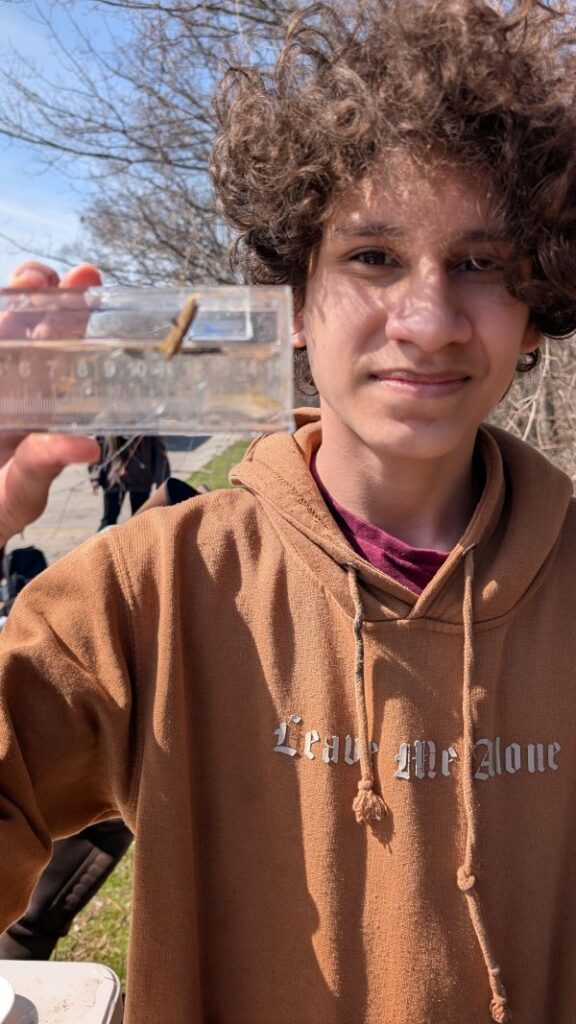
“I learned about what a creek needs to be defined as healthy or unhealthy,” said Kimberly Perez, who with Makiya Creamer proposed to the board leading a school-wide storm drain awareness campaign.
The goal of the LGROW project, Juliot said, was for students to get an idea of what it’s like to be an environmental engineer and to propose a solution that helps protect the watershed.
Other proposals included native trees and plantings in the schoolyard and other areas with heavy stormwater runoff. The board indicated future support of one of the projects — though didn’t determine which one — after more exploration, Juliot said.
A Lens on Where They Live
Matt Bain, aquatic specialist and education coordinator for LGROW, led the project with students through classroom visits, field samplings at the creeks and a site assessment of the schoolyard to identify stormwater collection areas. Buck Creek provided a look at urban water quality in comparison to the woodsy, natural Sand Creek location. Students compared plant and tree diversity as well.
“The takeaway for students is learning to cultivate empathy for plants and animals, and (to) be able to look at the places you live and know there are different things you can do that can improve things,” he said. “We are trying to turn the lens toward ‘(People) aren’t the only things here.’ … Hopefully they do walk away with the idea that they can make those changes, and you don’t have to be an expert.”
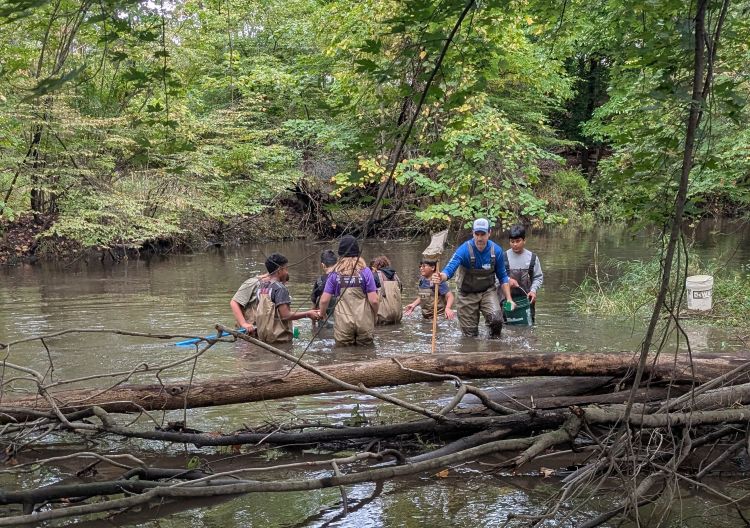
Wyoming Junior High is one of 18 schools LGROW is working with this school year and next on projects involving the watershed, the human impact on it and how to restore and protect it. Community connection pieces are presentations to boards of education and municipality boards, and stewardship projects such as planting trees and native plants.
The engineering class, in its second year, offers students a chance to explore STEM in depth and beyond the textbook. The water study is one of several units challenging students to think like an engineer.
“It’s about learning initial hands-on skills, getting kids excited about the hands-on portion of science and math,” Juliot said.
Read more from Wyoming:
• Fifth-graders work to leave no trace of plastic
• Principal reveals his artistic side


