


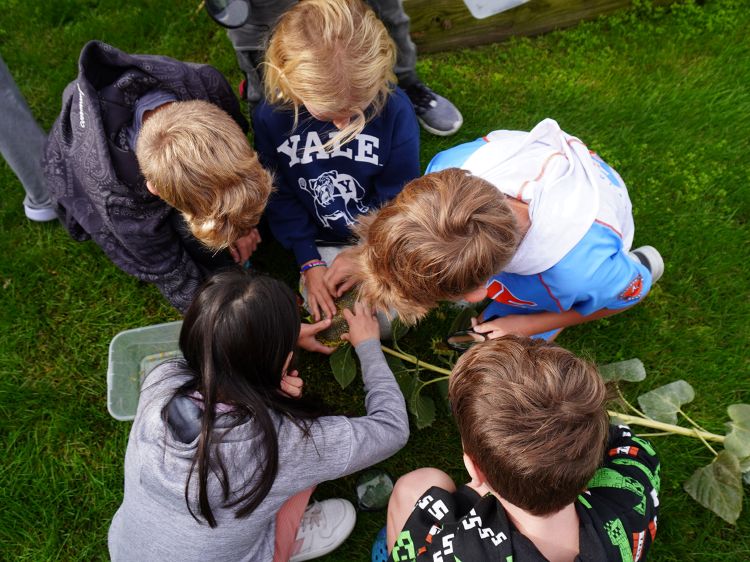
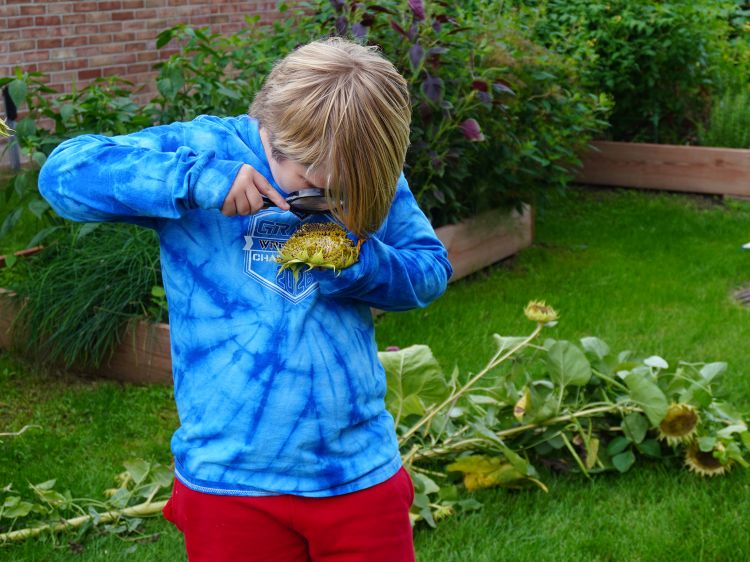
Byron Center — Magnifying glasses in hand, a class of third-graders marched outside on a mission to harvest sunflower seeds.
In Brown Elementary’s learning garden, several boxes of sunflowers were in their final stages of life as fall approached. The drying stems and flower heads presented teacher Sherri Newenhouse’s STEM students with an opportunity to learn about plant life cycles.
“It’s raining seeds over here, folks,” third-grader Ryker Grantham announced as he found flowers still filled with seeds.
For the past few years, Newenhouse’s students have harvested sunflower seeds to save for the winter for another project come springtime.
“The garden gives the students hands-on experience to discover how the plants grow to produce seeds to plant again in the spring,” Newenhouse said.
The sunflowers play an important part in STEM education at Brown year-round.
“Every year we use the sunflowers in the classroom to figure out how water moves through the stem, why the stem feels prickly, why the seeds are fuzzy, why the leaves are so big, and so many more questions about the function of the plant,” Newenhouse explained.
Last year, students also worked on a project where they used parts and pieces of the sunflower to build mini shelters, an activity Newenhouse said they loved.
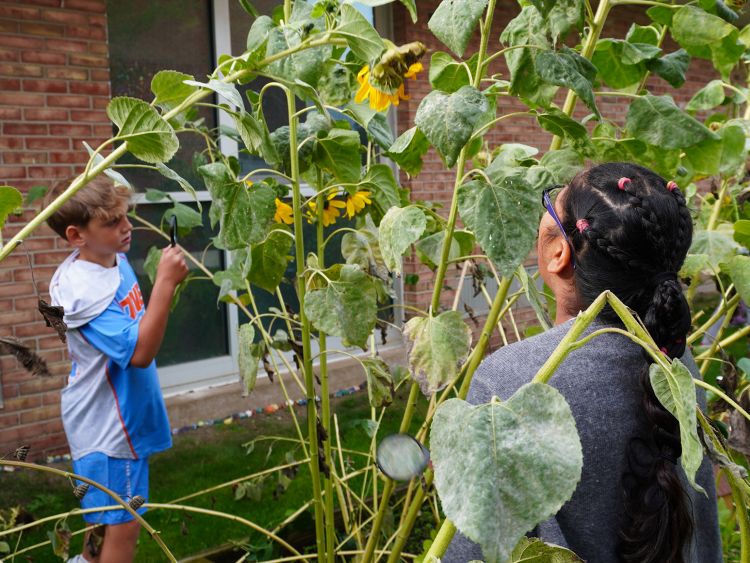
Learning the Life Cycle of Sunflowers
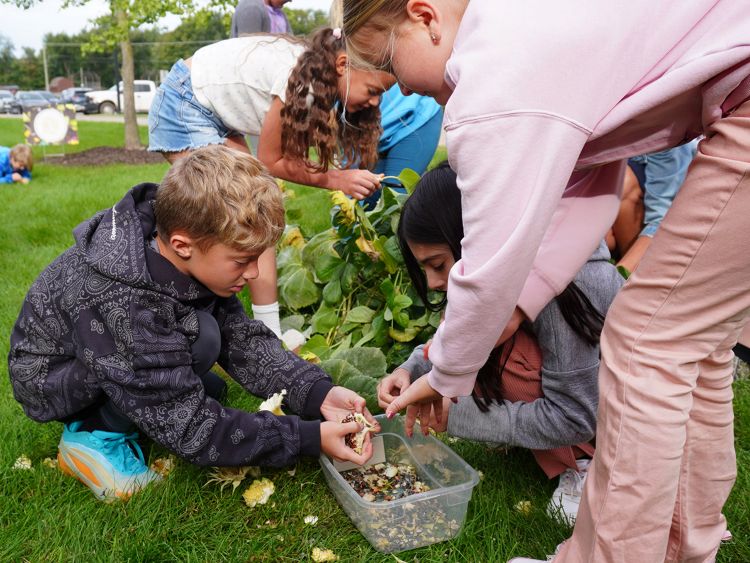
On the day of the harvest, small groups of third-graders scattered throughout the garden and then had to figure out the best way to extract seeds from the flowers.
Despite hungry birds who threatened to eat all the seeds, the students salvaged a good amount for observation and future projects.
“Once the sunflowers get old, we pick off the seeds and save them to plant for more sunflowers,” third-grader Alexandra Pasara said.
She recognized the role she and her classmates play in the life cycle of sunflowers.
“The sunflowers need us because they need to expand and grow into beautiful flowers,” Alexandra added. “If sunflowers are important because they have the seeds, and the bird needs seeds, then we’re important.”
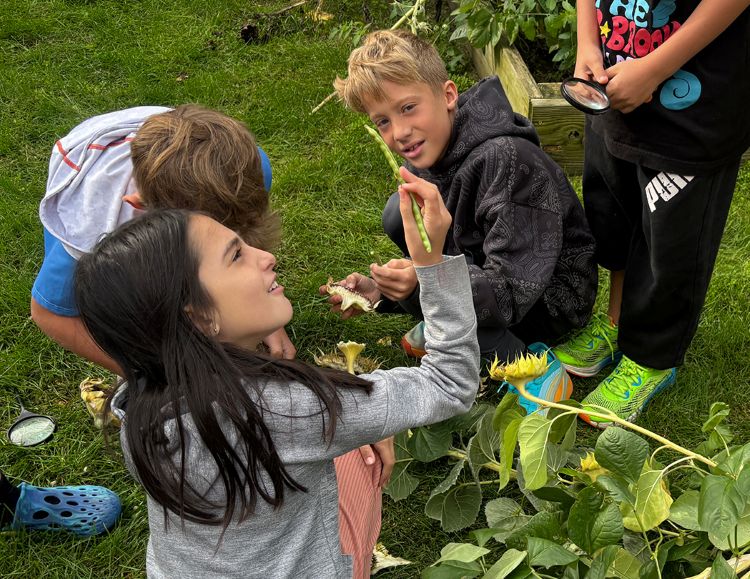
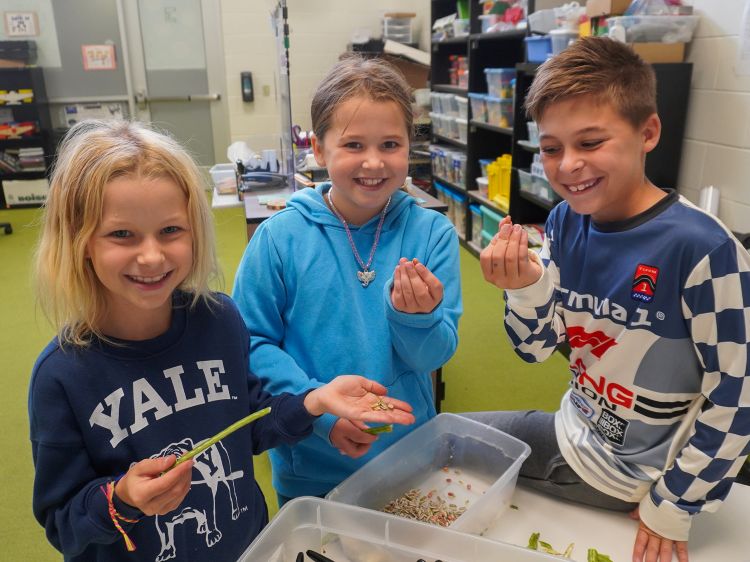
Towards the end of their seed harvest, Newenhouse and her students uncovered an unexpected surprise waiting to be discovered in the garden.
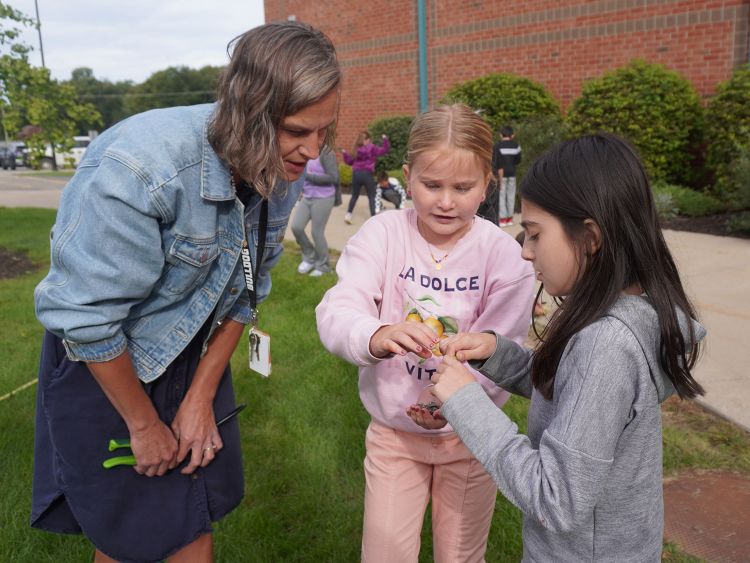
“It’s beans!” Several students had the realization at the same time: A vine of green beans had grown friendly with the sunflowers over the final summer months and produced a few bean pods for the students to gather seeds from.
“The seeds are red,” third-grader Brooke Bergstrum noticed. Her classmate Jaxton Swartz would later discover the green beans beneath the red skin.
In addition to class activities during the school year, Newenhouse said the garden continues to be a hands-on learning space for students and their families over the summer, when the Brown Learning Garden group visits and tends to the garden.
Read more from Byron Center:
• He’s come full circle to the school he once attended
• Seniors remember ‘little kid’ selves through backpacks


