


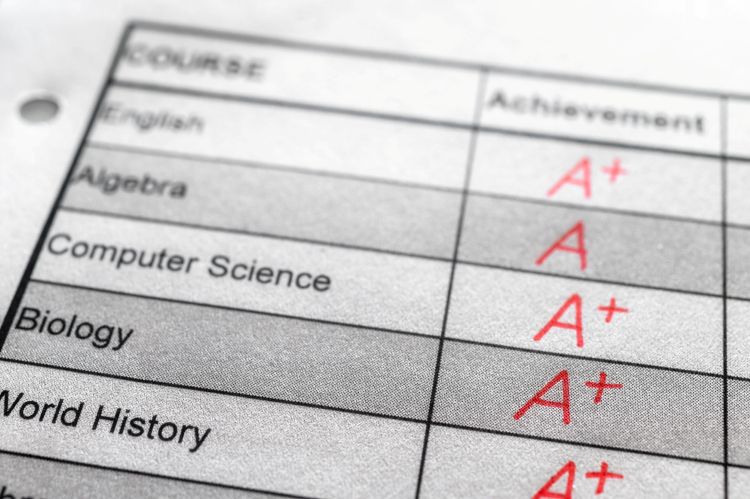
Kentwood — Students in any high school anywhere can spot these teachers on their class lists:
There’s the ‘easy A’ teacher; there’s the teacher who makes squeaking by with a C difficult. Then there are the middle-of-the-road graders, who might let students chase higher marks through extra-credit opportunities.
In Kentwood Public Schools, however, the district has worked to take the variability out of grading, said Sunil Joy, KPS executive director of strategy and innovation. Put in place last school year, a new secondary grading policy was developed over two years by a committee of juniors and seniors, middle and high school teachers and administrators.
‘The best thing about this is that we are all speaking the same language about what grades actually indicate.’
— freshman ELA teacher Stevie Combs

In practical terms: a grade now means the same thing regardless of the teacher giving it.
“The purpose was to examine our grade policies to make sure they are reliable, accurate and motivational for students,” Joy said. “Since the changes, we have much more clarity and a spotlight on what grades are supposed to communicate in a way that’s transparent to students and parents.”
The goal is to not only provide consistency from teacher to teacher, subject to subject, and school to school, but to ensure grades reflect what they are supposed to — how much a student has demonstrated they know about a learning standard, Joy said.
In high school, the grading structure is essentially the same, except a final exam is added to determine 20% of the final grade.
Middle school grades are determined 30% through coursework, known as Learning Process work, and 70% through tests and projects, known as Learning Mastery work.
“The best thing about this is that we are all speaking the same language about what grades actually indicate,” said Stevie Combs, who has taught English Language Arts at the East Kentwood Freshman Campus since 2019.
Combs, who served on the committee, said she likes to think of former grading practices in visual terms: Picture a student at a high school open house receiving six different syllabi, six different grading systems and expectations.
“That has gone away now, and I think that’s the biggest improvement,” she said.
Another thing that’s really cleared up for teachers and parents and students is: what do grades actually represent?” Combs said. “They should be representing learning opportunities, (a student’s) growth in them and have (they) mastered a standard and to what level?”
What That A+ Means
The policy allows students to retake tests, a practice used by some teachers but not by others in the past, and it ditches extra-credit opportunities.
The reasoning: retaking tests allows students to reach the true goal of the course, which is to learn the content, Joy said. Extra credit, however, can create an unclear picture of true learning if the extra work is not directly related.
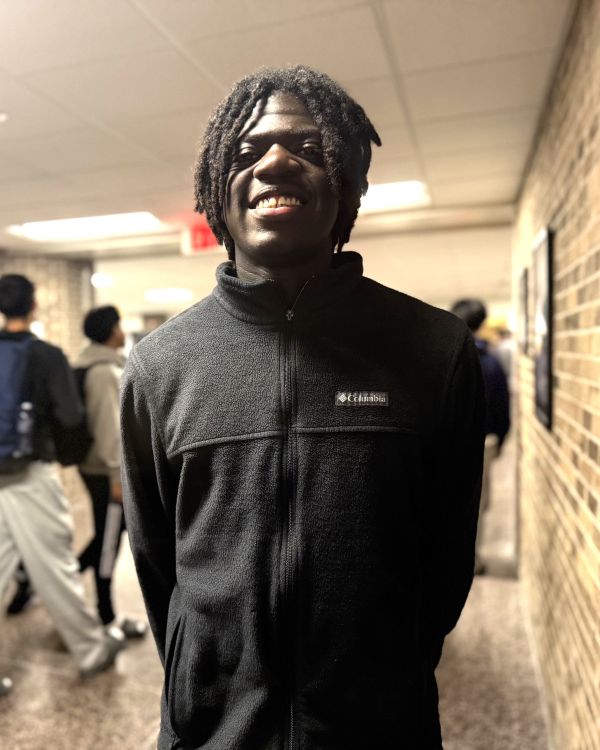
East Kentwood High School senior Shane Nshime served as a student representative on the committee last school year, offering monthly feedback about how the new policy was going.
After he graduates, Shane hopes to pursue a degree in chemical engineering and eventually law school. He said he wants his high school grades to actually reflect his understanding in subjects like calculus, so that he’s prepared for future rigor.
“Before the policy, it was a lot easier to skate by and get an A or just float through a class, but I feel like after implementing it, it helps students retain knowledge and to learn better,” he said.
Shane noticed grading policies varied greatly before the policy.
“History might do their own thing; math might do their own thing; but it wasn’t very generalized to the whole school. I know now that everything is 70-30,” he said. “It just made everything uniform and made everybody have the same policy.
“I think it’s going well. I think it’s forcing students to actually study and learn a little bit more than they did before.”
Not Defeated by a Bad Grade
At the district’s alternative school, Crossroads High School, science teacher Peter Weise said the policy clears up ambiguity. Students know what they need to master.
“I do see the students’ grades reflect their actual knowledge level at the moment,” said Weise, who also served on the committee.
Before retaking a test, students need to revisit labs or other hands-on activities, seek help from him or attend study sessions, for example.
“It’s no longer, ‘You failed a test, and that’s too bad,’ it’s, ‘You just don’t know enough yet,’” he said.
Weise said students’ grades crept up last year.
“I saw students do more work and then improve their grades. They were not defeated when they had a bad day or a bad test,” he said.
“Ultimately, our goal is to get them the understanding about what they need to know so they get them to their next step in school and careers.”
Read more from Kentwood:
• It takes a community to send students back to school with confidence
• Building skills that last, from STEM into everything else


